

Product
Product Details
Aluminum Stud Mount Connectors
Aluminum Stud Mount Connectors — Single and Double Bolt Bus Bar Connectors
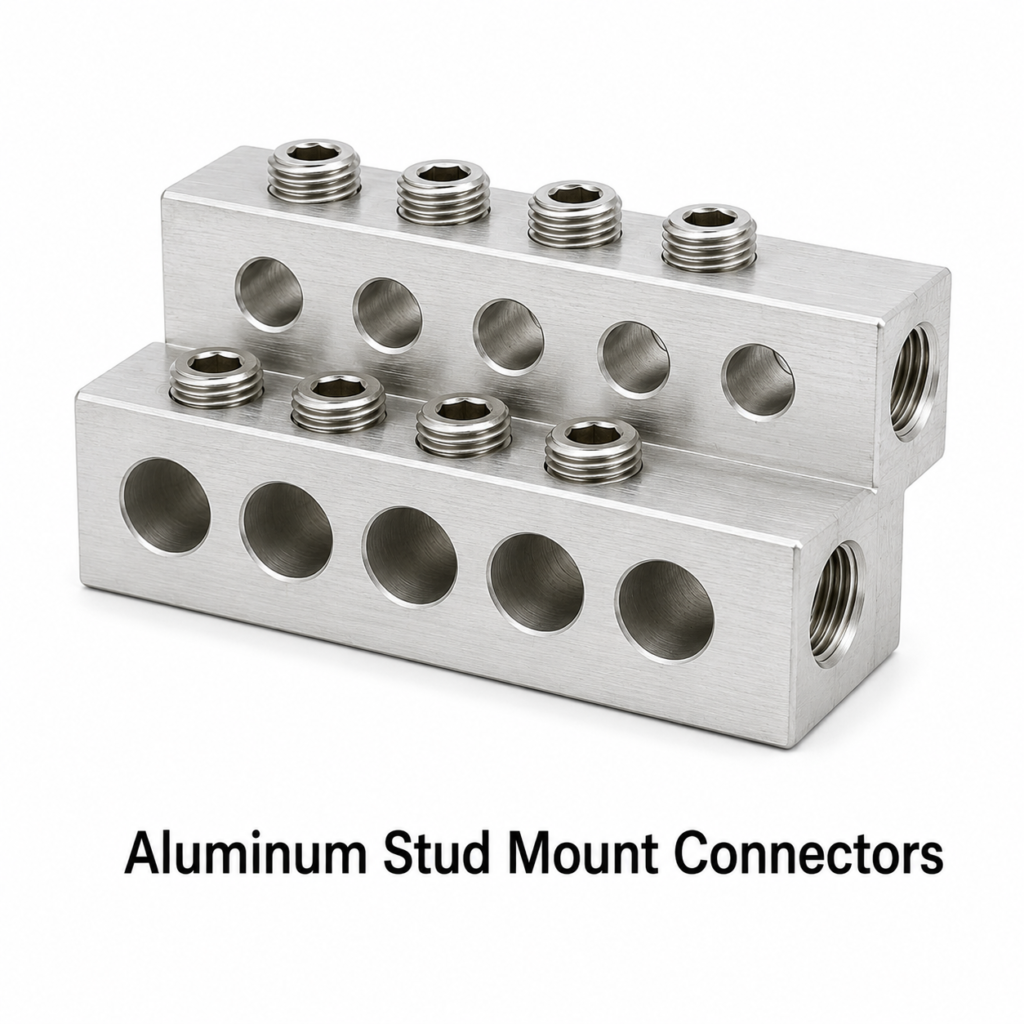
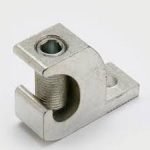
Aluminum Stud Mount Connectors are heavy-duty electrical connectors designed for bolted connection of aluminum or copper conductors to bus bars, equipment terminals, grounding points, and structural earthing systems. Electrical Accessories India manufactures these connectors from 6061-T6 and 1350 EC-grade aluminum in one-hole (single bolt) and two-hole (double bolt) configurations, covering conductor sizes from 35 mm² to 1,200 mm² and bolt patterns for M8 through M24 mounting studs. These connectors are used extensively in substations, switchgear panels, transformer earthing, motor terminal boxes, and power distribution systems. Price: US$ 8.80/Kilogram
Product Overview
What Are Stud Mount Connectors?
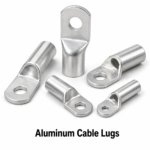
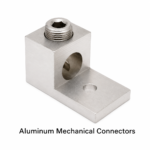
Stud mount connectors (also called stud type lugs, pad mount connectors, or bolted bus connectors) are compression or mechanical connectors that terminate a conductor on one end (barrel/socket) and mount to a stud, bolt, or bus bar flat surface via one or more holes on the opposite end (tongue/pad). Unlike compression lugs that require special crimping tools and die sets, stud mount connectors with mechanical clamping bolts (wedge, saddle, or clamp-type) can be installed and removed without specialized tooling. This makes them preferred for maintenance-intensive applications like earthing grids, protection relay panels, and metering installations where connections may need to be made or broken during planned outages. The aluminum stud mount connector’s low weight, corrosion resistance, and cost efficiency make it the preferred choice for large-format connections (>240 mm² conductor) in power infrastructure.
Design Configurations and Mounting Patterns
Aluminum stud mount connectors from Electrical Accessories India are manufactured in the following standard configurations: Single-hole (one bolt): tongue with one bolt hole, sized M8 to M24, for standard terminal posts and stud connections in switchgear and transformer terminal boards; Double-hole (two bolt): tongue with two bolt holes on a standard pitch (matching NEMA/IEC bus bar hole patterns) for bus bar pad connections in substations and LV switchboards; Offset tongue: the tongue centerline is offset from the barrel centerline for tight-space installation in congested panel wiring; Double barrel: two conductor barrels sharing a single mounting tongue, for connecting two conductors to the same terminal point; and Long-reach variants: extended tongue length for spanning wider bus bar widths or bridging physical gaps between mounting points.
Material and Conductivity Properties
Stud mount connectors are manufactured from EC-grade aluminum (AA 1350, ≥61% IACS) for maximum conductivity in high-current applications, and from 6061-T6 (40% IACS, 310 MPa tensile strength) for applications requiring higher mechanical strength. The choice depends on the current density at the connector and the mechanical load it must withstand during installation and service. For substation earthing connectors, 6061-T6 is typically preferred for its robustness in handling rough installation conditions (driving into ground rods, clamping to structural steel). For LV switchboard bus connections carrying 400–2,500A continuously, 1350 EC aluminum provides the minimum cross-section for the specified temperature rise limit, allowing more compact connector design. All material is traceable to IS 8130 (EC grade) or IS 64430 (6061) with mill test certificates.
Mechanical Design for Reliable Connections
The mechanical design of aluminum stud mount connectors must account for: creep relaxation (aluminum’s tendency to permanently deform under sustained compressive stress, especially at elevated temperatures), differential thermal expansion between aluminum connector and steel/copper mating surfaces, and the risk of oxide film regrowth at the contact interface reducing joint conductivity over time. Electrical Accessories India addresses these through: use of correctly heat-treated (T6 temper) 6061 alloy for the tongue to resist creep at transformer service temperatures, specifying Belleville (spring) washers in the bolt assembly to maintain contact force as material creeps, tin plating of contact surfaces to prevent aluminum oxide film formation, and contact inhibitor compound in the joint to displace moisture and oxygen. These design features ensure the connector meets IEC 61238-1 requirements for temperature rise and long-term joint stability.
Installation Methods and Tools
Aluminum stud mount connectors are installed using standard metric (or imperial for NEMA applications) hexagonal bolts, washers, and spring washers per the torque values specified for the bolt diameter and material combination. Recommended torque for M12 bolts in 6061-T6 connector tongues: 25–35 N·m (without Belleville washer); for M16 bolts: 40–55 N·m. Torque values are specified in the technical data sheet supplied with each connector to prevent both under-torque (leading to high contact resistance and overheating) and over-torque (leading to bolt failure or connector cracking). Compression barrel connectors (where a crimped barrel transitions to a stud mount pad) require hydraulic crimping tools with correct die sets matched to the conductor cross-section and connector barrel. Our technical data sheets include the die set reference (die code) for major crimping tool manufacturers (Burndy, Hubbell, Thomas and Betts, Cembre).
Galvanic Compatibility and Bimetal Considerations
Aluminum stud mount connectors are frequently installed adjacent to copper bus bars, copper cable conductors, and galvanized steel structures. Galvanic corrosion is a risk at all aluminum-to-copper and aluminum-to-steel interfaces, especially in outdoor, coastal, or high-humidity environments. Mitigation strategies include: tin plating of the aluminum contact surface (reduces galvanic potential between Al and Cu), use of bi-metal connectors (aluminum barrel + copper tongue for direct bolting to copper bus bars), application of contact inhibitor grease at the joint, use of aluminum or zinc-plated steel bolts and washers (rather than bare steel or copper hardware), and coating of exposed connector body with UV-stabilized insulating compound or heat-shrink sleeve. We supply all these options and advise on appropriate specification for each installation environment.
Substation and Switchgear Applications
In substation construction and switchgear assembly, aluminum stud mount connectors appear throughout the installation: at the transformer LV bushing output for connection of LV cables to the distribution board, on overhead line strain clamps for conductor-to-equipment connection, at bus bar riser connections in outdoor 11 kV/33 kV switchgear bays, on the earthing bar in LV MCC and MDB panels for earth cable termination, and at the equipment earth terminal on motors, generators, and power factor correction capacitor banks. EPC contractors source these connectors in large quantities for project-specific bill of materials, requiring consistent dimensional quality, accurate material certification, and competitive unit pricing for cost control on large substation projects.
Key Features
- Configurations: single-hole, double-hole, offset tongue, double barrel
- Conductor range: 35 mm² to 1,200 mm²
- Bolt hole: M8 to M24 (one-hole and two-hole patterns)
- Material: Al 1350 EC Grade (≥61% IACS) and Al 6061-T6
- Surface: Tin plated, plain + inhibitor, or silver plated
- Bi-metal Al/Cu available for Cu bus bar connections
- IEC 61238-1 and IEEE 837 compliant design
- Torque specifications and die code data sheets supplied
- ISO 9001:2015 certified manufacturing
- Export to substations and switchgear projects worldwide
NEMA vs. IEC Hole Patterns
Stud mount connector tongues are manufactured to both NEMA (National Electrical Manufacturers Association) and IEC hole patterns. NEMA two-hole patterns follow NEMA CC1 standard: hole centers at 0.75″ (19.05 mm) or 1.0″ (25.4 mm) spacing for different conductor sizes. IEC patterns follow IEC 61238-1 and are dimensioned in mm to match European and Asian switchgear bus bar standards. For Middle East, Africa, and South Asian projects (Bangladesh, Sri Lanka, Pakistan, Nepal), IEC patterns are standard. For North American projects and US-spec EPC work, NEMA patterns are required. We manufacture both patterns and can supply customer-specific patterns on request.
Compression vs. Mechanical Stud Mount Connectors
Stud mount connectors are offered in two conductor termination styles: compression (crimp) barrel type, where the conductor is inserted into a round barrel and crimped with a hydraulic crimping tool; and mechanical (bolt clamp) type, where a saddle plate or clamping bolt directly grips the conductor without crimping. Compression barrel connectors provide a gas-tight joint that prevents oxidation of the conductor strands at the joint, resulting in the lowest long-term contact resistance. Mechanical bolt clamp connectors are easier to install (no special tooling) and can be reused, making them preferred for earthing connections and maintenance-intensive locations. Both types are manufactured by Electrical Accessories India in aluminum alloys for the full range of conductor cross-sections.
Special Configurations for Railway and Traction
Railway traction power supply systems (25 kV AC, 1.5 kV DC, 3 kV DC) require heavy-duty aluminum stud mount connectors for overhead contact wire equipment, track earthing systems, return current rail connections, and traction substation bus bars. Special requirements for railway applications include: vibration resistance (EN 61373 or IEC 61373 random vibration testing), short-circuit current withstand (ANSI C119.4 or IEC 61238-1 4-cycle fault test), and corrosion resistance for outdoor exposure (salt spray per IEC 60068-2-11, 1,000 hours). Connector design may include captive bolts (to prevent bolt loss during maintenance) and double-stud locking patterns (to prevent inadvertent loosening). We manufacture to railway project specifications on request.
Large-Format Connectors for Power Plant Earthing
Power station and industrial plant earthing systems require large-format aluminum stud mount connectors for connecting copper conductor earthing cables (240 mm² to 1,200 mm²) to structural steel earthing bars, ground rod connections, and equipment frame bonding points. These large-format connectors are machined from 6061-T6 billet with tongue thicknesses of 12–25 mm, two-hole patterns on M16–M24 bolts, and conductor barrels matched to 300–1,200 mm² cable cross-sections. Heavy-wall extrusion connectors are alternately specified where the connector cross-section is too large for billet machining to be economical. Both manufacturing methods (machined and extruded) are available from Electrical Accessories India based on the dimensional and volume requirements.
Technical Specifications
| Parameter | Specification |
|---|---|
| Conductor Range | 35 mm² to 1,200 mm² |
| Bolt Hole Diameter | M8 to M24 (IEC and NEMA patterns) |
| Tongue Configurations | One-hole, Two-hole, Offset, Double barrel |
| Material | Al 1350 (EC Grade) or Al 6061-T6 or Bi-metal Al/Cu |
| Conductivity (1350) | ≥61% IACS |
| Tensile Strength (6061-T6) | 310 MPa |
| Contact Resistance | <0.1 mΩ (per IEC 61238-1) |
| Surface Finish | Tin Plated (5–15 µm), Plain + Inhibitor, Silver Plated |
| Temperature Rating | -40°C to +130°C continuous |
| Test Standard | IEC 61238-1, IEEE 837, ANSI C119.4 |
| Crimp Die Reference | Per manufacturer (Burndy, Cembre, T&B, Hubbell) |
| Price | US$ 8.80/Kilogram |
International Equivalent Material Standards
| Grade | Indian Standard | AA (USA) | EN (Europe) | JIS (Japan) |
|---|---|---|---|---|
| EC Grade | IS 8130 EC | AA 1350 | EN AW-1350 | JIS A1350 |
| Structural | IS 64430/HE-9 | AA 6061-T6 | EN AW-6061 | JIS A6061 |
| Cu Face (Bimetal) | IS 613 ETP | C11000 | CW003A | C1100 |
Product Types and Variants
| Type | Conductor Size | Bolt Holes | Application |
|---|---|---|---|
| Single-Hole Stud Mount | 35–630 mm² | 1 × M8–M20 | Switchgear terminal posts, transformer studs |
| Double-Hole Stud Mount | 70–1,200 mm² | 2 × M10–M24 | Substation bus bars, LV switchboard |
| Offset Tongue Connector | 35–400 mm² | 1 or 2 holes | Tight-space panel wiring |
| Double Barrel Connector | 2× 35–240 mm² | 2 holes | Dual conductor to single bus bar point |
| Mechanical Wedge Connector | 16–630 mm² | No crimp required | Earthing, temporary connections |
| Compression Barrel Stud Mount | 35–1,200 mm² | 1 or 2 holes | Power cable termination to bus |
| Bi-Metal Al/Cu Stud Mount | 50–630 mm² | 1 or 2 holes | Aluminum conductor to copper bus |
Applications in Industry
| Industry | Application |
|---|---|
| Power Utilities (Substations) | Bus bar connections, earthing systems, cable terminations |
| LV Switchgear (MDB, MCC) | Bus bar risers, main incomer connections, earth bars |
| Transformer OEMs | LV bushing output connectors, neutral earthing |
| EPC Contractors | Project-spec earthing and cable termination hardware |
| Motor Control Centers | Feeder cable terminations, earth bus connectors |
| Renewable Energy (Solar, Wind) | DC combiner box bus connections, earthing system |
| Railway Traction | Traction return earthing, track bonding connections |
| Industrial Plants | Equipment frame earthing, power cable termination |
Manufacturing Process
Aluminum stud mount connectors are manufactured from EC-grade or 6061-T6 aluminum bar stock, extruded profiles, or billet, depending on the design and volume. CNC machining (turning and milling) is used for the barrel bore, tongue drilling, and profile shaping. For standard product ranges in high volume, precision cold forging followed by CNC machining of the barrel bore reduces material waste and improves grain flow for higher mechanical properties. Tin plating is applied by electrodeposition in a controlled bath to ASTM B545 specifications. All connectors are dimensionally inspected (barrel ID, tongue OD, hole diameter, hole spacing), electrically tested (contact resistance spot-check), and packed with technical data sheets including torque values and crimp die references.
Quality Standards
| Standard | Scope |
|---|---|
| IEC 61238-1 | Compression and mechanical connectors for power cables |
| IEEE 837 | Permanent connections used in substation grounding |
| ANSI C119.4 | Electric connectors — connectors for use between aluminum overhead conductors |
| IS 8130 | Indian Standard conductors for insulated cables |
| ASTM B545 | Electrodeposited coatings of tin |
| ISO 9001:2015 | Quality Management System |
Why Choose Electrical Accessories India?
- Complete Connector Range — single hole to double barrel, 35 mm² to 1,200 mm², mechanical to compression
- EC Grade and Structural Grade — both available with full material certification
- IEC and NEMA Patterns — covering global project specifications
- Bi-Metal Capability — aluminum-to-copper transition connectors in production
- Price: US$ 8.80/Kilogram — cost-competitive for project BOM quantities
- Technical Data Sheets — torque values, crimp die codes, installation guides provided
- Global Supply Chain — export packaging and documentation for projects in 40+ countries
Frequently Asked Questions
Q1. What is the difference between a stud mount connector and a standard compression lug?
A standard compression lug has a barrel that crimps onto the conductor and a tongue with a hole for one stud. A stud mount connector is a broader category that includes single-hole, double-hole, and other tongue configurations. The barrel termination method (compression vs. mechanical) is separate from the tongue mounting configuration. Stud mount connectors may have compression or mechanical barrels combined with any tongue configuration.
Q2. Which is better for earthing systems — aluminum or copper connectors?
Both are used. For large earthing conductors (240–1,200 mm²), aluminum connectors offer significant weight and cost advantages over copper. However, copper conductors connecting to copper earthing bars are most reliably joined with copper connectors to avoid galvanic issues. In mixed aluminum/copper earthing systems, bi-metal Al/Cu connectors at the interface or tin-plated aluminum connectors with contact inhibitor grease are the correct specification.
Q3. How do I select the correct stud mount connector for my application?
Four key parameters determine connector selection: (1) Conductor cross-section (mm²) determines the barrel size; (2) Current rating determines the minimum cross-section area per IEC 61238-1 temperature-rise limits; (3) Bus bar bolt hole pattern (one-hole vs. two-hole, NEMA vs. IEC spacing, bolt diameter) determines the tongue configuration; (4) Environmental conditions (indoor, outdoor, coastal, marine) determine material and surface treatment selection.
Q4. What torque should I use when installing aluminum stud mount connectors?
Torque values depend on bolt diameter, thread form, and material combination. Typical values for standard M12 bolts in 6061-T6 tongue: 25–35 N·m; M16: 40–55 N·m; M20: 60–80 N·m. Our technical data sheets include specific torque values for each connector size and bolt combination. Always use a calibrated torque wrench. Belleville washers are recommended for aluminum connectors to compensate for creep relaxation over time.
Q5. Do you supply stud mount connectors pre-installed on cables?
We supply connectors as loose components. Cable assembly (connector crimped onto conductor) requires a licensed electrical contractor using calibrated hydraulic crimping tools with the correct die set. We provide die code references for all major crimping tool manufacturers (Burndy, Cembre, Thomas and Betts, Hubbell, Panduit) to ensure proper tool selection for our connectors.
Q6. Can you supply ATEX-rated stud mount connectors?
Aluminum connectors (non-sparking) are generally acceptable in Zone 2 (gas) hazardous areas per IEC 60079-0 Clause 8 requirements, provided the alloy meets the magnesium and titanium content limits and surface temperature limits. We can provide alloy composition data for ATEX compliance review by the equipment OEM or ATEX certification body.
Q7. What is the minimum order quantity?
For standard single-hole and double-hole configurations in common sizes: MOQ 200 pieces. For custom or non-standard configurations: MOQ 500 pieces. Sample quantities (5–20 pieces) available for qualification testing and project evaluation.
Q8. Do you offer stud mount connectors with pre-applied contact inhibitor?
Yes. Plain aluminum (non-tin-plated) connectors are available with contact inhibitor grease (petroleum-based with zinc oxide or other anti-oxidant additives, conforming to ASTM D4165 / NEMA standards) pre-applied and factory-sealed in individual poly bags. This ensures the inhibitor is properly applied and the contact surface is protected during transport and storage until installation.
Equivalent Terms in Other Languages
| Language | Term 1 | Term 2 | Term 3 |
|---|---|---|---|
| Spanish | Conectores de montaje en espárrago de aluminio | Conectores de perno aluminio | Conectores de barra de barras aluminio |
| Russian | Алюминиевые клеммы крепления на шпильке | Алюминиевые болтовые соединители | Контактные наконечники на шпильке алюминий |
| French | Connecteurs à montage sur goujon aluminium | Cosses à boulon aluminium | Connecteurs de barre bus aluminium |
| Portuguese | Conectores de montagem em pino de alumínio | Terminais de parafuso alumínio | Conectores de barra coletora alumínio |
| Italian | Connettori a montaggio su prigioniero alluminio | Connettori a bullone alluminio | Connettori barra bus in alluminio |
Related Aluminum Products
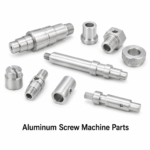
- Aluminum Screw Machine Parts
- Aluminum CNC Machined Components
- Aluminum Transformer Spade Terminals
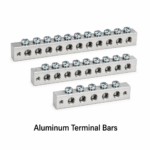
- Aluminum Terminal Bars
- Aluminum Transformer Lugs (Tubular)
- Aluminum Pipe Brackets (Pressed)
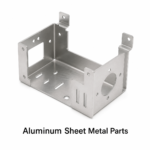
- Aluminum Sheet Metal Parts
Get a Quote — Aluminum Stud Mount Connectors
Specify conductor cross-section, bolt hole pattern (IEC/NEMA), single or double-hole, material grade, surface finish, and quantity. Email info@elecaccs.com — response within 24 hours.
Price: US$ 8.80/Kilogram | MOQ: 200 pcs | Gujarat, India | Global Export