

Product
Product Details
Brass Lock Nuts Nickel Plated for Conduit Fittings
Brass Lock Nuts Nickel Plated
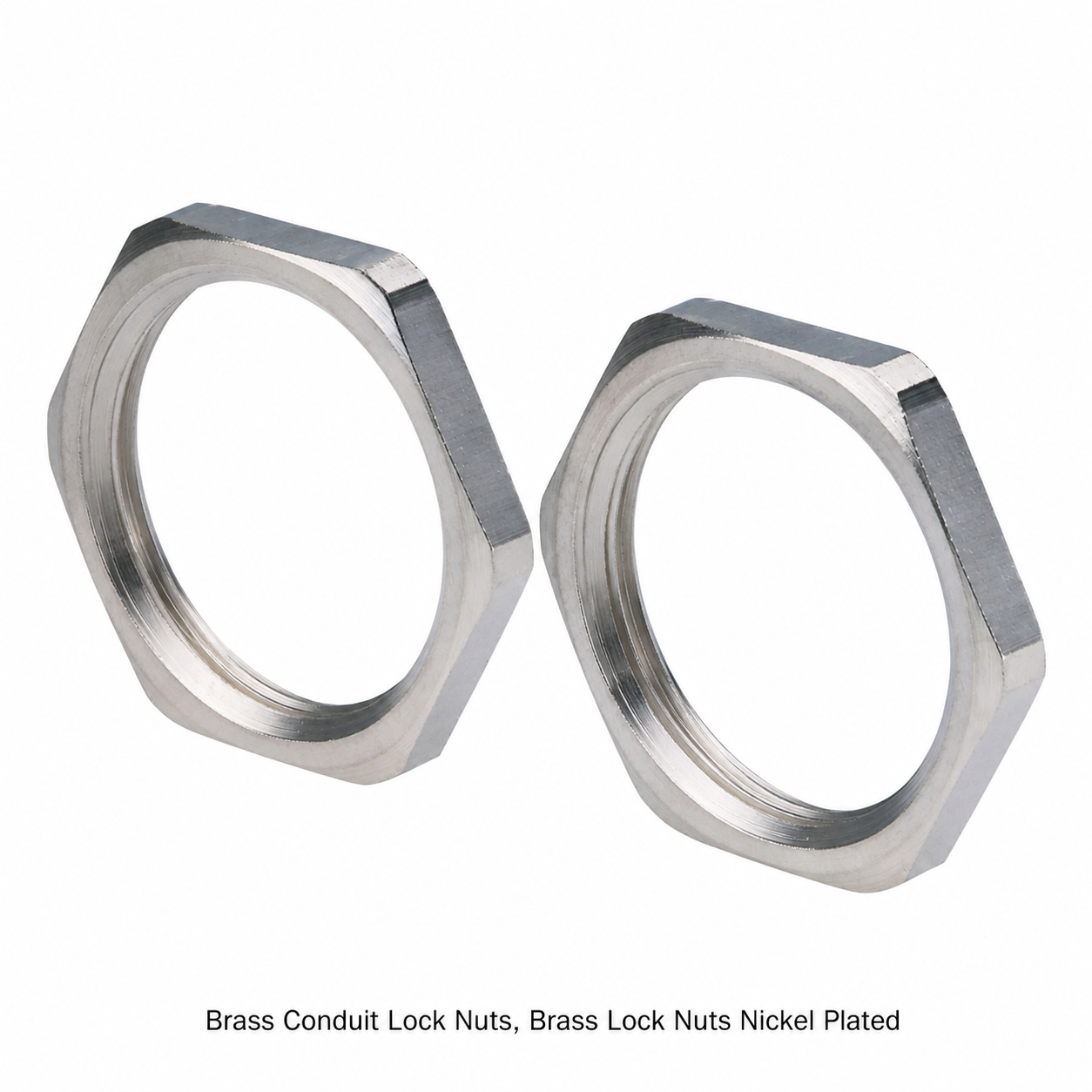
Brass Lock Nuts (also called conduit lock nuts, gland lock nuts, check nuts, jam nuts, securing nuts, or back nuts) are the essential fastening elements in every conduit cable entry assembly. Available in nickel-plated brass for superior corrosion resistance, these locknuts thread onto the male conduit entry thread protruding through the enclosure wall, clamping the cable gland, thread reducer, or conduit fitting securely in place. Electrical Accessories India manufactures conduit locknuts in standard metric sizes M16, M20, M32, M40, M50, M63, and M75 (all 1.5 mm pitch, ISO 965-1) and NPT sizes ½” through 2″ (ANSI/ASME B1.20.1), all with high-quality electroless or electrolytic nickel plating for enhanced corrosion resistance, aesthetic finish, and long service life. Supplied to electrical OEMs, EPC contractors, switchgear manufacturers, power utilities, and cable management distributors worldwide from Jamnagar, Gujarat, India.
Indicative Pricing
Brass Items (Nickel Plated): US$ 11.50 per kilogram, CIF US Port / Major Indian Port. Nickel plating adds a small premium; included in quoted price. Price varies by size, plating specification, and order quantity. Contact us with your RFQ for a firm quotation.
Product Overview
What Are Conduit Lock Nuts and Why Are They Critical?
A conduit locknut is a thin, flat, internally-threaded nut with an external spanner hexagonal profile or with knurled serrations. It is threaded onto the male thread of a cable gland, conduit fitting, or thread reducer that passes through the wall of an electrical enclosure. When tightened, the locknut clamps the fitting against the enclosure wall, preventing rotation, pull-out, and loosening under mechanical vibration, thermal cycling, and cable tension loads. Without a properly tightened locknut, cable glands and conduit fittings will work loose, compromising the IP rating of the enclosure, the electrical continuity of the conduit earth path, and the mechanical protection of the cable. In armoured cable gland assemblies, the locknut is the primary retention element that maintains the cable gland body in position and completes the IP-rated sealing assembly.
Why Nickel-Plated Brass Locknuts?
Plain brass locknuts are adequate for clean, dry, indoor environments. However, electrical installations in coastal areas, marine vessels, chemical plants, outdoor switchyards, offshore platforms, water treatment facilities, and humid industrial environments demand greater corrosion resistance. Nickel plating (electroless nickel / ENP or electrolytic bright nickel) applied over brass provides a hard, smooth, corrosion-resistant surface that resists oxidation, salt-spray attack, humidity, mild acids, and industrial chemicals significantly better than unplated brass. Nickel-plated locknuts are also preferred by panel builders and OEM manufacturers for aesthetic reasons—the bright, uniform silver finish gives a professional appearance to finished electrical panels and enclosures. The nickel layer also provides additional hardness (500–600 HV for ENP), improving resistance to abrasion and thread damage during installation.
Metric Locknuts – Sizes and Thread Specifications
Metric conduit locknuts are manufactured in all standard conduit entry sizes: M16×1.5, M20×1.5, M32×1.5, M40×1.5, M50×1.5, M63×1.5, and M75×1.5—all conforming to ISO 965-1 fine metric thread with 1.5 mm pitch. The internal bore thread tolerance is 6H (internal thread class), and the mating external thread (cable gland, adapter, or conduit) is 6g (external thread class). This tolerance pairing ensures a smooth running fit with appropriate thread clearance for easy hand-threading while providing sufficient engagement strength after tool-tightening. All locknuts are gauged with calibrated Go/No-Go thread gauges to ensure conformance to ISO thread standards.
NPT Locknuts – Sizes and Thread Specifications
NPT (National Pipe Thread Taper) locknuts are used with NPT-threaded cable glands, conduit fittings, and adapters in NEMA enclosures or when American-standard conduit systems are used. NPT locknut sizes available: ½” NPT, ¾” NPT, 1″ NPT, 1¼” NPT, 1½” NPT, and 2″ NPT, conforming to ANSI/ASME B1.20.1. Because NPT threads are tapered (not parallel), the NPT locknut has a complementary taper thread on its inside. When used in combination with an NPT thread reducer bush or cable gland, the locknut clamps against the enclosure wall as the taper thread engages. NPT locknuts are commonly required for oil and gas projects, NEMA-rated enclosure installations, and petrochemical plants using American NEC/CSA specifications.
Nickel Plating Process and Properties
Two types of nickel plating are available: (1) Electroless Nickel Plating (ENP): A chemical deposition process that produces a uniform nickel-phosphorus alloy coating of 5–15 µm (10 µm standard) on all surfaces including threads and recesses, with hardness of 500–600 HV (as-deposited) and excellent corrosion resistance (500+ hours neutral salt spray per ISO 9227 / ASTM B117). ENP is preferred for precision thread components where dimensional consistency is critical, as the uniform coating thickness does not distort thread tolerances. (2) Electrolytic Bright Nickel Plating: An electrodeposition process producing a bright, decorative nickel finish of 8–15 µm. Slightly less corrosion-resistant than ENP but offers superior aesthetic brightness. Both types conform to ISO 4527 (ENP) and ISO 1458 (electrolytic nickel) plating standards. Standard coating offered is ENP to maintain thread dimensional accuracy.
Design and Dimensional Features
Conduit locknuts are designed as thin, flat, circular nuts with an internal thread matching the conduit entry thread, and a peripheral hexagonal profile or a round knurled edge for tool engagement. For metric sizes M16 to M32, a hexagonal profile is standard for spanner tightening. For larger sizes (M40–M75), a round serrated face is common, tightened with a pin spanner or locknut wrench. The face of the locknut facing the enclosure wall has serrations or a serrated flange ring that bites into the enclosure surface and prevents back-rotation under vibration. Material thickness varies from 2.5 mm (M16) to 6 mm (M75) to provide adequate thread engagement and clamping strength. The OD of the locknut is designed to clear the enclosure knockout without overhanging adjacent entries.
Sealing and IP Rating
The locknut itself is a mechanical fastening element; it does not provide sealing. In an IP-rated cable entry assembly, sealing is provided by the cable gland’s sealing washer, O-ring, or elastomeric seal on the cable jacket, combined with a flat neoprene or EPDM washer between the cable gland shoulder and the enclosure face. The locknut, when tightened to the specified torque, compresses the sealing washer and maintains the IP rating of the assembly (IP54, IP65, IP66, or IP67). For threaded entries without cable glands (blank entries), a rubber-faced brass blanking plug with locknut achieves the same sealing effect. The combined assembly of cable gland + sealing washer + locknut conforms to IEC 62444 and BS EN 50262 for IP-rated cable entry systems.
Earthing and EMC Performance
In metallic conduit installations, the locknut provides electrical continuity between the conduit/cable gland body and the enclosure wall—completing the equipotential bonding circuit required by IEC 60364-5-54 and NEC Article 250. For EMC cable gland assemblies (used in variable speed drives, servo amplifiers, medical equipment, and data centres), the locknut must ensure a low-impedance metallic bond at the cable entry point to maintain high-frequency shielding effectiveness. Brass locknuts with contact serrations provide a low contact resistance joint critical for EMC bonding. For hazardous area (Ex) installations, the locknut engagement also helps maintain the flameproof or increased-safety integrity of the cable entry assembly.
Key Features
- Available in metric (M16, M20, M32, M40, M50, M63, M75) and NPT (½”–2″) thread sizes
- All metric threads: 1.5 mm pitch, ISO 965-1, tolerance 6H
- Material: Free-cutting brass IS 319 / CuZn39Pb3 / CW614N
- Finish: Electroless Nickel Plating (ENP) standard; electrolytic bright nickel optional
- ENP coating: 10 µm standard; 500+ hours salt spray resistance (ASTM B117)
- Hexagonal or serrated round face for tool engagement
- Serrated contact face for anti-rotation and electrical continuity
- Compatible with IEC 62444 / BS EN 50262 / IS 12943 cable gland assemblies
- RoHS 2011/65/EU and REACH SVHC compliant
- Suitable for IP65 / IP66 / IP67 conduit entry assemblies
Corrosion Protection for Harsh Environments
Electroless nickel plating (ENP) on brass locknuts provides outstanding performance in coastal, marine, petrochemical, chemical, food processing, pharmaceutical, and offshore environments. The nickel-phosphorus alloy coating resists chloride attack (salt spray), hydrogen sulphide (H₂S sour gas), ammonia, mild acids, and alkaline cleaning agents that would rapidly corrode unprotected or standard yellow-zinc plated components. For extremely aggressive environments (offshore platforms, desalination plants), double-layer ENP (20 µm) or a supplemental clear lacquer topcoat can be applied. DZR brass substrate with ENP provides maximum corrosion resistance for long-service installations.
Anti-Vibration and Anti-Rotation Design
Locknuts in industrial installations are subject to continuous mechanical vibration from motors, pumps, compressors, generators, and conveyor systems. The serrated face of the conduit locknut bites into the powder-coated, bare metal, or galvanised surface of the enclosure wall, creating a mechanically positive anti-rotation engagement. For critical installations (Ex-d flameproof enclosures, marine deck-mounted junction boxes), a secondary locknut threaded against the primary locknut (double-locknut assembly) or a thread-locking compound (Loctite 243) can be used to prevent any rotational loosening. The nickel plating does not compromise thread engagement or anti-vibration performance.
Compatibility with All Cable Gland Types
Brass nickel-plated locknuts are compatible with all cable gland types manufactured to metric or NPT thread standards: armoured cable glands (SWA/AWA type, A2 type), unarmoured cable glands (E1W type, W type), EMC cable glands (CW type), Ex-certified cable glands (IECEx/ATEX), polyamide cable glands (PG thread or metric), stainless steel cable glands (for food/pharma grade), and conduit fittings including rigid conduit male adaptors, flexible conduit fixed connectors, and thread reducer/adapter bushes. The locknut is a universal complement to all cable entry hardware conforming to the relevant metric or NPT thread standard.
OEM and Panel Builder Supply
Locknuts are typically supplied in bulk to panel builders, switchgear manufacturers, enclosure fabricators, and cable gland distributors as complementary items in cable gland kit packs. Electrical Accessories India offers locknuts in matched pairs with cable glands (one locknut + one gland), in bulk bags per size, in assortment kits (one bag per size, multiple sizes per kit), and in custom retail packaging for distribution. Standard inner pack quantities are 50–200 pieces per polybag; outer cartons of 500–2000 pieces per size are standard for export.
Dimensional Accuracy and Thread Quality
All locknuts are thread-gauged with Go/No-Go gauges calibrated to ISO 965-1 (metric) and ANSI B1.20.1 (NPT) at 100% inspection on robotic gauging stations for standard sizes, and at AQL 1.0 sampling for high-volume production. Dimensional inspection includes OD, bore ID, thickness, and flatness. The ENP coating is measured with XRF (X-ray fluorescence) coating thickness gauges to verify uniform 10 µm (±2 µm) coverage. Thread gauging after plating confirms that coating does not compromise thread fit or engagement. Certificate of Conformity and lot traceability are provided with each shipment.
Technical Specifications
| Parameter | Specification |
|---|---|
| Material | Free-Cutting Brass IS 319 / CuZn39Pb3 / CW614N |
| Plating Type (Standard) | Electroless Nickel Plating (ENP) per ISO 4527 |
| Plating Thickness | 10 µm ± 2 µm (ENP); 12–15 µm (electrolytic bright nickel) |
| Plating Hardness | 500–600 HV (ENP) |
| Salt Spray Resistance | 500+ hours (ASTM B117 / ISO 9227) |
| Thread Standard (Metric) | ISO 965-1, Pitch 1.5 mm, Tolerance 6H |
| Thread Standard (NPT) | ANSI/ASME B1.20.1 Tapered Pipe Thread |
| Metric Sizes | M16, M20, M32, M40, M50, M63, M75 |
| NPT Sizes | ½”, ¾”, 1″, 1¼”, 1½”, 2″ NPT |
| Operating Temperature | -40°C to +120°C |
| IP Rating (in assembly) | Contributes to IP65 / IP66 / IP67 cable entry assembly |
| RoHS Compliance | Yes – RoHS 2011/65/EU |
| Country of Origin | Jamnagar, Gujarat, India |
Metric Locknut Dimensional Reference
| Thread Size | Thread OD (mm) | Pitch (mm) | Approx. OD of Locknut (mm) | Thickness (mm) |
|---|---|---|---|---|
| M16×1.5 | 16.0 | 1.5 | ~22 | 2.5–3 |
| M20×1.5 | 20.0 | 1.5 | ~28 | 3 |
| M32×1.5 | 32.0 | 1.5 | ~42 | 4 |
| M40×1.5 | 40.0 | 1.5 | ~52 | 4.5 |
| M50×1.5 | 50.0 | 1.5 | ~62 | 5 |
| M63×1.5 | 63.0 | 1.5 | ~76 | 5.5 |
| M75×1.5 | 75.0 | 1.5 | ~90 | 6 |
International Material Equivalent Table
| Standard | Designation | Description |
|---|---|---|
| Indian IS 319 | IS 319 Type I | Free-cutting brass bar |
| European EN 12164 | CuZn39Pb3 / CW614N | Free-machining brass rod |
| British BS 2874 | CZ121 | Leaded brass rod |
| American ASTM B16 | UNS C36000 | Free-cutting brass |
| German DIN 17660 | CuZn39Pb3 | Brass machining rod |
| Japanese JIS H3250 | C3604 | Free-cutting brass rod |
| Plating Standard (ENP) | ISO 4527 | Electroless nickel-phosphorus |
Product Types and Variants
- Type A – Standard Hex Locknut (Metric, ENP): Hexagonal peripheral profile, nickel-plated brass, metric thread M16–M75, 1.5 mm pitch. For M16–M32 sizes standard. Most common type.
- Type B – Serrated Round Locknut (Metric, ENP): Round serrated peripheral face with serrations on contact face, nickel-plated brass. For M40–M75 sizes standard. Requires pin spanner for tightening.
- Type C – NPT Locknut (Nickel Plated): Internal NPT taper thread, nickel-plated brass, sizes ½” to 2″ NPT per ANSI B1.20.1.
- Type D – Bright Nickel Electrolytic Locknut: Electrolytic bright nickel plating for decorative panel applications. Metric and NPT available.
- Type E – DZR Brass Locknut (Nickel Plated): DZR brass substrate (CW602N) with ENP for maximum corrosion resistance in marine, chemical, and offshore environments.
- Type F – Stainless Steel Locknut: SS 316L locknut for pharmaceutical, food processing, and extreme chemical environments.
Applications in Industry
- Electrical Panels and Switchgear: Locknut in every cable gland assembly on LV/MV switchgear, MCCs, control panels, and distribution boards
- Oil and Gas / Petrochemical: NPT and metric locknuts in Ex-d flameproof and Ex-e increased-safety junction boxes, field instrument enclosures, zone 1 and zone 2 hazardous areas
- Marine and Offshore: Nickel-plated locknuts for ship deck junction boxes, offshore platform panels, marine HVAC panels, engine room enclosures subject to salt-spray and humidity
- Water Treatment and Utilities: Corrosion-resistant locknuts for pump control panels, valve actuator junction boxes, outdoor IP66 switchgear in humid or chemical-dosed environments
- Renewable Energy: Solar inverter and combiner box cable entries, wind turbine nacelle junction boxes, EV charging station cable management
- Railways and Defence: Railcar and locomotive wiring junction boxes, military vehicle panels, naval switchboards requiring corrosion-resistant cable entry hardware
- Building Services / Data Centres: EMC cable entry assemblies in UPS panels, server room panels, BMS control cabinets requiring low contact resistance bonding
Manufacturing Process
Brass nickel-plated conduit locknuts are manufactured by CNC automatic turning or press/stamping from brass bar stock (IS 319 / CW614N). Production sequence: (1) bar feeding to CNC turning machine, (2) external profile turning (hexagonal or round) and facing, (3) internal bore drilling and tapping (metric or NPT), (4) serration forming on contact face (CNC or form tool), (5) parting and deburring, (6) ultrasonic cleaning and pickling (preparation for plating), (7) barrel plating or rack plating with electroless nickel per ISO 4527 (barrel for small sizes, rack for M50+ sizes to avoid thread damage), (8) post-plate baking (200°C, 1 hour) to achieve full ENP hardness, (9) 100% thread gauging with Go/No-Go gauges, (10) coating thickness measurement by XRF gauge, (11) dimensional inspection, (12) lot marking and bulk packaging. Daily production capacity exceeds 100,000 pieces for M20 locknuts. Custom sizes, special plating thicknesses, and DZR substrate available with 2–4 week lead time.
Quality Standards and Certifications
- ISO 9001:2015 Quality Management System
- Plating per ISO 4527 (Electroless Nickel); ISO 1458 (Electrolytic Nickel)
- Thread gauging: ISO 965-1 Go/No-Go (metric); ANSI B1.20.1 (NPT)
- Salt spray testing per ASTM B117 / ISO 9227 (500 hours for standard ENP)
- RoHS 2011/65/EU compliance; REACH SVHC declarations available
- Coating thickness by XRF per ISO 3497
- Cable gland compatibility: IEC 62444 / BS EN 50262 / IS 12943
- ATEX/IECEx component specifications available for hazardous area assembly
- Factory approvals: Lloyd’s Register, DNV GL, Bureau Veritas for marine projects
Why Choose Electrical Accessories India
- Full Size Range in Stock: Metric (M16–M75) and NPT (½”–2″) nickel-plated locknuts available ex-stock or in short lead times.
- Premium ENP Plating Quality: ISO 4527 compliant ENP plating with XRF-verified thickness—not the thin, low-quality plating common in commodity supplies.
- Matched with Cable Glands: Locknuts supplied as matched accessories with all our cable gland and conduit fitting product ranges.
- Jamnagar Manufacturing Advantage: Direct manufacturer pricing with no intermediary margins. Price: US$ 11.50/kg for brass nickel-plated locknuts.
- Export Expertise: Regular exports to Middle East, Europe, Southeast Asia, and Africa with full documentation (MTR, COC, MSDS, COO).
- Custom Packaging: Bulk bags, blister packs, assortment kits, and OEM private-label packaging available.
Frequently Asked Questions (FAQ)
Q1: What is a conduit locknut and where is it used?
A conduit locknut is a flat, internally-threaded nut that threads onto the cable gland, conduit fitting, or thread reducer body protruding through an enclosure wall. When tightened, it clamps the fitting in place, maintains IP rating, and ensures electrical continuity of the earth path. Used in all electrical panel, switchgear, and industrial wiring enclosure cable entry applications.
Q2: Why use nickel-plated brass locknuts instead of plain brass?
Nickel plating provides significantly better corrosion resistance (500+ hours salt spray), improved hardness (500–600 HV), resistance to oxidation and tarnishing, and a cleaner aesthetic finish. Nickel-plated locknuts are preferred for coastal, marine, chemical, outdoor, and food-grade applications, as well as for premium panel-building specifications.
Q3: What sizes are available for metric conduit locknuts?
Standard metric sizes: M16×1.5, M20×1.5, M32×1.5, M40×1.5, M50×1.5, M63×1.5, and M75×1.5—all with 1.5 mm pitch per ISO 965-1. M25×1.5 and M63×1.5 also available on request.
Q4: What is the price for brass nickel-plated conduit locknuts?
Price: US$ 11.50 per kilogram, CIF US Port or Major Indian Port for brass nickel-plated locknuts. Quantity pricing is available for orders above 500 kg/month. Stainless steel locknuts are available at US$ 9.90/kg. Contact us for a firm quotation.
Q5: Are NPT-threaded nickel-plated locknuts available?
Yes. NPT locknuts (½” NPT through 2″ NPT) are available in nickel-plated brass, conforming to ANSI/ASME B1.20.1. These are used with NPT-threaded cable glands and conduit fittings in NEMA enclosures and American-standard electrical installations.
Q6: What is the IP rating of an assembly using a brass locknut?
The locknut itself contributes to IP65/IP66/IP67 ratings when combined with an appropriately sealed cable gland and sealing washer. The locknut provides the clamping force that compresses the sealing washer; it does not seal itself. The IP rating of the complete assembly depends on the cable gland specification and correct installation torque.
Q7: Are these locknuts suitable for ATEX/IECEx hazardous area installations?
Yes. Nickel-plated brass locknuts are compatible with ATEX (Directive 2014/34/EU) and IECEx certified cable gland assemblies for zone 1, zone 2, zone 21, and zone 22 hazardous areas. Material certificates and dimensional compliance documentation are provided on request.
Q8: What is the ENP plating standard used for these locknuts?
Electroless Nickel Plating (ENP) conforms to ISO 4527 (Autocatalytic nickel coatings). Standard coating thickness is 10 µm ± 2 µm with nickel-phosphorus alloy content of 8–12% phosphorus for optimal corrosion resistance and hardness. Coating thickness is verified by XRF (X-ray fluorescence) measurement.
Q9: Can I order locknuts matched with cable glands as a kit?
Yes. We supply cable gland + locknut + sealing washer kits in any combination of sizes. For OEM panel builders, we offer kitted cable entry sets (gland + locknut + washer) in matched polybags per size, ready for assembly line use.
Q10: What is the minimum order quantity and lead time?
Sample orders: 100–200 pieces per size. Commercial MOQ: 1000–5000 pieces per size for standard metric and NPT nickel-plated locknuts. Standard sizes are typically ex-stock or available within 1–2 weeks. Custom plating specifications or DZR brass substrate: 3–4 weeks.
Equivalent Terms in European Languages
| Language | Equivalent Terms |
|---|---|
| Spanish | Tuerca de bloqueo para conduit niquelada; Contratuerca para prensaestopas; Tuerca de seguridad de latón niquelado; Tuerca trasera para conducto eléctrico |
| Russian | Контргайка для кабельного ввода никелированная; Накидная гайка для сальника; Стопорная гайка для кондуита; Контргайка латунная никелированная |
| French | Contre-écrou pour presse-étoupe nickelé; Écrou de blocage pour conduit électrique; Écrou de fixation laiton nickelé; Contre-écrou de presse-câble |
| Portuguese | Contra-porca niquelada para prensa-cabo; Porca de trava para eletroduto; Contra-porca de latão niquelado; Porca traseira para passagem de cabo |
| Italian | Controdado nichelato per pressacavi; Dado di blocco per conduit elettrico; Controdado in ottone nichelato; Dado di fissaggio per passacavi |
Related / Linked Parts and Terms
- Brass Conduit Thread Reducer Bushes
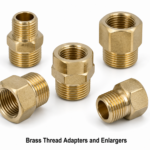
- Brass Thread Adapters and Enlargers
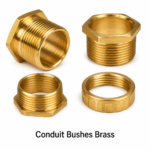
- Brass Conduit Bushes (Standard Entry)
- Conduit Fittings – Full Range
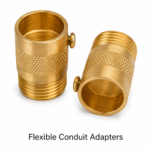
- Flexible Conduit Adapters
- Flexible Conduit Fixed Connectors
- Cable Glands (A2 type, E1W type, BW type, CW EMC type) per BS EN 50262
- Brass Sealing Washers and Neoprene / EPDM Washers for Cable Glands
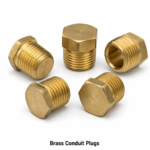
- Conduit Blanking Plugs (Brass and Nylon)
- Metal Conduit Couplers and Union Adaptors
- Brass Gland Plates and Sub-Plates
- NPT × Metric Thread Adapter Bushes
Comprehensive Thread Comparison Chart for Conduit Fittings
The following reference chart compares all major thread standards used in conduit fittings, cable glands, and electrical enclosure entries supplied by Electrical Accessories India. Use this chart to identify equivalent sizes across Metric (ISO 965-1), NPT (ANSI/ASME B1.20.1), PG (DIN 40430), and BSP (BS 2779/ISO 228) thread systems.
Chart 1 – Metric ISO Conduit Threads (ISO 965-1, 1.5 mm Pitch) with Locknut Torque Data
| Thread | OD (mm) | Pitch (mm) | Form | Tolerance | Max Cable OD | Conduit OD (mm) | Locknut Torque (Nm) | Spanner A/F (mm) |
|---|---|---|---|---|---|---|---|---|
| M16x1.5 | 16.0 | 1.5 | ISO Metric Fine | 6H/6g | 7-10 mm | 16 | 5-8 | 22 |
| M20x1.5 | 20.0 | 1.5 | ISO Metric Fine | 6H/6g | 10-14 mm | 20 | 8-12 | 27 |
| M25x1.5 | 25.0 | 1.5 | ISO Metric Fine | 6H/6g | 14-18 mm | 25 | 12-18 | 32 |
| M32x1.5 | 32.0 | 1.5 | ISO Metric Fine | 6H/6g | 18-25 mm | 32 | 18-25 | 41 |
| M40x1.5 | 40.0 | 1.5 | ISO Metric Fine | 6H/6g | 25-32 mm | 40 | 25-35 | 50 |
| M50x1.5 | 50.0 | 1.5 | ISO Metric Fine | 6H/6g | 32-42 mm | 50 | 35-50 | 60 |
| M63x1.5 | 63.0 | 1.5 | ISO Metric Fine | 6H/6g | 42-55 mm | 63 | 50-70 | 75 |
| M75x1.5 | 75.0 | 1.5 | ISO Metric Fine | 6H/6g | 55-67 mm | 75 | 65-90 | 90 |
Chart 2 – NPT Threads (ANSI/ASME B1.20.1) for Conduit Locknuts
| NPT Size | OD at Entry (mm) | TPI | Pitch (mm) | Taper | Nearest Metric | Locknut Torque (Nm) | Spanner A/F (mm) | Application |
|---|---|---|---|---|---|---|---|---|
| 1/2 inch NPT | 21.3 | 14 | 1.814 | 1:16 | M16/M20 | 8-12 | 27 | NEMA instrument panels |
| 3/4 inch NPT | 26.7 | 14 | 1.814 | 1:16 | M20/M25 | 10-18 | 32 | Control panels, NEMA 4X |
| 1 inch NPT | 33.4 | 11.5 | 2.209 | 1:16 | M32/M40 | 18-28 | 41 | Motor terminal boxes, MCC |
| 1-1/4 inch NPT | 42.2 | 11.5 | 2.209 | 1:16 | M40/M50 | 25-38 | 50 | Power cables, armoured glands |
| 1-1/2 inch NPT | 48.3 | 11.5 | 2.209 | 1:16 | M50 | 30-45 | 55 | Large feeder cables, oil and gas |
| 2 inch NPT | 60.3 | 11.5 | 2.209 | 1:16 | M63 | 45-65 | 70 | Heavy power cables |
| 2-1/2 inch NPT | 73.0 | 8 | 3.175 | 1:16 | M75 | 60-80 | 85 | Extra-large substation entries |
Chart 3 – NPT x Metric Adapter Cross-Reference
| Male/External | OD (mm) | Female/Internal | OD (mm) | Fitting Type | EAI Stock | Application |
|---|---|---|---|---|---|---|
| 1/2 inch NPT | 21.3 | M16x1.5 / M20x1.5 | 16/20 | NPT x Metric Bush | Yes | NEMA to metric gland |
| 3/4 inch NPT | 26.7 | M20x1.5 / M25x1.5 | 20/25 | NPT x Metric Bush | Yes | Control panel NEMA to IEC |
| 1 inch NPT | 33.4 | M32x1.5 / M40x1.5 | 32/40 | NPT x Metric Bush | Yes | Petrochemical Ex-d boxes |
| 1-1/4 inch NPT | 42.2 | M40x1.5 / M50x1.5 | 40/50 | NPT x Metric Bush | Yes | Oil and gas offshore panels |
| 2 inch NPT | 60.3 | M63x1.5 | 63 | NPT x Metric Bush | Yes | Large cable entries |
| M20x1.5 | 20.0 | 1/2 inch NPT | 21.3 | Metric x NPT Bush | Yes | Metric enclosure to NPT gland |
| M32x1.5 | 32.0 | 3/4 inch NPT | 26.7 | Metric x NPT Bush | Yes | European panel to US gland |
Chart 4 – PG Thread Sizes (DIN 40430) vs Metric Equivalents
| PG Size | PG OD (mm) | PG Pitch (mm) | Nearest Metric | Metric OD (mm) | Max Cable OD | Notes |
|---|---|---|---|---|---|---|
| PG7 | 12.5 | 1.27 | M12x1.5 | 12.0 | 3-6.5 mm | Small sensor/signal cables |
| PG9 | 15.2 | 1.41 | M16x1.5 | 16.0 | 4-8 mm | Signal and control cables |
| PG11 | 18.6 | 1.41 | M20x1.5 | 20.0 | 5-10 mm | Most common small entry |
| PG13.5 | 20.4 | 1.41 | M20x1.5 | 20.0 | 6-12 mm | Control and instrument |
| PG16 | 22.5 | 1.41 | M25x1.5 | 25.0 | 10-14 mm | Mid-size control cables |
| PG21 | 28.3 | 1.41 | M25/M32x1.5 | 25/32 | 13-18 mm | Standard power entry |
| PG29 | 37.0 | 1.41 | M32/M40x1.5 | 32/40 | 18-25 mm | Armoured cables |
| PG36 | 47.0 | 1.41 | M40/M50x1.5 | 40/50 | 22-32 mm | Large power cables |
| PG48 | 59.3 | 1.41 | M63x1.5 | 63.0 | 34-44 mm | Extra-large entries |
Chart 5 – BSP Threads vs Metric Equivalents
| BSP Size | OD (mm) | TPI | Pitch (mm) | Form | Nearest Metric | Nearest NPT | Application |
|---|---|---|---|---|---|---|---|
| 1/4 inch BSP | 13.16 | 19 | 1.337 | 55 deg Whitworth | M14x1.5 | 1/4 inch NPT | Instrument cables |
| 3/8 inch BSP | 16.66 | 19 | 1.337 | 55 deg Whitworth | M16x1.5 | 3/8 inch NPT | Small control cables |
| 1/2 inch BSP | 20.96 | 14 | 1.814 | 55 deg Whitworth | M20x1.5 | 1/2 inch NPT | Control panels, British std |
| 3/4 inch BSP | 26.44 | 14 | 1.814 | 55 deg Whitworth | M25x1.5 | 3/4 inch NPT | Mid-size cable entries |
| 1 inch BSP | 33.25 | 11 | 2.309 | 55 deg Whitworth | M32x1.5 | 1 inch NPT | Power cables, BS enclosures |
| 1-1/2 inch BSP | 47.80 | 11 | 2.309 | 55 deg Whitworth | M50x1.5 | 1-1/2 inch NPT | Large power cables |
| 2 inch BSP | 59.61 | 11 | 2.309 | 55 deg Whitworth | M63x1.5 | 2 inch NPT | Extra-large entries |
Chart 6 – Global Thread Standard Comparison
| Standard | Reference | Angle | Form | Taper/Parallel | Primary Markets | Conduit/Locknut Use |
|---|---|---|---|---|---|---|
| Metric ISO Fine | ISO 965-1 | 60 deg | V-thread | Parallel | Europe, Asia, India, ME, Africa | Cable glands, reducer bushes, locknuts M16-M75 |
| NPT | ANSI/ASME B1.20.1 | 60 deg | V-thread | Taper 1:16 | USA, Canada, Saudi Arabia | NEMA enclosures 1/2 to 2 inch |
| PG | DIN 40430 | 80 deg | Round Rd | Parallel | Germany, legacy European | Old switchgear PG7-PG48 |
| BSPP | BS 2779 / ISO 228 | 55 deg | Whitworth | Parallel | UK, Commonwealth, Australia | British enclosures, BS cable glands |
| BSPT | BS 21 / ISO 7-1 | 55 deg | Whitworth | Taper 1:16 | UK, Commonwealth | Legacy BS panels, hydraulic rated |
| UNF | ANSI/ASME B1.1 | 60 deg | V-thread | Parallel | USA, Canada (defence/aero) | Defence panels, specialist locknuts |
Note: All dimensions are nominal. Verify thread fit with calibrated Go/No-Go gauges (ISO 965-1 for metric; ANSI B1.20.1 for NPT) before installation. Contact Electrical Accessories India for nickel-plated locknut recommendations by thread type. All brass nickel-plated locknuts: US$ 11.50 per kilogram, CIF US Port.
Call to Action
Request a Quote for Brass Lock Nuts Nickel Plated for Conduit Fittings
Electrical Accessories India – Manufacturer and Exporter, Jamnagar, Gujarat, India.
We supply nickel-plated brass conduit locknuts in all metric sizes (M16–M75, 1.5 mm pitch) and NPT sizes (½”–2″) to electrical OEMs, cable gland manufacturers, EPC contractors, panel builders, and distributors worldwide.
Contact us with your size, plating specification, quantity, and destination port for a competitive CIF quotation. Price: US$ 11.50/kg.
Email: info@elecaccs.com | Website: www.elecaccs.com