

Product
Product Details
Brass Test Pins & Probe Pins
Brass Test Pins and Probe Pins
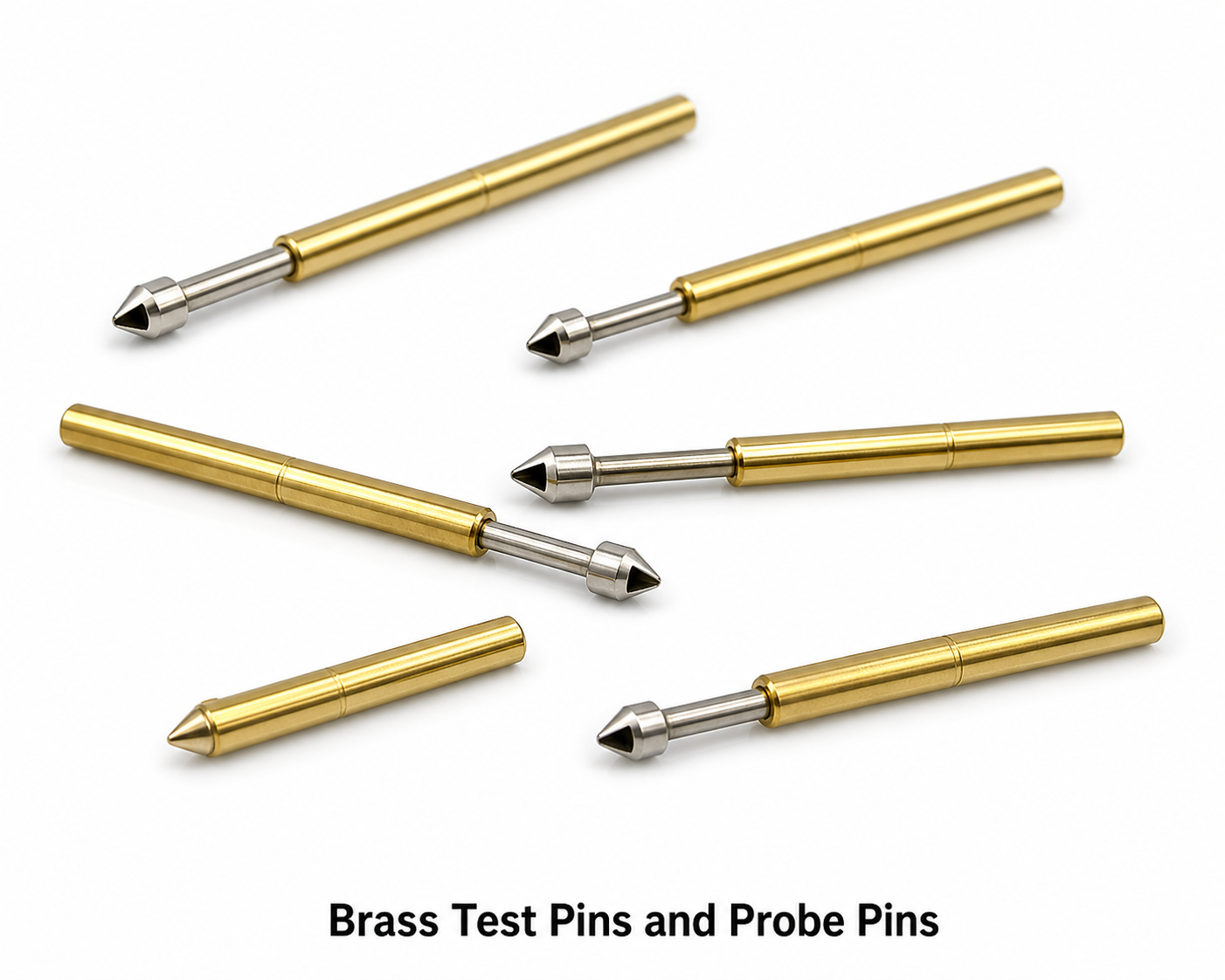
Brass test pins and probe pins are precision-machined contact components used in printed circuit board (PCB) testing, in-circuit testing (ICT) fixtures, flying probe testers, boundary scan testers, functional test fixtures, and laboratory measurement instruments. Manufactured from free-cutting brass (CW614N), beryllium copper (C17200), and phosphor bronze (C51100), these pins deliver reliable electrical contact at test points, vias, pads, and SMD components. Electrical Accessories India manufactures and exports brass probe pins and test pins to PCB manufacturers, electronics OEMs, EMS companies, and test equipment manufacturers. Price: US$ 11.50/kg
Product Overview
Design and Function
Brass test pins are slender, precision-turned cylindrical contacts that make temporary or semi-permanent electrical contact with PCB test points, component leads, connector pins, and IC pads during testing and measurement. Pin geometry is designed for low insertion force, reliable contact, and zero damage to PCB surface finishes including HASL, ENIG (electroless nickel immersion gold), OSP, ENEPIG, and immersion tin. Pin tip profiles are engineered for specific PCB surface types and pitch requirements from 0.5 mm to 2.54 mm grid spacing.
Test Pin Tip Geometries
Crown-tip test pins provide multiple contact points on through-hole and via test points, ensuring electrical contact even on oxidized or contaminated surfaces. Spear-tip probe pins penetrate surface oxide layers for reliable contact on bare copper pads. Flat-tip pins are used for large solder pads and component leads. Radius-tip pins work on crowned solder joints and ball grid array (BGA) test points. Cup-tip and pointed-tip probe pins are used in flying probe testers and guided-probe diagnostic systems. All tip geometries are precision-ground with tolerances of ±0.005 mm.
Materials for Test Probe Pins
Standard brass test pins use CW614N free-cutting brass offering machinability above 85% and electrical conductivity of 26–28% IACS. For spring-probe applications requiring combined conductivity and spring force, beryllium copper C17200 (BeCu, 40–65% IACS) and phosphor bronze C51100 are used. For high-frequency RF probe applications, oxygen-free copper C10100 pins with silver or gold plating provide minimum signal distortion. Material choice depends on contact resistance target, spring force requirement, frequency range, and probe duty cycle.
Plating Options for Test Pins
Surface plating directly affects contact resistance, wear life, and insertion cycles of test probe pins. Gold plating (0.1–2 µm over nickel undercoat) provides minimum contact resistance (<10 mΩ) and maximum insertion cycle life (>500,000 cycles). Hard gold plating (0.5–1.5 µm, HV 130–200) is standard for ICT fixture pins. Palladium-nickel (PdNi) plating offers comparable performance to gold at lower cost. Nickel plating (5–10 µm) is used for general-purpose test pins with medium contact resistance requirements. Tin and silver platings are available for specific application requirements.
Application in ICT and Flying Probe Testing
In-circuit testing (ICT) fixtures use brass test pins mounted on a bed-of-nails fixture plate to simultaneously contact hundreds of test points on PCBs during production testing. ICT probe pins must withstand 100,000–1,000,000 contact cycles without significant contact resistance increase. Flying probe testers use motorized probe arms with replaceable brass probe pins for flexible non-fixture testing of prototype and low-volume PCBs. Probe pin diameter and tip selection is guided by IPC-9252 guidelines for PCB testing and IEC 61188-5-1 for test point design.
Dimensional and Pitch Specifications
Brass test pins are manufactured in body diameters from 0.68 mm (miniature pitch 0.5 mm grid) to 5 mm (high-current test applications). Standard pitches include 1.27 mm, 2.00 mm, and 2.54 mm grid spacing for leaded PCB test points. Fine-pitch test pins at 0.5 mm and 0.8 mm pitch serve SMD component testing and fine-pitch BGA applications. Custom pitch and length configurations are manufactured per customer test fixture drawings.
Related Test and Connector Components
Brass test pins are used in conjunction with Brass Spring Contact Pins (Pogo Pins) for spring-loaded contact fixtures, Brass Header Pins for fixture interface connections, Brass Plug Pins for connector interface, and Brass PCB Connectors for board-level interconnections. Related components include ICT fixture plates, probe receptacles, probe cards, and test socket contacts.
Key Features
- Precision CNC turned to ±0.005 mm tip geometry tolerances
- Multiple tip profiles: crown, spear, flat, radius, cup, pointed
- Materials: brass CW614N, BeCu C17200, phosphor bronze, OFC C10100
- Gold, PdNi, nickel, tin, silver plating options
- Contact resistance <10 mΩ (gold plated)
- 500,000+ insertion cycle life (gold plated, ICT grade)
- Pitch range: 0.5 mm to 2.54 mm grid spacing
- Custom tip geometry and body profile per test fixture drawing
Electrical Performance
Gold-plated brass test pins achieve contact resistance below 10 mΩ per IEC 60512-2-1 test method. Contact resistance stability over 500,000 insertion cycles is <25% increase from initial value. Current-carrying capacity up to 3A continuous for 1.27 mm pitch pins; up to 10A for 2.54 mm pitch pins.
Mechanical Life and Durability
ICT fixture test pins are rated for 100,000 to 1,000,000 insertion cycles depending on plating, tip geometry, and spring force. Flying probe pins are rated for 500 to 10,000 duty cycles per pin depending on tip condition. Pin straightness is held to within 0.01 mm TIR (total indicator reading) to ensure vertical contact perpendicular to PCB surface.
High-Frequency RF Test Probes
RF test probe pins for frequencies above 1 GHz require coaxial construction or low-inductance pin geometry to minimize signal reflection and insertion loss. Characteristic impedance-matched probe pins (50 Ω) are available for RF/microwave PCB testing per IEC 61076-4-113. Silver-plated OFC probe pins minimize skin-effect losses at high frequencies.
Test Fixture Compatibility
Standard test pins are compatible with Everett Charles, Ingun, Feinmetall, PTR, and Coda Systems test fixtures. Custom configurations match competitor probe receptacle dimensions for direct replacement. Fixture plate drilling patterns per customer CAD data or IPC-D-356 netlist format.
Packaging for Test Pins
Test probe pins are packed in precision trays, tube packaging, or reel format depending on quantity and handling requirements. Electrostatic discharge (ESD) compliant packaging per ANSI/ESD S20.20 available for sensitive plating types. Bulk packing in anti-tarnish poly bags for non-ESD applications.
Technical Specifications
| Parameter | Specification |
|---|---|
| Body Diameter | 0.68 mm – 5.0 mm |
| Body Length | 5 mm – 50 mm |
| Pitch / Grid | 0.5 mm, 0.8 mm, 1.0 mm, 1.27 mm, 2.00 mm, 2.54 mm |
| Tip Geometries | Crown, Spear, Flat, Radius, Cup, Pointed |
| Material | Brass CW614N / BeCu C17200 / PhBr C51100 / OFC C10100 |
| Plating | Gold 0.1–2 µm / Hard Gold / PdNi / Nickel / Tin / Silver |
| Contact Resistance | <10 mΩ (Au) / <20 mΩ (Ni) per IEC 60512-2-1 |
| Insertion Cycles | 100,000–1,000,000 (Au plated ICT grade) |
| Current Capacity | 1A–10A depending on size |
| Operating Temp. | -55°C to +150°C |
| Price | US$ 11.50/kg |
Raw Material Grades
| Material | EN Grade | ASTM Grade | Conductivity % IACS | Application |
|---|---|---|---|---|
| Free-Cutting Brass | CW614N | C36000 | 26–28 | Standard test pins |
| Beryllium Copper | CW101C | C17200 | 40–65 | Spring probe pins |
| Phosphor Bronze | CW451K | C51100 | 15–20 | Spring contact pins |
| OFC Copper | CW009A | C10100 | 101 | RF probe pins |
Product Types and Variants
| Type | Description | Application |
|---|---|---|
| ICT Fixture Pin | Press-fit in fixture plate, crown or spear tip | PCB in-circuit testing production lines |
| Flying Probe Pin | Replaceable tip, fine-pitch | Flying probe automated PCB test systems |
| Bed-of-Nails Pin | Long-body, spring-loaded or rigid | High-density ICT fixture matrices |
| RF Probe Pin | Coaxial or low-inductance, Au/Ag plated | RF and microwave PCB testing |
| High-Current Test Pin | Large diameter 3–5 mm, heavy Au plated | Power electronics PCB testing |
| Custom Profile Pin | Per customer fixture drawing | OEM test fixture manufacturers |
Applications by Industry
| Industry | Application |
|---|---|
| PCB Manufacturing / EMS | ICT, flying probe, functional test fixtures |
| Semiconductor / IC Test | Wafer probe, package test, burn-in sockets |
| Automotive Electronics | ECU, ABS, TPMS PCB testing per IATF 16949 |
| Telecom Equipment | Base station, router PCB production testing |
| Medical Devices | Implantable device PCB testing per ISO 13485 |
| Defense/Aerospace | Avionics PCB testing per MIL-STD-2000A |
| Consumer Electronics | Smartphone, tablet, wearable PCB testing |
Manufacturing Process
Brass test pins and probe pins are produced on Swiss-type CNC turning centers with spindle speeds up to 12,000 RPM for sub-millimeter diameter pins. Tip grinding is performed on dedicated cylindrical grinding machines with diamond wheel dressing for consistent tip geometry within ±0.005 mm. Multi-axis CNC turning centers produce complex probe pin profiles including relieved bodies, knurled shanks, and shoulder profiles in a single operation. Electroplating of gold, palladium-nickel, and nickel layers is performed in temperature-controlled plating baths with continuous monitoring of bath composition, pH, and current density. Final inspection uses laser measurement systems, vision inspection machines, and contact resistance testers for 100% outgoing QC of precision probe pins.
Quality Standards and Certifications
| Standard | Scope |
|---|---|
| ISO 9001:2015 | Quality Management System |
| IPC-9252 | Requirements for electrical testing of unpopulated PCBs |
| IEC 60512-2-1 | Contact resistance measurement for connectors |
| IEC 61188-5-1 | PCB test point design standard |
| ASTM B488 | Gold plating specification |
| RoHS 2011/65/EU | Restriction of hazardous substances |
| REACH SVHC | Chemical compliance |
Why Choose Electrical Accessories India
- Sub-millimeter CNC turning capability for pins as small as 0.68 mm diameter
- In-house gold and nickel electroplating with controlled bath chemistry
- 100% outgoing contact resistance testing on precision probe pins
- ISO 9001:2015 certified with full batch traceability
- Competitive pricing at US$ 11.50/kg with flexible MOQ
- Export to PCB manufacturers in USA, Germany, South Korea, Taiwan, and 35+ countries
Frequently Asked Questions (FAQ)
Q1. What is the difference between a test pin and a probe pin?
Test pin typically refers to a static contact pin in a fixture, while probe pin (or pogo pin) usually implies a spring-loaded contact. Both are used in PCB electrical testing, and the terms are often used interchangeably in the industry.
Q2. What tip geometry is best for ENIG-finished PCBs?
Crown-tip or radius-tip test pins are preferred for ENIG (electroless nickel immersion gold) surface-finished PCBs as they provide multi-point contact without damaging the soft gold layer.
Q3. How many contact cycles do gold-plated test pins last?
Hard gold-plated ICT fixture test pins are rated for 500,000 to 1,000,000 contact cycles. Contact resistance increases to <25% above initial value at end of life.
Q4. What pitch test pins do you supply?
We supply test pins for 0.5 mm, 0.8 mm, 1.0 mm, 1.27 mm, 2.00 mm, and 2.54 mm grid spacing. Custom pitch configurations are available per fixture drawing.
Q5. Can you supply beryllium copper probe pins?
Yes. We supply beryllium copper (BeCu C17200) test pins for spring probe applications requiring combined high conductivity, spring force, and wear resistance.
Q6. Are your test pins compatible with standard ICT fixture receptacles?
Yes. Our test pins are dimensionally compatible with Everett Charles, Ingun, Feinmetall, and PTR probe receptacle dimensions for most standard fixture configurations.
Q7. What is the minimum order quantity for custom test pins?
Minimum 1,000 pieces for standard configurations; 5,000 pieces for full custom per drawing. Prototype quantities of 100–500 pcs available at sample pricing.
Q8. Do you supply test pins in ESD-safe packaging?
Yes. ESD-safe packaging per ANSI/ESD S20.20 is available for all precision-plated test pins. Packaging includes static-shielding bags and foam inserts.
Q9. What is the current rating of your PCB test pins?
Current capacity ranges from 1A (0.68 mm diameter) to 10A (5 mm diameter) for continuous contact during functional PCB testing.
Q10. Can you match competitor probe pin dimensions exactly?
Yes. Provide us with the competitor part number or dimensional drawings and we will manufacture exact replacement or equivalent brass test pins with equivalent or superior plating specifications.
International Terminology – Brass Test Pins / Probe Pins
| Language | Term 1 | Term 2 | Term 3 |
|---|---|---|---|
| Spanish | Pines de prueba de latón | Sondas de prueba PCB latón | Contactos de prueba de latón |
| Russian | Латунные тестовые штыри | Щупы для тестирования плат | Зонды из латуни для PCB |
| French | Broches de test en laiton | Sondes de test PCB laiton | Contacts de mesure laiton |
| Portuguese | Pinos de teste de latão | Sondas de teste PCB latão | Contatos de medição latão |
| Italian | Spinotti di test in ottone | Sonde di prova PCB ottone | Contatti di misura ottone |
Related Products – Brass Pins Category
- Brass Plug Pins – Industrial plug pin contacts for 5A to 125A applications
- Brass Sockets For Pins – Female socket contacts for industrial connectors
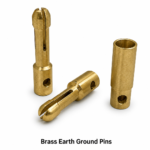
- Brass Earth Ground Pins – Grounding pins for electrical panels and switchgear
- Brass Spring Contact Pins (Pogo Pins) – Spring-loaded connector pins for PCB testing
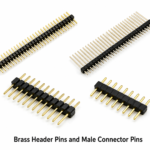
- Brass Header Pins / Male Connector Pins – Wire-to-board PCB connector pins
- Brass Terminal Pins – Crimp and solder terminal pins for connectors
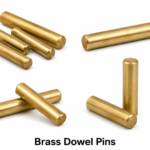
- Brass Dowel Pins – Alignment and mechanical fastening pins
- Brass Round Pins / Solid Pins – General-purpose machined brass pins
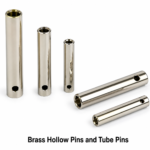
- Brass Hollow Pins / Tube Pins – Feed-through tube pins for connectors
- Brass IEC Appliance Inlet Pins – IEC standard power connector pins
Request a Quote
Contact Electrical Accessories India for pricing, custom specifications, and bulk order enquiries for brass test pins and probe pins.
📧 Email: sales@elecaccs.com
📞 Phone: +91-22-43449300 | +91-22-43449323
📍 Address: Plot 10, GIDC Industrial Estate, Shanker Tekri, Jamnagar 361004, Gujarat, India