

Product
Product Details
Aluminum CNC Machined Components
Aluminum CNC Machined Components — Precision Milled, Turned and Drilled Parts
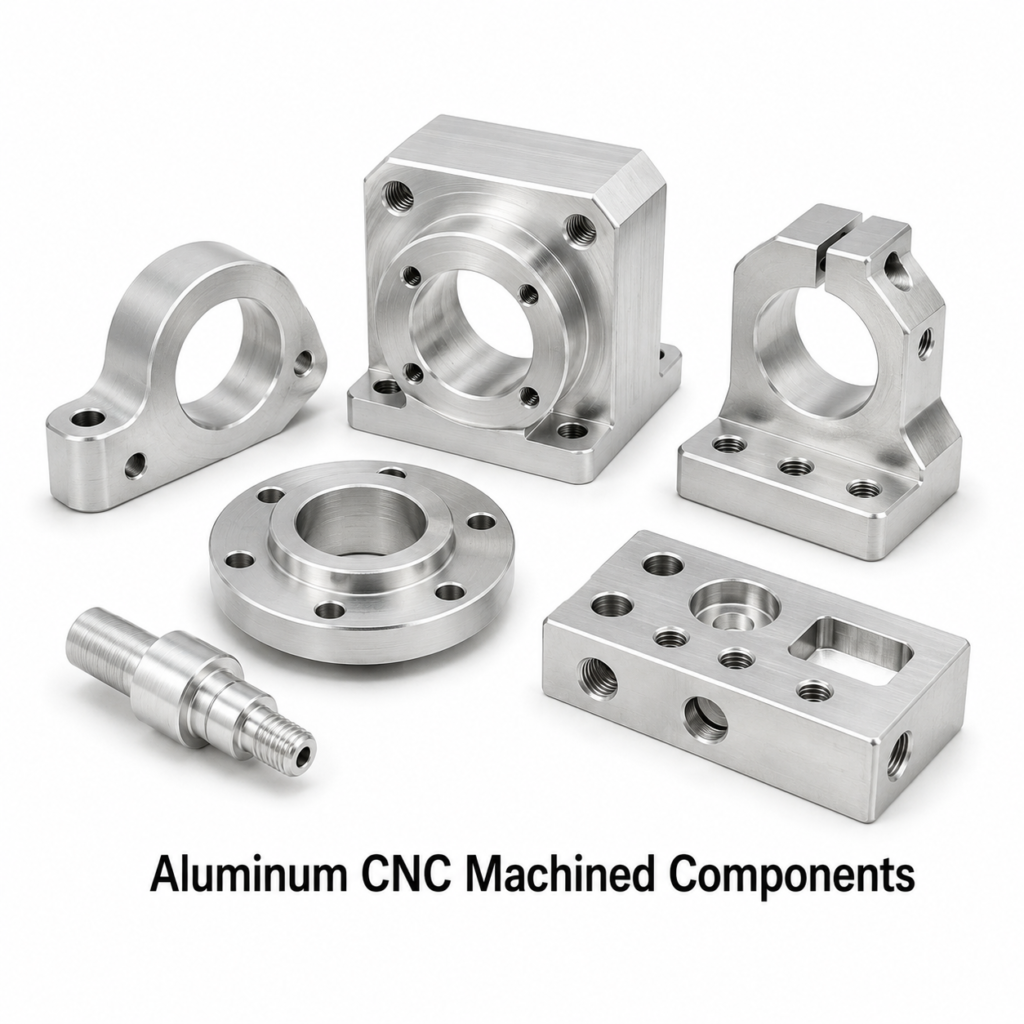
Aluminum CNC Machined Components are manufactured by Electrical Accessories India using state-of-the-art 3-axis, 4-axis, and 5-axis CNC machining centers, CNC lathes, and multi-tasking turning-milling machines. These components cover a broad range of geometries — from simple turned pins and bored housings to complex milled enclosures, heat sinks, bus bar clamps, and cable bracket assemblies. Alloys machined include 6061-T6, 6063-T5, 7075-T6, 5083-H111, 2024-T4, 2011-T3, and 1100-H14. Applications span electrical switchgear, transformer hardware, power distribution, motor housings, railway traction, and renewable energy installations. Price: US$ 8.80/Kilogram
Product Overview
CNC Turning of Aluminum Electrical Components
CNC turning operations on aluminum produce cylindrical and conical components with high surface finish and tight tolerances: terminal pins, contact rods, cable gland bodies, conduit fittings, bushing sleeves, coupling nuts, earthing studs, and compression ferrules. Our CNC lathes handle diameters up to 300 mm and lengths up to 1,000 mm, with live tooling for milling cross-holes, keyways, and flats in a single setup. Feed rates up to 0.3 mm/rev and cutting speeds up to 500 m/min are used for aluminum, generating bright, burr-free surfaces (Ra 0.8–1.6 µm) without secondary polishing. Thread turning, form turning, and OD/ID grinding are performed in-line.
CNC Milling of Aluminum Enclosures and Profiles
3-axis VMC (Vertical Machining Center) and HMC (Horizontal Machining Center) operations produce flat faces, pockets, slots, bores, and complex contours on aluminum components: junction box bodies, metering panel frames, bus bar support brackets, heat sink profiles, din rail mounts, cable tray connector plates, and switch mounting frames. 5-axis CNC machining is used for complex aerospace-style parts with multiple compound angles, undercuts, and sculpted surfaces that cannot be achieved in 3-axis setups. Our machining centers have pallet-changers and 100+ tool automatic tool changers (ATC) enabling lights-out production for high-volume repeat orders.
Material Grades for CNC Machined Aluminum Components
The alloy selection for CNC machined aluminum components depends on the mechanical, thermal, and electrical requirements of the end application. 6061-T6 is the most common choice for structural electrical components due to its balance of machinability, weldability, and corrosion resistance. 7075-T6 is specified for high-strength applications in railway, defense, and offshore power equipment where load-bearing aluminum parts are needed at minimum weight. 5083-H111 is selected for marine and chemical plant electrical fittings. 2024-T4 (high copper, high-strength alloy) is used for precision components in power conversion and traction equipment. 1100-H14 (commercially pure aluminum) is machined for high-conductivity bus bar and electrical contact applications. All material is procured with full mill certification.
Tolerances and Surface Finish Capabilities
Standard CNC milling achieves dimensional tolerances of ±0.05 mm; precision machining achieves ±0.01 mm on critical features. Bore tolerances of H6, H7, H8 are standard using precision boring bars and CBN-tipped boring tools. Surface finish after milling: Ra 1.6–3.2 µm standard; Ra 0.8 µm (fine milling); Ra 0.4 µm (diamond turning/grinding). Profile tolerances for flat surfaces, squareness, and parallelism are held to 0.02–0.05 mm per 100 mm. All critical components are verified on CMM (Coordinate Measuring Machine) with full dimensional report and ballooned drawing per AS9102 FAI requirements when specified by OEM customers.
Secondary Operations and Value-Added Services
CNC machined aluminum components often require secondary operations before delivery: anodizing (Type II or Type III hard anodize), chromate conversion coating, powder coating, silk-screen or laser engraving of part numbers and logos, insert installation (threaded helicoils, press-fit bushings, rivet nuts), sub-assembly with mating hardware, and leak testing for sealed enclosures. Electrical Accessories India provides these secondary services in-house, acting as a single-source supplier for complete aluminum hardware assemblies rather than raw machined parts. This reduces the customer’s sourcing complexity, lead time, and total cost.
Quality Inspection and Documentation
Every machined aluminum component undergoes a structured inspection protocol: first-off inspection with full dimensional CMM report, in-process SPC sampling using calibrated gauge equipment, thread verification with Go/NoGo gauges, surface finish measurement using profilometer, hardness spot-check (Rockwell HRB or HRF), and visual inspection for burrs, surface defects, tool marks, and non-conformities. Full traceability is maintained through batch numbers, material heat numbers (linked to mill test certificates), and job traveler records. Rejected parts are tagged, quarantined, and subject to formal MRB (Material Review Board) disposition. Certificates of conformance (COC) and test reports are supplied with each shipment on request.
Industries Served by Aluminum CNC Machined Components
Electrical Accessories India supplies CNC machined aluminum components to: switchgear and switchboard manufacturers (LV, MV, HV), transformer OEMs and rewinders, motor and alternator manufacturers, power electronics (drives, inverters, UPS) OEMs, solar PV mounting hardware suppliers, wind turbine nacelle component manufacturers, railway traction equipment suppliers, EPC contractors for substation projects, telecom tower infrastructure suppliers, and oil and gas electrical equipment manufacturers. The versatility of CNC machining in aluminum enables this single manufacturing capability to serve the complete spectrum of electrical and industrial sectors.
Key Features
- 3-axis, 4-axis, and 5-axis CNC machining capabilities
- Turning, milling, boring, drilling, tapping in a single setup
- Dimensional tolerance: ±0.01 mm (precision); ±0.05 mm (standard)
- Alloys: 6061, 6063, 7075, 5083, 2024, 2011, 1100, 1350
- Component size: 5 mm up to 1,000 mm max dimension
- Surface finishes: Natural, Type II Anodize, Hard Anodize, Chromate, Nickel, Tin
- Secondary operations: Helicoil inserts, sub-assembly, laser marking
- ISO 9001:2015 certified; CMM inspection with full dimensional reports
- PPAP, FAI, and COC documentation on request
- Export to 40+ countries with competitive pricing
High-Precision Bored Housings and Enclosures
Machined aluminum enclosures (junction boxes, terminal box bodies, instrument housings) require precise bore dimensions for O-ring sealing, thread engagement, and component fit. Our CNC machining capability delivers: bore diameter tolerance H6 (±0.008 mm on Ø25 mm bore), flatness on sealing faces of 0.01 mm, and perpendicularity of 0.02 mm. Ingress protection (IP) ratings from IP54 to IP68 are achievable through proper O-ring groove machining, surface flatness, and compatible sealing materials. IP ratings are verified by in-house pressure/vacuum leak testing on sealed assemblies. Materials: 6061-T6 and 6063-T5 for standard enclosures; 5083 for marine/offshore ratings.
Heat Sink and Thermal Management Components
Extruded and machined aluminum heat sinks are used in power electronics, traction drives, and LED lighting for electrical installations. Our machining operations drill, tap, and mill extruded heat sink profiles to create custom mounting hole patterns, cable entry slots, and module mounting features. Custom heat sinks are machined entirely from 6061-T6 billet where standard extrusion profiles don’t meet the fin pitch, height, or thermal resistance requirements. Thermal conductivity of 6061-T6 is 167 W/(m·K) — approximately 4× that of stainless steel — making it the material of choice for cooling power semiconductor modules in drives and rectifiers used in substation auxiliary power systems.
Bus Bar Clamps and Support Insulators
Bus bar support systems in MV and LV switchgear use machined aluminum clamps, saddles, and spacer blocks to support copper or aluminum bus bars at specified phase-to-phase and phase-to-earth clearances. These components are machined from 6061-T6 billets to precise dimensions matching the bus bar cross-section (flat bar, tube, or shaped) and hole positions for M8–M16 bolting. Critical requirements: dimensional accuracy to ±0.1 mm for proper bus bar alignment, absence of sharp edges or protrusions that could damage insulating tape or shrink sleeve, and surface finish Ra ≤3.2 µm to prevent corona discharge initiation at elevated voltages. Powder coating or anodizing is applied for additional insulation and corrosion protection.
Rail and Din Rail Mounting Hardware
CNC machined aluminum DIN rail adapter brackets, mounting plates, and cable management system components are produced for panel builders and control cabinet manufacturers. These parts are machined to standard DIN 35 (TS35), DIN 15 (TS15), and IEC 60715 dimensional requirements. Precision punching and drilling of slot holes, clearance holes, and mounting patterns allows direct bolt-on or snap-on installation of terminal blocks, relays, circuit breakers, and other DIN rail equipment. Anodized or powder-coated finish provides the required corrosion resistance and aesthetics for industrial electrical panels operating in environments per IEC 60721-3 Classification 3C2 (chemical exposure).
Prototype to Production Ramp
CNC machining is particularly well-suited for the prototype-to-production ramp sequence in electrical OEM product development. Initial prototypes (1–10 pieces) are machined from the same production alloy at the same specifications as the production design, enabling meaningful mechanical, electrical, and environmental testing on representative samples. Following design validation and approval, the transition to higher volumes (1,000+ pieces/month) is achieved by optimizing CNC programs (cycle time reduction, tool life extension), introducing fixtures for multi-part setups, and moving selected features to secondary processes (drilling, tapping on dedicated drill centers). This manufacturing flexibility eliminates the need for expensive hard tooling (forging dies, casting molds) in the early stages of new product introduction.
Technical Specifications
| Parameter | CNC Turning | CNC Milling |
|---|---|---|
| Max Part Diameter | 300 mm | 800 mm (VMC) |
| Max Part Length/Height | 1,000 mm | 600 mm |
| Standard Tolerance | ±0.05 mm (IT8) | ±0.05 mm (IT8) |
| Precision Tolerance | ±0.01 mm (IT6) | ±0.01 mm (IT6) |
| Surface Finish Ra (standard) | 0.8–3.2 µm | 1.6–3.2 µm |
| Surface Finish Ra (precision) | 0.4 µm | 0.8 µm |
| Thread Range | M3–M42 (all forms) | M3–M36 (tapping) |
| Bore Tolerance | H6 to H9 | H7 standard |
| Materials | All Al alloys | All Al alloys |
| Axis Capability | 2-axis + C-axis live | 3-axis to 5-axis |
| Price | US$ 8.80/Kilogram | |
International Alloy Equivalents
| Indian Standard | AA (USA) | EN (Europe) | JIS (Japan) | DIN (Germany) |
|---|---|---|---|---|
| IS 64430 / HE-9 | AA 6061 | EN AW-6061 | JIS A6061 | AlMgSi1 |
| IS 64432 / HE-30 | AA 6063 | EN AW-6063 | JIS A6063 | AlMgSi0.5 |
| IS 64430 / HT-15 | AA 7075 | EN AW-7075 | JIS A7075 | AlZnMgCu1.5 |
| IS 54300 | AA 5083 | EN AW-5083 | JIS A5083 | AlMg4.5Mn0.7 |
| IS 64421 / HT-30 | AA 2011 | EN AW-2011 | JIS A2011 | AlCuBiPb |
Product Types and Variants
| Component Type | Description | Typical OEM Customer |
|---|---|---|
| Turned Terminal Pins | Ø4–Ø25 mm, threaded or plain end | Switchgear, Transformer OEMs |
| Milled Enclosures / Box Bodies | IP54–IP68 sealed housings | Instrumentation, Junction Box OEMs |
| Heat Sink Profiles (machined) | Custom fin geometry, T-slot mounting | Power Electronics, Drive OEMs |
| Bus Bar Clamps and Spacers | 6061-T6, per switchgear drawing | Switchgear, Panel Builders |
| Cable Gland Bodies | Metric/NPT/PG threads, IP ratings | EPC, Switchgear OEMs |
| DIN Rail Mounting Brackets | Per DIN 35/15, anodized | Panel Builders, OEM Controls |
| Conduit Fittings (machined) | BSP, metric threads, various sizes | EPC Contractors |
| Custom Complex Profile Parts | 5-axis, per customer drawing | Railway, Defense, Renewable Energy |
Applications in Industry
| Industry | Component Examples |
|---|---|
| Switchgear and MCB OEMs | Terminal blocks, contact arms, bus bar spacers |
| Transformer Manufacturers | Terminal blocks, oil drain cocks, bushing fittings |
| Power Electronics (VFD, UPS) | Heat sinks, mounting plates, DC bus support brackets |
| Solar Energy Systems | Inverter enclosures, rail mounting components, earthing clamps |
| Railway Traction | Overhead line hardware, earthing fittings, connector housings |
| Oil and Gas Electrical | ATEX-rated box bodies, conduit fittings, earthing studs |
| Telecom Infrastructure | Tower earthing hardware, equipment rack fittings |
| EPC Contractors | Substation hardware, cable tray brackets, earthing systems |
Manufacturing Process
CNC machined aluminum component production begins with raw billet or extruded bar stock procurement with material traceability. CAM (Computer-Aided Manufacturing) programmers generate optimized toolpath strategies using CAM software (Mastercam, CATIA, Siemens NX) from customer 2D/3D models. Cutting parameters — spindle speed, feed rate, depth of cut, coolant strategy — are selected for the specific alloy and required surface finish. Production runs begin with a first-off inspection to verify dimensional compliance before releasing the batch. CNC programs and fixture designs are stored in a secure PDM (Product Data Management) system for repeat production without programming from scratch. Final inspection, cleaning, and surface treatment are performed before packaging and shipping.
Quality Standards
| Standard | Scope |
|---|---|
| ISO 9001:2015 | Quality Management System |
| ASTM B209 / B221 | Aluminum alloy sheet, bar, and extruded profiles |
| IS 737 / IS 1285 | Indian Standard aluminum alloy wrought products |
| IEC 60068 | Environmental testing for electrical components |
| AS9102 | First Article Inspection (FAI) for OEM qualification |
| MIL-A-8625F | Anodic coatings for aluminum |
| RoHS Directive 2011/65/EU | Restriction of hazardous substances in EEE |
Why Choose Electrical Accessories India?
- Comprehensive CNC Capability — turning, milling, boring, grinding, honing under one roof
- 3-axis to 5-axis Machining — handling simple turned parts to complex milled assemblies
- Single-Source Supply — machining + surface treatment + assembly + inspection + export packing
- Competitive Price: US$ 8.80/Kilogram for standard aluminum alloy grades
- Fast Prototyping — 5–10 business days for first articles from drawing
- Export-Certified Documentation — COC, PPAP, FAI, MTCs, RoHS declarations
- Established Global Exporter — 40+ countries supplied since 1990s
Frequently Asked Questions
Q1. What is the difference between CNC turning and CNC milling for aluminum?
CNC turning produces cylindrical components (pins, rods, bushings, nuts) by rotating the workpiece against a stationary cutting tool. CNC milling produces flat, profiled, and complex 3D shapes (housings, brackets, plates, heat sinks) by moving a rotating tool over a stationary workpiece. Many components require both operations — turning for OD/ID features and milling for flats, slots, and non-cylindrical features — accomplished in a single multi-tasking machine setup or sequential operations.
Q2. Can you machine aluminum to tight tolerances of ±0.01 mm?
Yes. With proper setup, sharp carbide tooling, and controlled cutting parameters, CNC turning and precision boring on our machining centers routinely achieve ±0.01 mm on diameter and ±0.02 mm on length. CMM verification is performed on all precision-tolerance features. For bore tolerances of H6 (e.g., ±0.008 mm on Ø25 mm bore), boring bars with micrometer adjustment and vibration-damping boring heads are used.
Q3. What is the largest aluminum component you can machine?
CNC turning: up to Ø300 mm × 1,000 mm L. CNC milling: up to 800 mm × 600 mm × 500 mm (XYZ). Larger components can be produced in sections with precision dowel-pinned assembly. Heavy-duty HMC (Horizontal Machining Center) work envelopes for large bus bar frames and switchgear chassis are handled on a project basis.
Q4. What surface finish do you achieve on CNC machined aluminum?
Standard CNC milling: Ra 1.6–3.2 µm. High-speed finish milling: Ra 0.8 µm. Diamond turning: Ra 0.1–0.4 µm (optical-grade surfaces). Type II anodize requires Ra ≤1.6 µm pre-anodize for uniform color. Hard anodize requires Ra ≤3.2 µm for the coating to adhere properly and achieve the required 350 HV hardness.
Q5. Do you produce aluminum machined parts to customer drawings?
Yes. We accept 2D drawings (PDF, DXF, DWG) and 3D CAD models (STEP, IGES, Parasolid, CATIA, SolidWorks). All dimensions, tolerances, surface finishes, and material callouts from the customer drawing are implemented as-drawn. Any dimensional deviations or manufacturing concerns are discussed with the customer’s engineering team before production.
Q6. Can you provide anodized aluminum machined components?
Yes. Type II anodize (12–25 µm, clear or colored) and Type III hard anodize (25–75 µm) are available. Note that hard anodize increases outer dimensions by ~25–50% of the oxide layer thickness. For threaded features, we machine to adjusted pre-anodize dimensions so final thread dimensions meet the specified class of fit after anodizing.
Q7. What documentation is provided with shipment?
Standard: packing list, commercial invoice. Optional: Material Test Certificates (MTCs), Certificate of Conformance (COC), dimensional inspection report, RoHS/REACH declaration, country of origin certificate, FAI/PPAP package. Specify required documents at time of order placement.
Q8. Can you supply machined aluminum components for ATEX/hazardous area applications?
We supply machined aluminum components used in ATEX Zone 2 and Zone 22 electrical equipment (gas and dust explosion environments). Alloy selection must avoid incendive spark risk from impacts: non-ferrous, non-sparking grades (brass, bronze) are recommended for critical ATEX applications, but aluminum is permissible under specific conditions defined in IEC 60079-0. We advise confirming alloy acceptability with the ATEX equipment OEM and certification body for each application.
Q9. What is your approach to new product introduction (NPI)?
We follow a structured NPI process: design review (DFM feedback), prototype quotation, prototype manufacturing with FAI, customer approval, process planning for production, PPAP submission, production launch. Typical NPI timeline: 3–6 weeks from drawing release to PPAP submission for standard complexity parts.
Q10. How do I get a quotation for CNC machined aluminum components?
Submit your drawing (PDF or 3D STEP file), material specification, quantity (prototype + annual), required delivery location, and any special requirements (surface finish, certification, marking). Email to info@elecaccs.com. Our technical team responds with a detailed quotation within 24–48 hours (IST).
Equivalent Terms in Other Languages
| Language | Term 1 | Term 2 | Term 3 |
|---|---|---|---|
| Spanish | Componentes mecanizados CNC de aluminio | Piezas fresadas de aluminio | Componentes torneados CNC aluminio |
| Russian | Алюминиевые детали с ЧПУ-обработкой | Фрезерованные алюминиевые компоненты | Точёные алюминиевые изделия ЧПУ |
| French | Composants aluminium usinés CNC | Pièces fraisées en aluminium | Composants tournés CNC aluminium |
| Portuguese | Componentes de alumínio usinados CNC | Peças fresadas em alumínio | Componentes torneados CNC alumínio |
| Italian | Componenti in alluminio lavorati CNC | Parti fresate in alluminio | Componenti torniti CNC alluminio |
Related Aluminum Products
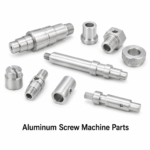
- Aluminum Screw Machine Parts
- Aluminum Transformer Spade Terminals
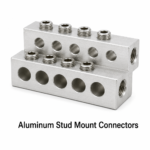
- Aluminum Stud Mount Connectors
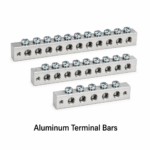
- Aluminum Terminal Bars
- Aluminum Transformer Lugs (Tubular)
- Aluminum Pipe Brackets (Pressed)
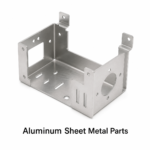
- Aluminum Sheet Metal Parts
- Aluminum Lay-In Lugs and Connectors
Get a Quote — Aluminum CNC Machined Components
Send your 2D drawing or 3D CAD file to info@elecaccs.com with material, quantity, and delivery requirements. Our engineers respond in 24–48 hours.
Price: US$ 8.80/Kilogram | Lead Time: 3–5 weeks new | 2–4 weeks repeat | Location: Gujarat, India