

Product
Product Details
Brass Switch Contacts
Brass Switch Contacts
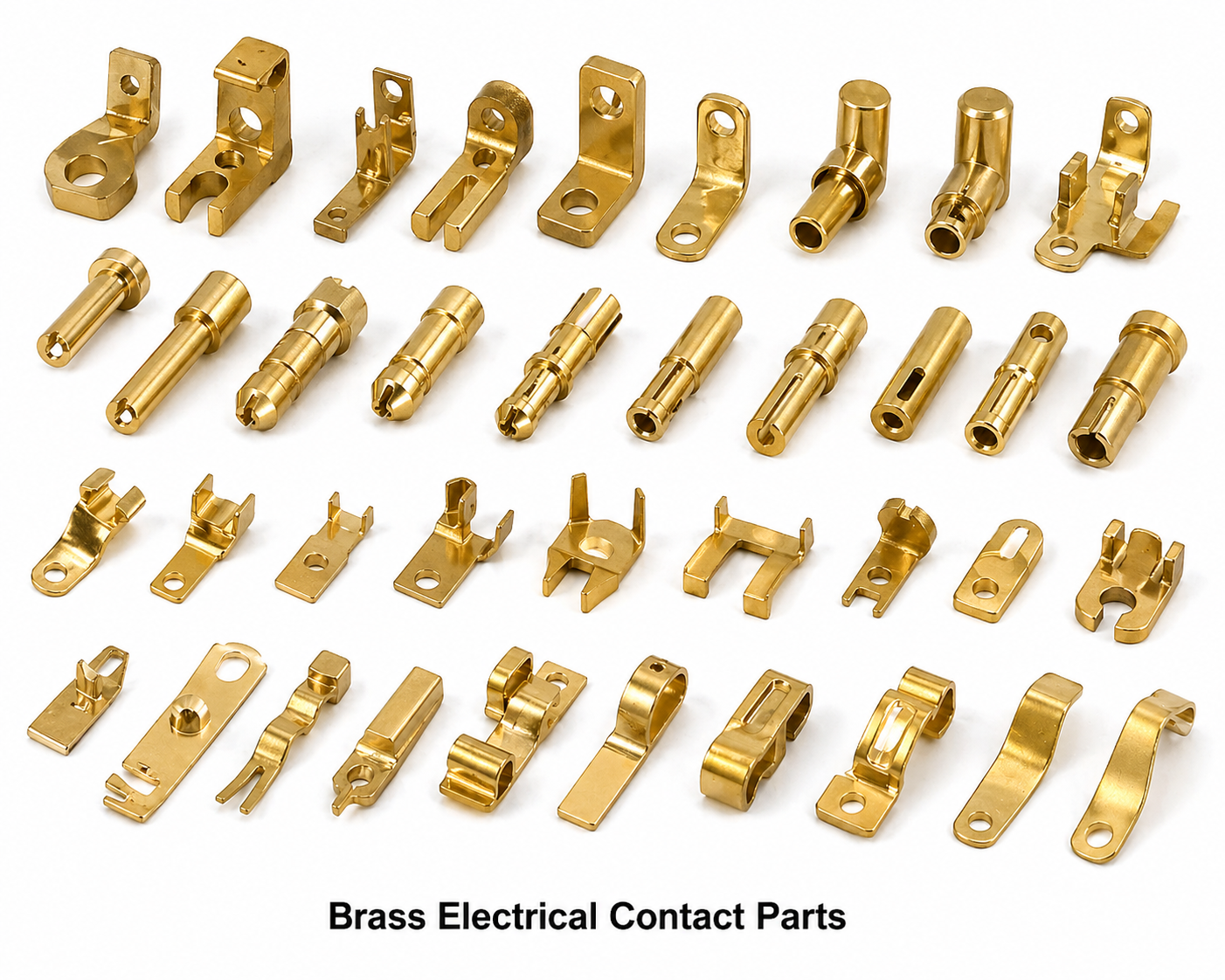
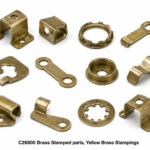
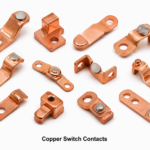
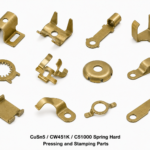
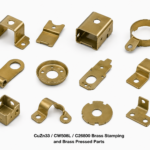
Brass switch contacts are precision-pressed and formed brass components that form the make-and-break interface in wall switches, rotary switches, toggle switches, push-button switches, selector switches, interlock switches, and small circuit breakers. Also known as brass contact blades, brass contact fingers, brass contact bridges, brass moveable contacts, brass fixed contacts, brass contact arms, brass contact rivets, brass contact springs, and brass contact pieces, these parts are manufactured from CW614N (CuZn39Pb3), CZ121, and CZ108 brass strip by Electrical Accessories India. Supplied to switch OEMs, relay manufacturers, circuit breaker makers, and control gear manufacturers.
Product Overview
Brass Wall Switch and Toggle Switch Contacts
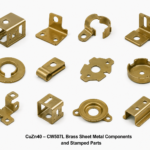
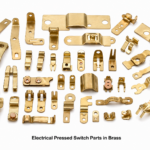
Brass switch contact blades, brass rocker switch contacts, brass toggle switch contacts, brass spur switch contacts, brass modular wiring device contacts, and brass lighting switch contacts are the most widely manufactured brass contact types. These are blanked and formed from CW614N brass strip (0.3–1.0 mm) by progressive die stamping. The contact blade is the central current-carrying spring element of the switch mechanism, carrying rated current (typically 6A, 10A, or 16A per IEC 60669-1) through the switch-on position and breaking the circuit reliably on switch-off. Silver contact tips (AgSnO2 or AgCdO) are riveted or bonded to contact faces for arc erosion resistance.
Brass Rotary Switch and Selector Switch Contacts
Brass rotary switch contacts, brass cam switch contacts, brass selector switch rotor contacts, brass drum switch contacts, brass changeover contacts, brass multiple-position switch contacts, and brass motor starter switch contacts are heavier-gauge (0.8–3.0 mm) brass stampings used in rotary and cam-operated switches for industrial control panels. These carry higher currents (20A–100A for cam switches) and must withstand repeated rotary switching under load. Silver plating (20–50 μm) or bimetal brass-silver strip is used for contact faces to ensure reliable current transfer over millions of switching cycles.
Brass Push-Button and Limit Switch Contacts
Brass push-button switch contacts, brass NO/NC contact elements, brass limit switch contacts, brass micro-switch contacts, brass snap-action contacts, and brass travel switch contacts are used in pushbutton stations, limit switches, machine safety interlock switches, and panel-mount control switches. Miniature contacts (0.1–0.5 mm strip) for snap-action mechanisms and micro-switches; standard contacts (0.5–1.5 mm) for conventional pushbutton and limit switches. Beryllium copper (C17200) is used where the highest spring force and cycle life (>10 million operations) is required.
Brass Knife Switch and Isolation Switch Contacts
Brass knife switch blades, brass isolator contacts, brass main switch contacts, brass incoming switch contacts, brass main circuit breaker contacts, and brass disconnector blades are used in main isolators, manual transfer switches, changeover switches, and manual motor starters in industrial and commercial electrical installations. Manufactured from heavy brass plate (3–8 mm, CW614N) by blanking and drilling. Contact faces are silver-plated (20–50 μm) or hard-chrome plated for high wear resistance over thousands of switching operations. Current ratings from 100A to 1600A.
Brass Terminal Contact and Cable Entry Parts
Brass switch terminal contacts, brass cable entry clamping plates, brass terminal clamping screws, brass current bar contacts, brass clamping bridges, and brass jumper contacts are associated components within switch assemblies that carry current to and from the external circuit. These are precision blanked from CW614N brass strip and assembled with the main switch contact in the switch body. Dimensional accuracy at the terminal entry determines clamping quality for conductors from 1.5 mm² to 50 mm². These components are manufactured to IEC 60998-2-1 (terminal blocks) and IEC 60947-1 (LV switchgear) requirements.
Key Features
- CW614N and CZ121 brass — good electrical conductivity (26–28% IACS), excellent formability
- Progressive die stamped — ±0.05 mm contact face tolerance
- Spring temper (H02, H04) for contact blades; soft for terminal contacts
- Tin plating (5–15 μm) or silver plating (10–50 μm) on contact faces
- AgSnO2 or AgCdO tip riveting available for arc-erosion resistance
- Compliant with IEC 60669, IEC 60947, IEC 60670, IEC 60998
- 100% inspection; contact resistance and spring force tested per batch
- Full material and electrical documentation standard
Brass vs Copper for Switch Contacts
Brass (CW614N, CuZn39Pb3) is widely used for light-to-medium switch contacts because of its combination of good spring properties (in H02/H04 temper), lower cost than copper, adequate conductivity (26–28% IACS), and excellent machinability for secondary operations. Pure copper (Cu-ETP) is preferred where the highest conductivity is needed (busbar contacts, high-current switches). Brass is preferred for domestic wiring devices, miniature circuit breakers, and control switches where the contact spring function and cost are primary considerations.
Contact Face Treatment and Arc Erosion
Brass switch contacts are subject to arc erosion at the contact face each time the switch opens under load. The arc vaporises and erodes contact material, reducing contact thickness and eventually causing contact failure. Arc erosion rate depends on current, voltage, and contact material. For light switching (5A, 250V AC): brass with tin plating is adequate for millions of operations. For higher currents or inductive loads: silver alloy tips (AgSnO2: 10–20 mg) are riveted to the brass blade. AgSnO2 provides 5–10× the arc erosion resistance of pure silver, suitable for >100,000 operations at 10A, 250V AC.
Spring Force and Contact Pressure
Switch contact blades depend on controlled spring force to maintain adequate contact pressure in the closed position (typically 0.5–5.0 N for domestic switches; 5–50 N for industrial contacts). Insufficient contact pressure increases contact resistance and causes heating. Excessive pressure causes high insertion and operation force. Spring force is controlled by strip temper, strip thickness, and contact geometry. In-process spring force measurement is performed by calibrated force gauge on each production batch. Force specification is supplied by the switch OEM as part of the component drawing.
Dimensional Tolerances for Switch Assembly
Brass switch contacts are manufactured to tight tolerances to ensure consistent switch assembly: contact face profile ±0.05 mm; hole position ±0.05 mm; bend angle ±0.5°; overall length ±0.2 mm. These tolerances ensure that automatic insertion into switch bodies works reliably without jams or misalignment. First-article approval with full dimensional report is required for new OEM part numbers.
Plating and Surface Treatment
Standard: barrel-plated tin (5–15 μm) for general switch contacts. Silver-plated (10–25 μm, barrel or rack): for higher current contacts and OEM specifications requiring silver. Nickel plating (3–10 μm): base coat under silver for improved adhesion and elevated temperature performance. Gold flash (0.1–0.5 μm): available for low-current signal switch contacts where contact resistance must be maintained below 10 mΩ through the product lifetime. All plating is XRF verified per batch.
Technical Specifications
| Parameter | Specification |
|---|---|
| Base Material | CW614N (CuZn39Pb3), CZ121, CZ108, CW505L |
| Strip Thickness | 0.1 mm to 8.0 mm |
| Temper | H02 (half-hard) to H04 (hard) for springs; O for terminal parts |
| Contact Resistance | <100 μΩ per IEC 60947-1 |
| Spring Force | 0.5–50 N (application dependent) |
| Surface Finish | Tin (5–15 μm), Silver (10–50 μm), Nickel+Silver, Gold flash |
| Applicable Standards | IEC 60669-1, IEC 60947-1, IEC 60670, IEC 60998-2-1 |
Material Grades and International Equivalents
| India IS | USA ASTM/UNS | UK BS EN | Germany DIN | Europe EN | ISO | Common Name |
|---|---|---|---|---|---|---|
| IS 319 Type 2 | C37700/ASTM B283 | CW614N/BS EN 12165 | CuZn39Pb3/DIN 17660 | EN CW614N | ISO 426/1 | CW614N Brass |
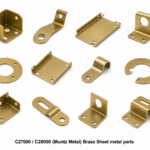
| IS 319 Type 3 | C28000/ASTM B36 | CZ121/BS 2870 | CuZn40Pb2 | EN CW614N | ISO 426/1 | CZ121, 60/40 Brass |
| IS 319 Type 1 | C26000/ASTM B36 | CZ106/BS 2870 | CuZn30 | EN CW505L | ISO 426/1 | Cartridge Brass 70/30 |
Product Types and Variants
Wall switch contact blades; rocker switch contacts; toggle switch contacts; rotary/cam switch contacts; push-button switch contacts (NO/NC); micro-switch snap-action contacts; knife switch blades; limit switch contact pieces; terminal clamping bridges; contact rivet assemblies (Ag-tip on brass base); spring contact fingers; custom profiles to OEM drawing.
Applications in Industry
Domestic wiring devices (wall switches, dimmer switches); industrial control switches (pushbutton, selector, key-operated); circuit breakers (MCB, RCBO contact blades); rotary isolators and cam switches; limit switches and position sensors; motor starters; manual transfer switches; industrial control panels; automotive interior switches; railway rolling stock control switches.
Manufacturing Process
- Brass strip procurement — CW614N/CZ121 ASTM B36/BS EN 12165, H02/H04, with MTC
- Incoming inspection — XRF composition, hardness, thickness, conductivity
- Progressive die blanking and forming — contact profile and fixing holes
- Coining — contact face coining for flatness and surface quality
- Silver tip riveting (if required) — AgSnO2 or AgCdO tips riveted to blanks
- Deburring — barrel deburring; burr <0.05 mm on contact faces
- Cleaning — alkaline degreasing, acid pickling
- Plating — barrel tin or rack silver plating
- 100% dimensional and spring force inspection; contact resistance sampling
- Packing and documentation
Quality Standards and Certifications
Material: ASTM B36, BS EN 12165. Performance: IEC 60669-1, IEC 60947-1, IEC 60670. Plating: IEC 60068-2-20. ISO 9001:2015 QMS. REACH and RoHS compliance. EN 10204 Type 3.1 MTCs standard.
Why Choose Electrical Accessories India
Electrical Accessories India manufactures brass switch contacts for switch and relay OEMs worldwide from its Jamnagar facility. Our precision progressive die tooling achieves ±0.05 mm contact face tolerances. Spring force testing, contact resistance measurement, and silver plating verification are performed in-house. We support prototype qualification and scale to millions of pieces per year for global switch OEMs. Full documentation and compliance certificates are standard.
Frequently Asked Questions (FAQ)
What brass grade is recommended for switch contact blades?
CW614N (CuZn39Pb3) in H02 or H04 temper is the most common grade for brass switch contact blades. It combines adequate spring properties, good conductivity (26–28% IACS), and excellent machinability. For high-cycle micro-switch contacts requiring >10 million operations, beryllium copper (C17200) is preferred.
When should silver contact tips be used?
Silver contact tips (AgSnO2 or AgCdO) are specified for contacts switching inductive loads (>cos φ 0.6), incandescent lamp loads (>5A), motor loads, or for switch ratings above 16A. For purely resistive loads at 6A–10A, tin-plated brass contacts are adequate for standard switch life ratings (≥40,000 operations per IEC 60669-1).
What is the minimum order quantity?
Standard profiles: 500 pieces. New OEM profiles: 1000 pieces for new tooling. Prototype samples: 50–100 pieces for qualification and type testing.
Can you supply complete contact assemblies with silver tips pre-riveted?
Yes. Complete brass contact assemblies with AgSnO2 or AgCdO tips riveted are available. Tip dimensions, alloy, and riveting parameters are per OEM specification.
What contact resistance is achievable?
Fresh silver-plated brass contacts achieve contact resistance below 10 μΩ. Aged tin-plated contacts maintain below 100 μΩ over service life per IEC 60947-1. Gold-flashed contacts maintain below 10 mΩ for low-current signal applications.
What documentation is provided?
MTC (EN 10204 Type 3.1), hardness report, plating thickness (XRF), contact resistance test, spring force test, REACH, RoHS, packing list, and commercial invoice.
Are brass switch contacts suitable for EV charging station switches?
For EV AC charging station contactors and switches (up to 32A, 240V AC single-phase; up to 63A three-phase), brass contacts with AgSnO2 tips are suitable. For DC fast charging switches (>100A DC), copper contacts with AgSnO2 tips are recommended due to the more severe arc behaviour at DC voltage.
Can you match an existing OEM contact part profile?
Yes. Send a sample part or dimensional drawing. We will reverse-engineer if needed and supply matching first-article samples for OEM qualification. Tooling is made to match the approved sample dimensions.
Equivalent Terms – Multilingual Reference
| Language | Term 1 | Term 2 | Term 3 |
|---|---|---|---|
| Spanish | Contacto de interruptor de latón | Lámina de contacto de latón | Pieza de contacto eléctrico de latón |
| Russian | Латунный контакт выключателя | Контактная пластина из латуни | Латунный подвижный контакт |
| French | Contact d’interrupteur en laiton | Lame de contact en laiton | Pièce de contact électrique laiton |
| Portuguese | Contato de interruptor em latão | Lâmina de contato em latão | Peça de contato elétrico em latão |
| Italian | Contatto di interruttore in ottone | Lamella di contatto in ottone | Pezzo di contatto elettrico in ottone |
Related Products and Linked Terms
- Brass Stamping – Brass Stamped Parts and Components
- Electrical Pressed Switch Parts in Brass
- Brass Fuse Clips – Brass Fuse Holders
- Brass Switch Contacts – Electrical Contact Parts
- Brass Grounding Tags – Brass Earth Tags
- Brass Earthing Terminals and Brass Earth Tags
- Copper Pressing and Copper Pressed Parts
- Copper Fuse Clips – Pressed Copper Fuse Clips
- Brass Parts – Brass CNC Machined Parts
Indicative Pricing
Brass Items: US$ 11.50 per kilogram, CIF USA Port
Prices are indicative and subject to change based on quantity, specification, alloy grade, and market conditions. Contact us with your RFQ for a firm quotation.
Request a Quote
Supply your drawing or sample part to receive a DFM review and commercial proposal within 24 hours. We export to 30+ countries.
Contact us: Send your RFQ with drawing (PDF/DXF), material, plating, quantity, and annual volume. We respond within 24 business hours.