

Product
Product Details
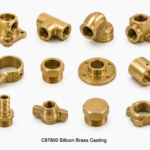
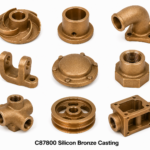
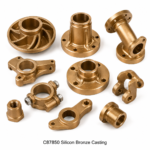
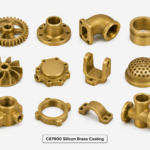
Silicon Bronze Castings
Silicon Bronze Castings
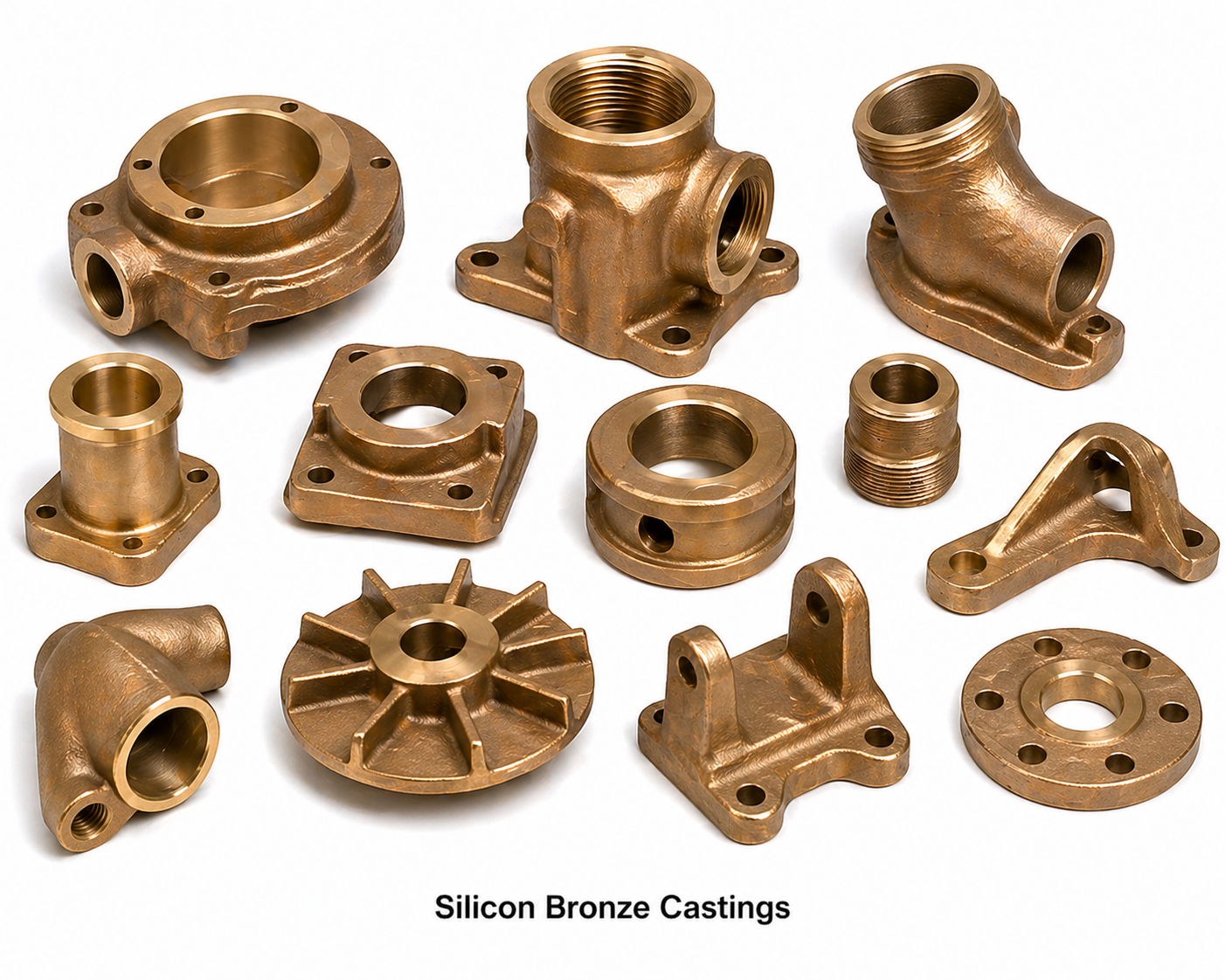
Silicon bronze is a copper-base alloy containing 1.5–6% silicon with additions of manganese, zinc, and iron, producing a material that combines high strength, exceptional corrosion resistance across a wide range of environments, outstanding weldability among copper alloys, and a distinctively fine casting surface that makes it the preferred choice for artistic, architectural, and marine hardware applications. Electrical Accessories India manufactures silicon bronze castings for electrical OEMs, EPC contractors, marine engineers, architectural hardware manufacturers, chemical plant engineers, sculpture founders, and industrial distributors. Silicon bronze offers corrosion resistance superior to admiralty brass in most environments, weldability approaching that of mild steel (a property unique among structural copper alloys), and a golden-brown aesthetic that requires no surface treatment for many outdoor architectural applications.
Product Overview
Silicon’s Metallurgical Role in Copper Alloys
Silicon acts as a powerful solid-solution strengthener in copper, increasing tensile strength from approximately 220 MPa (pure copper) to 380–550 MPa (silicon bronze) while maintaining ductility above 15% elongation. Silicon also functions as a deoxidizer during melting, producing silicon dioxide (SiO₂) slag that floats clear, resulting in clean, sound castings with low porosity. Unlike tin bronzes, silicon bronze does not exhibit the segregation and hot-shortness problems associated with tin, making it significantly more weldable and more amenable to hot-working. The addition of manganese (0.5–1.5%) further enhances strength, grain refinement, and resistance to dezincification. Silicon bronze maintains its mechanical properties over the temperature range –200°C to +200°C, making it suitable for cryogenic valve applications as well as elevated temperature electrical contact service.
Corrosion Resistance Profile
Silicon bronze develops a stable, adherent silicon oxide surface film that provides excellent corrosion resistance in fresh water, seawater, marine atmospheres, most mineral acids (dilute), organic acids, and industrial atmospheres containing sulfur dioxide. The alloy is particularly resistant to stress corrosion cracking (SCC) in ammonia-containing environments – a critical advantage over brass in chemical plant electrical installations and fertilizer plant environments. Silicon bronze shows minimal corrosion in saline soil environments, making it suitable for buried earthing hardware, underground conduit fittings, and sub-sea fasteners. In seawater, silicon bronze performance is intermediate between aluminum bronze (best) and naval brass – suitable for splash zone hardware, seawater-cooled equipment enclosures, and marine deck fittings where direct impingement velocity is moderate.
Weldability – The Key Differentiator
Silicon bronze is the most weldable of all copper casting alloys, a property that makes it uniquely valuable for fabricated structures and weld-repair applications. TIG welding using ERCuSi-A filler wire (AWS A5.7) produces joints with 95–100% of parent metal tensile strength without preheating in sections up to 6 mm. For heavier sections, preheat of 100–150°C is sufficient – far less than the 200–400°C required for aluminum bronze or phosphor bronze. Thermal conductivity of silicon bronze (36–50 W/m·K) is significantly lower than pure copper, reducing heat sink effects during welding and enabling better fusion at lower heat inputs. This weldability makes silicon bronze the preferred alloy for artistic bronze casting (sculpture, architectural elements, decorative hardware) where weld repair of casting defects and assembly joining are essential to the production process.
Electrical Applications
Silicon bronze has an electrical conductivity of 7–12% IACS – lower than pure copper or aluminum bronze, but adequate for structural electrical components where conductivity is secondary to mechanical and corrosion performance. Applications include: earthing system hardware (clamps, connectors, bonding plates) in corrosive chemical plant environments where standard brass would dezincify; cable gland bodies for chemical plant and marine electrical installations; connector bodies for seawater pump motors; structural fasteners (bolts, nuts, studs) for electrical equipment in marine and offshore environments; and hardware for cathodic protection systems. The stress corrosion cracking resistance of silicon bronze makes it superior to brass for electrical equipment enclosure hardware in ammonia, amine, and nitrogen compound-rich atmospheres.
Artistic Bronze and Architectural Hardware
Silicon bronze is the foundry alloy of choice for fine art casting, architectural hardware, memorial plaques, sculpture, decorative fountains, and monumental work. Its low silicon content produces a fine-grained microstructure with excellent surface detail reproduction in investment (lost-wax) and sand casting processes – capturing textures as fine as 0.1 mm in investment-cast work. The warm golden-brown natural patina that silicon bronze develops in outdoor environments is aesthetically stable and does not require lacquering or surface maintenance. Electrical Accessories India produces silicon bronze investment castings, sand castings, and permanent mould castings for architectural hardware manufacturers, interior design firms, heritage restoration contractors, and export markets for premium hardware components.
Marine and Fastener Applications
Silicon bronze fasteners (bolts, screws, nuts, studs, washers) are the most widely used non-ferrous fastener material in marine boatbuilding, replacing stainless steel in many applications where the risk of crevice corrosion (a weakness of 316L stainless in stagnant seawater) makes stainless unsuitable. Silicon bronze fasteners maintain strength across the full range of marine service conditions, are compatible with fiberglass (GRP) and timber boat structures without galvanic corrosion concerns, and are easily cut, filed, and shaped aboard without work hardening to brittleness. Electrical Accessories India produces silicon bronze hex bolts, machine screws, threaded rods, nuts, and washers to ISO metric and UNC/UNF thread standards, as well as custom fasteners to drawing for naval and marine OEM customers.
Casting Process and Microstructure
Silicon bronze is one of the most castable of copper alloys due to its wide freezing range, good fluidity, low gas absorption, and self-deoxidation during melting. Electrical Accessories India uses sand casting, investment casting (lost-wax), and permanent mould (gravity die) casting for silicon bronze. Investment casting achieves dimensional tolerances of CT4–CT5 and surface finishes of Ra 1.6–3.2 µm, making it ideal for precision marine and electrical hardware with complex geometry. Sand casting handles large and complex components up to 200 kg. The alloy’s single-phase (alpha) microstructure after casting is homogeneous, free of the hard intermetallic phases that limit machinability in high-tin bronzes, resulting in a machinability rating of 30–40% – better than most copper alloys except brass.
Key Features
- Tensile strength 380–550 MPa – significantly stronger than gunmetal or leaded tin bronze
- Outstanding weldability (TIG/MIG with ERCuSi-A filler) – unique among structural copper casting alloys
- Excellent stress corrosion cracking resistance in ammonia and nitrogen-compound environments
- Self-deoxidizing during melting – sound, low-porosity castings without added deoxidizers
- Fine aesthetic surface for architectural, artistic, and heritage casting applications
- Natural outdoor patina – stable golden-brown colour without lacquering or surface treatment
- Operating temperature: –200°C to +200°C (including cryogenic valve service)
- Available in all international grades: C87300, C87600, C87800, CuSi3Mn, CC212A
- Compliant with ASTM B198, BS EN 1982, IS 318, DIN 1705
- Full material traceability: spectrometric analysis, EN 10204 3.1 Mill certificates
Material Grades and International Equivalents
| Grade | India (IS) | USA (ASTM/UNS) | UK (BS EN) | Germany (DIN) | Europe (EN) | Japan (JIS) | ISO | Si% | Mn% | Zn% | UTS (MPa) |
|---|---|---|---|---|---|---|---|---|---|---|---|
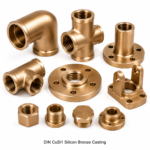
| Low Silicon Bronze A | IS 318 Gr.SiB1 | C87300 / UNS C87300 | — | DIN CuSi1 | — | — | — | 1.5–3.0 | 0.5–1.3 | — | 380 |
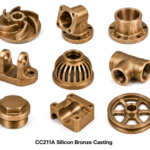
| Silicon Bronze B | IS 318 Gr.SiB2 | C87600 / UNS C87600 | BS EN 1982 CC211A | DIN CuSi3 | EN CC211A | — | ISO CuSi3 | 3.0–5.0 | 0.8–1.5 | Bal. | 430 |
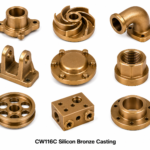
| High Silicon Bronze A | IS 318 Gr.SiB3 | C65500 / UNS C65500 | BS EN 12163 CW116C | DIN CuSi3Mn | EN CW116C | JIS C6561 | ISO CuSi3Mn1 | 2.8–3.8 | 0.5–1.3 | — | 490 |
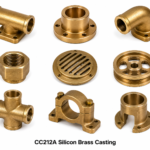
| Silicon Brass (Casting) | — | C87800 / UNS C87800 | BS EN 1982 CC212A | DIN CuZn15Si4 | EN CC212A | — | ISO CuZn15Si4 | 3.5–4.5 | — | 12–16 | 520 |
| Silicon Bronze (Die Cast) | — | C87500 / UNS C87500 | — | — | — | — | — | 3.0–5.0 | — | Bal. | 450 |
| Everdur / High-Si Art Bronze | — | C65100 / UNS C65100 | — | — | — | — | — | 0.8–2.0 | — | — | 350 |
Technical Specifications
| Property | C87300 | C87600 / CC211A | C65500 (Wrought) | C87800 / CC212A |
|---|---|---|---|---|
| Density (g/cm³) | 8.3 | 8.3 | 8.5 | 8.2 |
| Tensile Strength (MPa) | 380 min | 430 min | 490 min | 520 min |
| 0.2% Yield Strength (MPa) | 140 min | 170 min | 200 min | 230 min |
| Elongation (%) | 20 min | 18 min | 15 min | 12 min |
| Hardness (HB) | 80–110 | 90–130 | 100–150 | 120–160 |
| Electrical Conductivity (%IACS) | 9–12 | 7–10 | 7–9 | 6–8 |
| Thermal Conductivity (W/m·K) | 50 | 36 | 38 | 33 |
| Max. Service Temp. (°C) | 200 | 200 | 200 | 180 |
| Machinability Rating (%) | 30–40 | 30–40 | 30 | 40–50 |
| Weldability | Excellent | Excellent | Excellent | Good |
Product Types and Variants
- Sand Castings – Architectural hardware, marine components, valve bodies (0.05–200 kg)
- Investment Castings (Lost-Wax) – Precision marine hardware, sculpture, fine detail architectural components (±0.15 mm)
- Permanent Mould Castings – High-repeatability production hardware, fastener blanks
- CNC Machined Parts – From silicon bronze bar/rod to drawing tolerances
- Fasteners – Hex bolts, machine screws, threaded rod, nuts, washers (metric and imperial)
- Art and Sculpture Castings – Lost-wax fine art castings with patina finishing
Applications in Industry
- Marine & Naval: Deck hardware, cleats, fairleads, through-hull fittings, propeller shaft nuts, seacock bodies, marine fasteners, boat building hardware
- Electrical & Chemical Plant: Earthing clamps and hardware for ammonia/fertilizer environments, cable gland bodies in H₂S-rich atmospheres, conduit fittings in acid plant buildings
- Architectural: Door hardware, window furniture, handrail brackets, heritage restoration castings, signage letters, memorial plaques, sculptural elements
- Cryogenic: Valve bodies and fitting bodies for liquid nitrogen, liquid oxygen, and LNG service (excellent low-temperature ductility)
- General Engineering: Hydraulic valve bodies, pump components, non-sparking tool blanks for ATEX environments
- Art Foundry: Fine art sculpture, monumental castings, bell casting, architectural ornament
Manufacturing Process
1. Melting: High-purity copper cathode, silicon metal, and manganese metal charged into induction furnace. Silicon added at 1100°C to minimize SiO₂ loss. Self-deoxidation confirmed by mirror-bright melt surface – no additional deoxidizer required.
2. Chemistry Check: Spectrometric analysis verifies Si, Mn, Zn content before tapping. Critical check: Si ±0.15%, Mn ±0.1%.
3. Mould Preparation: For investment casting: wax injection, ceramic shell build (8–12 dips), dewaxing, and pre-fire to 900°C. For sand: furan resin-bonded moulds. For permanent mould: steel dies at 200–250°C.
4. Pouring: At 1050–1100°C into moulds. Excellent fluidity of silicon bronze fills thin sections (<3 mm) reliably in investment casting.
5. Finishing: Shot blasting, fettling, and optional hand-chasing for art castings.
6. Patina Application (Art Castings): Chemical patinas applied using ferric nitrate, liver of sulfur, cupric nitrate, or forced weathering as per customer specification.
7. Machining: CNC turning and milling with sharp carbide tooling; machinability significantly better than tin bronze or aluminum bronze.
8. Inspection: Dimensional, visual, spectrometric PMI, mechanical testing. Pressure testing for valve and plumbing applications.
Quality Standards and Certifications
- ASTM B198 – Silicon Bronze Sand Castings
- ASTM B96 – Silicon Bronze Rod, Bar, and Shapes
- BS EN 1982 – Copper and Copper Alloys: Ingots and Castings (CC211A, CC212A)
- BS EN 12163 – Copper Alloy Rod and Bar (CW116C)
- IS 318 – Indian Standard for Copper Alloy Ingots and Castings
- DIN 1705 – Copper-Silicon Casting Alloys
- AWS A5.7 ERCuSi-A – Silicon Bronze Welding Wire
- ISO 9001:2015 Quality Management System
- RoHS 3 and REACH compliant
Why Choose Electrical Accessories India
- Full Grade Range: All silicon bronze grades from C65100 to C87800 in cast and wrought form
- Art Foundry Capability: Lost-wax investment casting with patina finishing for architectural and fine art applications
- Marine Hardware Expertise: Fasteners, fittings, and structural hardware to international marine standards
- Export Track Record: Supply to USA, UK, Germany, Australia, UAE, Singapore with full 3.1 Mill certificates
- Chemical Environment Knowledge: Alloy selection support for ammonia, acid, and H₂S service environments
- Short Lead Times: Investment castings with existing tooling: 2–3 weeks; sand castings: 1–2 weeks
- Weld-Repair Service: Defective castings repaired by TIG welding in-house, avoiding scrapping of expensive patterns and moulds
Frequently Asked Questions (FAQ)
Q1: What is silicon bronze used for in marine boatbuilding?
Silicon bronze fasteners (screws, bolts, nuts, through-bolts) are the standard fastener for traditional and modern timber and GRP boatbuilding. Silicon bronze is preferred over stainless steel because it does not suffer crevice corrosion in stagnant seawater (a common failure mode of 316L stainless in underwater fastenings), is easily worked with standard tools, is compatible with timber, GRP, and bronze/brass fittings galvanically, and has a 50+ year service life in marine environments.
Q2: Can silicon bronze be welded to mild steel?
Direct TIG welding of silicon bronze to mild steel (dissimilar metal welding) is possible using ERCuSi-A filler at reduced heat input, but the joint will be weaker than either parent metal due to brittle intermetallic phases at the fusion boundary. For structural dissimilar metal joints, mechanical fastening with appropriate isolation washers is preferred. Silicon bronze to copper TIG welding with ERCuSi-A filler produces excellent structural joints.
Q3: How does silicon bronze compare to aluminum bronze for marine applications?
Aluminum bronze (C95400/NAB) provides superior seawater corrosion resistance, higher strength (UTS 570–690 MPa vs. 380–550 MPa for silicon bronze), better cavitation resistance, and is preferred for high-velocity seawater service (propellers, pump impellers, sea valves). Silicon bronze is preferred where weldability, aesthetic quality, ease of machining, or cryogenic performance is required. For marine fasteners, deck hardware, and non-flow-facing fittings, silicon bronze is economically and technically preferred.
Q4: What patinas are available for silicon bronze art castings?
Electrical Accessories India applies the following standard patinas: natural (bare metal, develops brown-gold patina outdoors), liver of sulfur (dark brown-black antiqued finish), ferric nitrate (golden-brown tones), cupric nitrate (blue-green patina), and forced weathering (outdoor exposure green/turquoise). Custom patina development to sample or specification is available. All patinas are sealed with microcrystalline wax or lacquer for indoor display castings.
Q5: Is silicon bronze suitable for food contact applications?
Silicon bronze without lead content (<0.05% Pb) is acceptable for many food and beverage contact applications under FDA and EU food contact material regulations, subject to specific regulatory confirmation for your jurisdiction. The alloy does not leach zinc (unlike brass) and has low silicon ion release in contact with food-grade liquids. For potable water contact, confirm WRAS or NSF 61 compliance requirements for your specific application.
Q6: What is the difference between silicon bronze and silicon brass?
Silicon bronze (C87300, C87600, C65500) has a copper-rich matrix with silicon as the primary alloying element and little or no zinc. Silicon brass (C87800, CC212A) is essentially a zinc-containing copper alloy with silicon addition – the zinc significantly lowers cost but reduces corrosion resistance slightly compared to silicon bronze. Silicon brass is used where cost is critical and the environment is not highly corrosive; silicon bronze is used for demanding corrosion, weldability, or aesthetic applications.
Q7: Can you produce silicon bronze castings to specific patina requirements for heritage restoration?
Yes. Electrical Accessories India has experience producing heritage restoration castings to match existing patina and surface texture of original historic pieces. We work from photographs, physical samples, or 3D scans to reproduce the original pattern, and apply chemical patinas matched to the original finish. Historic bronze alloy composition analysis by XRF/OES is available to identify the original alloy grade for accurate reproduction.
Q8: What is the minimum order for silicon bronze investment castings?
No minimum order for prototype investment castings (1 piece per pattern). For production tooling (permanent dies or pattern equipment), tooling cost is amortized over the production run. Wax injection tooling for investment casting: 2–4 weeks fabrication. Repeat production from existing tooling: 2–3 weeks delivery.
Equivalent Terms – Multilingual Reference
| Language | Term 1 | Term 2 | Term 3 |
|---|---|---|---|
| Spanish | Fundición de bronce silicio | Bronce al silicio fundido | Aleación cobre-silicio fundida |
| Russian | Литьё из кремнистой бронзы | Отливки из кремниевой бронзы | Медно-кремниевый сплав литой |
| French | Pièces moulées en bronze silicium | Bronze au silicium coulé | Alliage cuivre-silicium moulé |
| Portuguese | Fundição de bronze silício | Peças fundidas em bronze ao silício | Liga cobre-silício fundida |
| Italian | Fusione in bronzo al silicio | Getti in bronzo siliconato | Lega rame-silicio fusa |
Related Products and Linked Terms
- Aluminum Bronze Casting (C95400, NAB, AB2)
- Phosphor Bronze Casting and Phosphor Bronze Machined Parts
- Brass DZR Casting and DZR Brass Machined Parts
- Copper Casting and Copper Machined Parts
- Bronze Ground Rod Clamps
- Bronze Copper Grounding Clamps
- Marine Cable Glands
- Bronze Transformer Ground Connectors
Request a Quote
Electrical Accessories India engineers respond to all silicon bronze casting enquiries within 24 hours. Provide your drawing (PDF/DXF/STEP), alloy grade (or application description for alloy selection advice), quantity, surface finish or patina requirements, and delivery destination. We supply from prototype single castings to high-volume production, with full material traceability, spectrometric analysis, and EN 10204 3.1 Mill certificates. Export to 30+ countries with complete commercial documentation.
Contact us today for your silicon bronze casting requirements – architectural, marine, electrical, or industrial.
Indicative Pricing
Bronze Items: US$ 13.90 per kilogram, CIF US Port
Prices are indicative and subject to change based on quantity, specification, alloy grade, and market conditions. Contact us with your RFQ for a firm quotation.
Silicon Bronze Alloy Grades – Complete Product Range
Electrical Accessories India manufactures silicon bronze castings in all major US (ASTM/UNS) and international alloy grades. Select your specific grade below for full technical specifications, casting process options, and international standard equivalents.
US Silicon Bronze Grades (ASTM/UNS)
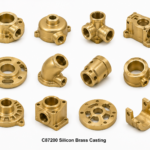
- C87200 Silicon Bronze Casting – UNS C87200, 3.5-5.5% Si silicon brass
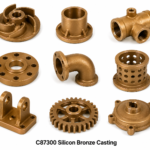
- C87300 Silicon Bronze Casting – UNS C87300, Low Silicon Bronze A, 1.5-3.0% Si, 380 MPa, IS 318 Gr.SiB1, DIN CuSi1
- C87500 Silicon Bronze Casting – UNS C87500, Silicon Bronze die casting alloy, 3.0-5.0% Si, 450 MPa
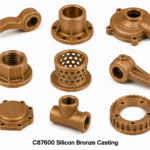
- C87600 Silicon Bronze Casting – UNS C87600, Silicon Bronze B, 3.0-5.0% Si, 430 MPa, IS 318 Gr.SiB2, DIN CuSi3, CC211A
- C87800 Silicon Bronze Casting – UNS C87800, Silicon Brass, 3.5-4.5% Si + 12-16% Zn, 520 MPa, CC212A, DIN CuZn15Si4
- C87850 Silicon Bronze Casting – Lead-Free Silicon Bronze, Pb <0.25%, NSF 61 and California AB 1953 compliant
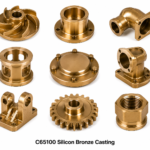
- C65100 Silicon Bronze Casting – UNS C65100, Everdur, Low Silicon Bronze B, 0.8-2.0% Si, finest investment casting detail
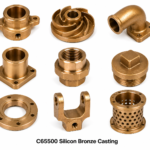
- C65500 Silicon Bronze Casting – UNS C65500, High Silicon Bronze A, 2.8-3.8% Si + Mn, 490 MPa, CW116C, JIS C6561, IS 318 Gr.SiB3
International Silicon Bronze Grades (European, German, Indian, Japanese)
- CC211A Silicon Bronze Casting – BS EN 1982 CC211A, equivalent to C87600, DIN CuSi3, IS 318 Gr.SiB2, 430 MPa
- CC212A Silicon Brass Casting – BS EN 1982 CC212A, equivalent to C87800, DIN CuZn15Si4, 520 MPa
- CW116C Silicon Bronze Casting – BS EN 12163 CW116C, equivalent to C65500, DIN CuSi3Mn, ISO CuSi3Mn1, JIS C6561, 490 MPa
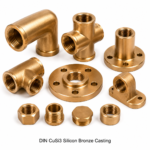
- DIN CuSi1 Silicon Bronze Casting – DIN 1705 CuSi1, equivalent to C87300, IS 318 Gr.SiB1, 380 MPa, best weldability
- DIN CuSi3 Silicon Bronze Casting – DIN 1705 CuSi3, equivalent to C87600, CC211A, IS 318 Gr.SiB2, 430 MPa
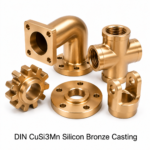
- DIN CuSi3Mn Silicon Bronze Casting – DIN 1705 CuSi3Mn, equivalent to C65500, CW116C, ISO CuSi3Mn1, 490 MPa cryogenic
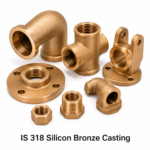
- IS 318 Silicon Bronze Casting – BIS Indian Standard IS 318, grades SiB1 (C87300), SiB2 (C87600/CC211A), SiB3 (C65500/CW116C)
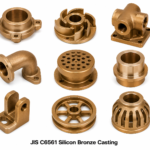
- JIS C6561 Silicon Bronze Casting – Japanese JIS H5120 C6561, equivalent to C65500, CW116C, CuSi3Mn1, 490 MPa, cryogenic
All Silicon Bronze Casting Processes Available
All silicon bronze alloy grades above are available in the following casting processes:
- Sand Casting – 0.05 to 200+ kg, CT7-CT9 tolerances, 1-2 week lead times
- Centrifugal Casting – Cylindrical hollow components, CT5-CT6 tolerances, fully dense microstructure
- Investment Casting (Lost-Wax) – CT4-CT5 tolerances, Ra 1.6-3.2 um, finest surface detail
- Green Sand Casting – Lowest tooling cost, CT8-CT10, fastest turnaround for standard shapes
- Permanent Mold Casting – High-volume production, CT5-CT7, excellent dimensional repeatability