

Product
Product Details
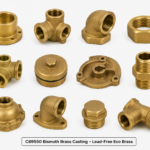
Lead Free Brass Casting and Lead Free Machined Castings
Lead-Free Brass Casting Alloys – Individual Specifications
| Alloy Code | Standard | Alloy System | Key Feature |
|---|---|---|---|
| C87850 | ASTM B584 | Silicon Brass (Cu-Si-Mn) | High machinability, NSF/ANSI 372 compliant |
| C89520 | ASTM B584 | Bismuth-Selenium Brass (BiLead™) | Closest to leaded brass machinability, <0.05% Pb |
| C89833 | ASTM B584 | Tin-Silicon Bronze (Cu-Sn-Si) | Superior pressure tightness, potable water |
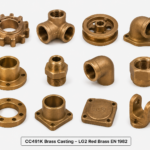
| CC499K | EN 1982 | CuSn5Zn5Pb0.5-C (Gunmetal) | European sand casting, BS EN 17139 compliant |
| CW511L | EN 12420 | CuZn42Si2Mn (Wrought Brass) | Hot-forming, forged and wrought components |
Lead Free Brass Casting and Lead Free Machined Castings
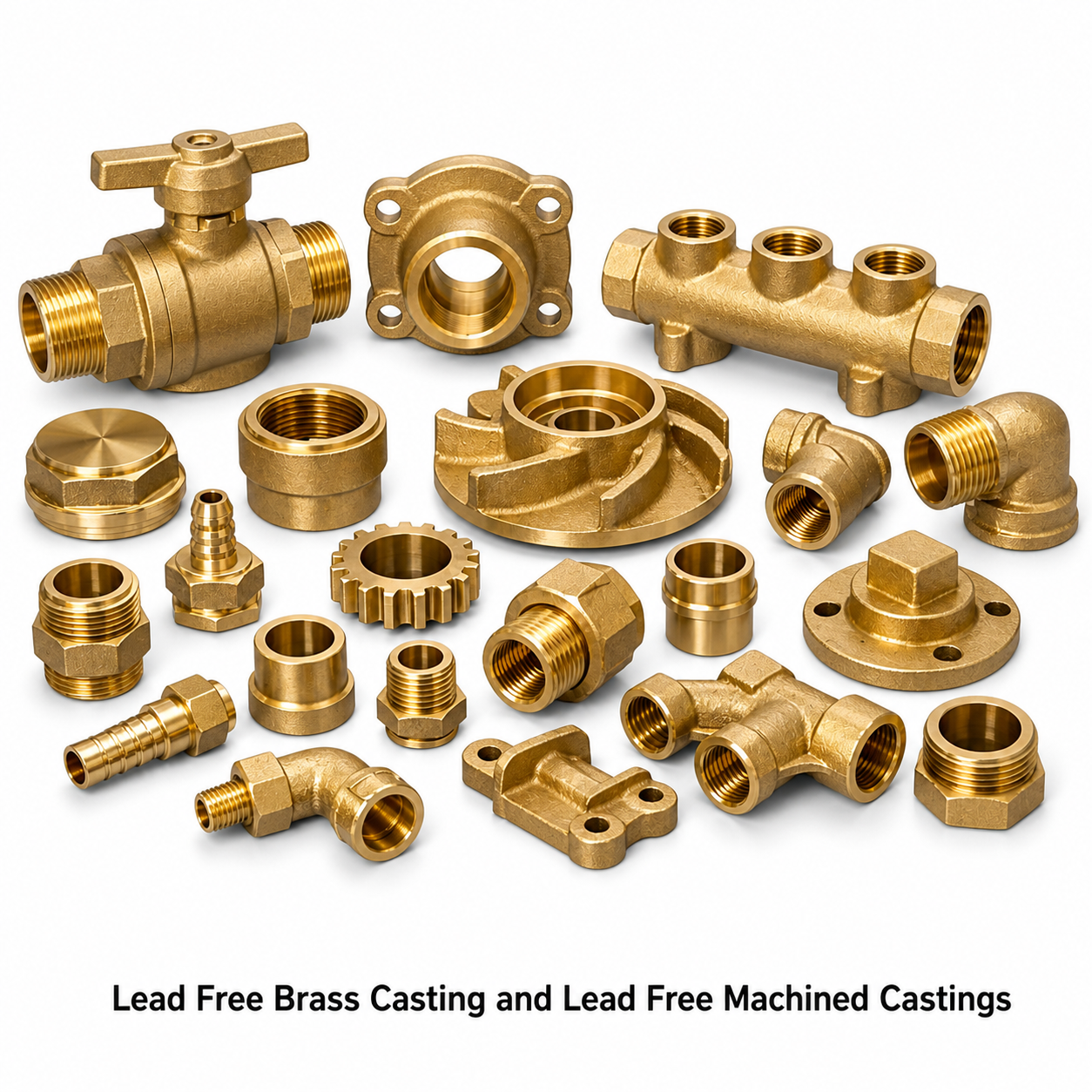
Lead-free brass castings and lead-free machined castings are precision copper-alloy components manufactured without lead additions, meeting the stringent requirements of the US Safe Drinking Water Act (SDWA 2014 "Reduction of Lead in Drinking Water Act"), NSF/ANSI 61 and NSF/ANSI 372 (<0.25% weighted average lead), EU Drinking Water Directive (98/83/EC), and California Proposition 65 lead disclosure requirements. Electrical Accessories India manufactures lead-free brass castings in alloys including C87850, C89833, C89520 (BiLead™), CW511L, and CC499K for electrical OEMs, EPC contractors, water works utilities, plumbing hardware manufacturers, power utilities, and industrial distributors worldwide. Indicative price: US$ 11.50/kilogram (subject to alloy, quantity, and specification).
Product Overview
The Regulatory Driver for Lead-Free Casting Alloys
The global shift toward lead-free brass casting alloys is driven primarily by public health regulations targeting lead contamination of potable water from plumbing fittings, valve bodies, and pipe connectors. In the USA, the Reduction of Lead in Drinking Water Act (2011, effective January 4, 2014) amended the Safe Drinking Water Act to restrict lead content in "lead-free" plumbing products to a weighted average of 0.25% across wetted surfaces — far below the previous 8% tolerance. NSF/ANSI 372:2020 provides the testing methodology for compliance verification. The EU Drinking Water Directive (recast 2020/2184/EU) targets lead elimination by 2036, and individual member states (Germany, Netherlands, UK, Sweden) have already implemented strict product approval requirements (KTW, WRAS, ACS). Additionally, RoHS Directive 2011/65/EU restricts lead content to <0.1% in electrical and electronic equipment, driving lead-free brass specification for electrical hardware including cable glands, terminals, and connectors.
Lead-Free Brass Alloy Portfolio: Technical Comparison
Electrical Accessories India works with multiple lead-free brass casting alloy systems to match customer performance and cost requirements: C87850 (silicon brass, Cu-Si-Mn) provides excellent machinability through silicon-manganese as lead replacement, achieving machinability ratings of 70–80%, with tensile strength of 310 MPa and compliance with ASTM B371 (silicon brass rod) and ASTM B584 (casting). C89833 (tin-silicon brass, Cu-Sn-Si) uses tin and silicon as lead substitutes, achieving NSF/ANSI 372 compliance with machinability of 60–70%, excellent pressure tightness, and corrosion resistance equivalent to C83600 in most service environments. C89520 (bismuth-selenium brass) uses bismuth (Bi) and selenium (Se) additions to replicate lead's chip-breaking function, achieving machinability ratings of 80–85% — the closest substitute to leaded brass machinability while achieving <0.05% lead content for NSF/ANSI 372 compliance. CW511L (European designation, EN 12420) is a hot-forming lead-free brass used for forged and wrought forms; CC499K (EN 1982) is the European sand casting grade lead-free gunmetal containing Cu-Sn-Zn-Bi.
NSF/ANSI 61 and 372 Compliance Verification
NSF/ANSI 61 (Drinking Water System Components — Health Effects) requires comprehensive toxicological testing of materials in contact with potable water, including extraction testing for lead, copper, zinc, tin, and other regulated metals at certification laboratories. NSF/ANSI 372 focuses specifically on "lead-free" designation by calculating the weighted average of lead on all wetted surfaces — a component must achieve <0.25% weighted average to be declared "lead-free" per US SDWA 2014. Electrical Accessories India sources lead-free alloy ingot and rod materials from certified suppliers with published NSF/ANSI 61/372 test data on specific alloy designations, and our castings are available with full compliance documentation traceable to certified alloy compositions for customer WRAS, KTW, ACS, and NSF 61 product approval submissions.
Machinability Challenges and Solutions in Lead-Free Alloys
The primary technical challenge in lead-free brass castings is machinability: lead's chip-breaking function is absent, resulting in long, continuous chips during turning and milling that cause tool wrap-around, surface finish degradation, and tool wear increases of 3–5× compared to leaded equivalents. Electrical Accessories India addresses this challenge through three strategies: (1) Alloy selection — specifying bismuth-selenium alloys (C89520) for high-volume machined components where machinability is critical; (2) Tooling optimization — using high-positive-rake carbide inserts with chip-breaker geometry, optimized cutting parameters (feed rate 0.10–0.15 mm/rev, cutting speed 120–180 m/min), and high-pressure coolant delivery to manage chip evacuation; (3) Process design — designing components to minimize interrupted cuts, deep bores, and long-overhang operations that amplify chip control challenges. With these measures, we achieve Ra 1.6 µm and dimensional tolerances to ISO 2768-m on lead-free brass castings as standard.
Pressure Tightness in Lead-Free Bronze Castings
Lead's role as an interdendritic micro-porosity filler is absent in lead-free alloys, creating a technical challenge for pressure-tight casting production. Electrical Accessories India addresses this through: (1) Vacuum-assisted casting for investment cast components, reducing dissolved gas porosity; (2) Directional solidification optimization through riser and chill placement to ensure progressive feeding; (3) Hot isostatic pressing (HIP) for critical-service castings requiring Class 1 radiographic quality; (4) Vacuum impregnation (resin impregnation per MIL-STD-276, Loctite 290 class) as an economical porosity seal for non-critical water fittings. Bismuth-containing lead-free alloys (C89520, CC499K) demonstrate naturally better pressure tightness than tin-silicon grades due to bismuth's partial filling of interdendritic spaces analogous to lead's mechanism.
Lead-Free Castings for Electrical Hardware
RoHS Directive 2011/65/EU (Restriction of Hazardous Substances in Electrical and Electronic Equipment) restricts lead to 0.1% maximum in EEE products placed on the EU market. Cable glands, terminal blocks, neutral link bodies, earthing clamps, and electrical connector housings manufactured from lead-free brass alloys (C87850, CW511L) comply inherently with RoHS without requiring exemption. Lead-free brass cable glands per IEC 60423 and BS 6121 are increasingly specified by European OEMs, UK electrical contractors, and export projects to RoHS-controlled markets. The electrical conductivity of lead-free brass alloys (16–22% IACS depending on alloy) meets the requirements for current-carrying electrical hardware applications in terminal blocks and grounding connectors rated to 1000A.
Lead-Free Brass in Potable Water Infrastructure
Municipal water utilities in USA, UK, Germany, Netherlands, Australia, and Canada increasingly specify NSF/ANSI 372-compliant lead-free brass fittings, valve bodies, and meter housings for new infrastructure and replacement programs. Lead-free brass gate valves (AWWA C800), corporation stops, curb stops, and service saddles manufactured from C89833 or C87850 alloys meet both mechanical performance requirements of AWWA standards and lead-free material requirements of US SDWA 2014. In the UK, WRAS-approved lead-free brass fittings are required for all new potable water installations per the Water Supply (Water Fittings) Regulations 1999. Electrical Accessories India can supply WRAS-compliant alloy material certificates and chemical analysis documentation to support customer WRAS product approval submissions for lead-free valve and fitting castings.
Key Features of Lead-Free Brass Castings
- Lead content <0.25% weighted average — NSF/ANSI 372 lead-free compliant
- Available alloys: C87850, C89833, C89520 (Bi-Se), CW511L, CC499K (EN 1982)
- Compliant with US SDWA 2014, EU DWD 2020/2184/EU, RoHS 2011/65/EU
- Sand casting, investment casting, and CNC-machined forms available
- NSF/ANSI 61 / WRAS / KTW compliance documentation support
- Tensile strength 280–400 MPa depending on alloy grade
- Full EN 10204 Type 3.1 material test reports with OES chemical analysis
- Competitive pricing versus European lead-free casting suppliers
Bismuth-Selenium Lead-Free Alloys (C89520)
C89520 (also designated as "BiLead™" brass) uses bismuth (1.0–2.5%) and selenium (0.05–0.15%) additions to replicate lead's chip-breaking function while achieving <0.05% lead content. This alloy achieves machinability ratings of 80–85% relative to C36000, the highest of any lead-free brass casting alloy, making it the preferred choice for high-volume precision-machined components such as valve seats, meter bodies, instrument housings, and cable gland bodies. The alloy's physical properties (tensile 276 MPa, hardness 65 HB, corrosion resistance equivalent to C83600) make it a near-direct substitute for C83600 in machining-intensive applications, enabling manufacturers to convert to lead-free specification with minimal process changes.
Silicon Brass Lead-Free Alloys (C87850 / CW511L)
Silicon brass alloys use silicon (2.8–4.0%) and manganese (0.5–1.5%) additions to strengthen the copper-zinc matrix and promote short chip formation during machining. C87850 achieves machinability of 70–80%, tensile strength of 310–380 MPa, and excellent casting fluidity that enables thin-section sand and investment castings. The alloy is specified in ASTM B584 and has established NSF/ANSI 61/372 compliance documentation through major North American alloy suppliers. Silicon content provides inherent dezincification resistance, making C87850 suitable for aggressive water service without DZR-grade specification. CW511L (European designation, EN 12420 CuZn42Si2Mn) is the wrought/forged equivalent used for machined-from-solid and hot-forged valve components.
Tin-Silicon Lead-Free Bronze (C89833 / CC499K)
C89833 and the European equivalent CC499K (CuSn5Zn5Pb0.5-C per EN 1982) represent the tin-silicon family of lead-free bronze casting alloys. These alloys add tin (4–6%) and silicon (0.5–1.5%) as strengthening and chip-breaking elements, resulting in tensile strength of 290–310 MPa, elongation 12–18%, and pressure tightness characteristics superior to silicon brass grades for thick-section castings. C89833/CC499K castings are accepted by NSF for NSF/ANSI 61 potable water contact and are specified in replacement applications for C83600/LG2 in UK, European, and Australian water works where lead-free compliance is required. The alloy is also referenced in BS EN 17139 (lead-free copper alloys for drinking water applications), a 2020 harmonized European standard establishing minimum performance criteria.
Technical Specifications – Lead-Free Brass Casting Alloys
| Property | C87850 (Si Brass) | C89520 (Bi-Se Brass) | C89833 (Sn-Si Bronze) | CC499K (EN 1982) |
|---|---|---|---|---|
| Cu Content | 67–71% | 86–89% | 84–87% | 85–88% |
| Zn Content | Balance | 3–5% | 3–5% | 2–5% |
| Sn Content | <0.5% | 3–5% | 4–6% | 4–6% |
| Si Content | 2.8–4.0% | <0.5% | 0.5–1.5% | <0.5% |
| Pb Content | <0.09% | <0.05% | <0.09% | <0.2% |
| Bi Content | — | 1.0–2.5% | — | <0.5% |
| Tensile Strength | 310–380 MPa | 276–310 MPa | 290–310 MPa | 280–300 MPa |
| Elongation | 15–20% | 18–22% | 12–18% | 12–16% |
| Hardness | 80–95 HB | 60–70 HB | 65–80 HB | 65–78 HB |
| Machinability | 70–80% | 80–85% | 60–70% | 60–70% |
| NSF/ANSI 372 Compliant | Yes | Yes | Yes | Yes |
| Price (Indicative) | US$ 11.50/kg | US$ 11.50/kg | US$ 11.50/kg | US$ 11.50/kg |
Regulatory Compliance Standards
| Regulation / Standard | Requirement | Applicable Market |
|---|---|---|
| US SDWA 2014 "Lead Free" | <0.25% weighted average Pb on wetted surfaces | USA, Canada |
| NSF/ANSI 61 | Toxicological testing — health effects for drinking water components | USA, Canada |
| NSF/ANSI 372 | Lead-free designation <0.25% weighted average Pb | USA, Canada |
| EU DWD 2020/2184/EU | Lead phase-out for potable water contact materials by 2036 | EU member states |
| WRAS (UK) | Water Regulations Advisory Scheme product approval | United Kingdom |
| KTW / W270 (Germany) | German potable water material approval | Germany |
| ACS (France) | French potable water material approval | France |
| RoHS 2011/65/EU | <0.1% Pb in EEE products | EU member states, UK |
| California Prop 65 | Lead warning label requirements for CA market | California, USA |
| BS EN 17139:2020 | Copper alloys for drinking water contacts — harmonized EU standard | EU / UK |
Product Types and Variants
- Lead-Free Sand Castings: Valve bodies, pipe fittings, manifold blocks, pump casings — all sizes from 100 g to 300 kg
- Lead-Free Investment Castings: Complex geometry precision parts, impellers, small valve trim, electrical connectors
- Lead-Free CNC Machined Castings: Fully machined to drawing — valve seats, meter housings, cable gland bodies, gland nuts
- Lead-Free Machined from Bar: High-volume turned parts from lead-free brass bar (C87850, CW511L) for cable glands, terminals, connectors
- Custom Lead-Free Parts: Per customer 2D/3D drawing — alloy selection guidance and DFM consultation available
Applications by Industry
| Industry | Lead-Free Brass Casting Applications |
|---|---|
| Potable Water / Utilities | NSF/ANSI 372 gate valves, globe valves, corporation stops, curb stops, service saddles, meter bodies |
| Plumbing Hardware | WRAS/KTW-compliant compression fittings, angle valves, ball valves, tap bodies, shower valves |
| Electrical / EPC | RoHS-compliant cable gland bodies, terminal blocks, neutral link housings, earthing clamps |
| Food & Beverage | Process valve bodies, pipe fittings for food-grade fluid handling where lead-free is required |
| Pharmaceutical | Lead-free CIP/SIP valve components, instrument housings for cleanroom-compatible installations |
| HVAC / Building Services | Lead-free balancing valves, pressure-independent control valves, thermostatic mixing valve bodies |
| Industrial OEM | Lead-free pump components, compressor fittings, hydraulic manifolds where RoHS compliance required |
Manufacturing Process
Lead-free brass castings at Electrical Accessories India are produced in dedicated foundry bays maintained separate from leaded alloy production areas to prevent cross-contamination. Dedicated crucibles, ladles, and tooling are used exclusively for lead-free alloy processing. Raw material is sourced from certified suppliers with published NSF/ANSI 372 and RoHS compliance documentation, and every heat is verified by in-house OES spectrometry pre-tap with results cross-checked against target composition before pouring. Casting processes include green sand (for larger valve body castings), furan no-bake (for complex cored components), and investment casting (for precision parts). CNC machining is performed on calibrated equipment with lead-free-specific cutting parameter sets optimized for chip control. Final inspection includes dimensional verification, chemical analysis certification, and surface finish measurement. All lead-free castings are dispatched with EN 10204 3.1 MTRs, OES chemical analysis certificates, and NSF/ANSI 372 / RoHS compliance declarations as standard.
Quality Standards and Certifications
- ISO 9001:2015 – Quality Management System
- ASTM B584 – C87850 / C89833 / C89520 alloy specifications
- EN 1982 – CC499K (CuSn5Zn5Pb0.5-C) casting standard
- NSF/ANSI 61 – Potable water health effects — alloy supplier certifications referenced
- NSF/ANSI 372 – Lead-free (<0.25% Pb weighted average) documentation
- BS EN 17139:2020 – Lead-free copper alloys for drinking water applications
- RoHS 2011/65/EU – Restriction of hazardous substances compliance declaration
- EN 10204 Type 3.1 – Material test reports as standard on all export orders
Why Choose Electrical Accessories India for Lead-Free Brass Castings
Electrical Accessories India offers a technically complete lead-free brass casting service covering alloy selection, DFM consultation, dedicated contamination-free foundry processing, in-house OES chemistry verification, CNC precision machining, and comprehensive regulatory compliance documentation. Our ISO 9001:2015 quality system, competitive FOB India pricing, and established export record to NSF/ANSI 372 markets (USA, Canada) and WRAS/KTW/RoHS markets (UK, EU) make us the preferred manufacturing partner for water works valve manufacturers, plumbing hardware producers, and electrical OEMs transitioning to lead-free product ranges. We provide full technical support including alloy equivalency documentation, compliance test data cross-referencing, and regulatory submission support to accelerate your product approval timeline in target markets.
Frequently Asked Questions – Lead-Free Brass Castings
Q1: What does "lead-free" mean under US SDWA 2014?
Under the US Reduction of Lead in Drinking Water Act (2014), "lead-free" means a weighted average lead content of <0.25% across all wetted surfaces of each component — not simply a lead-free bulk composition. NSF/ANSI 372 defines the calculation methodology. Solder and flux used in joining must also be <0.2% lead to qualify as "lead-free" for installation use.
Q2: Which lead-free alloy is the best substitute for C83600 in valve castings?
C89833 (tin-silicon bronze) is the closest lead-free technical equivalent to C83600 in terms of pressure tightness, corrosion resistance, and casting characteristics. C89520 (Bi-Se brass) is preferred when machinability is the priority. C87850 (silicon brass) offers the best combination of strength and NSF compliance for high-volume potable water fittings.
Q3: Are lead-free brass castings more expensive than standard C83600?
Lead-free alloys typically carry a 15–25% raw material premium over C83600 due to the cost of bismuth, silicon, and tin substitutes. However, reduced Proposition 65 compliance costs, eliminated lead waste disposal costs, and access to NSF/ANSI 372-regulated markets typically offset the material premium in total cost of ownership calculations for manufacturers serving US, UK, EU, and Australian markets.
Q4: Can you supply WRAS-approved lead-free brass castings for the UK market?
We supply lead-free brass castings with full chemical analysis documentation meeting the WRAS approval requirements. Customer product WRAS approval requires submission through WRAS-accredited test laboratories — we provide the MTRs, alloy compliance certificates, and material composition data required for the material section of WRAS product applications.
Q5: What is the machinability of lead-free brass compared to standard brass?
Bismuth-selenium alloys (C89520): 80–85% machinability. Silicon brass (C87850): 70–80%. Tin-silicon bronze (C89833): 60–70%. Standard leaded brass (C36000): 100% (reference). Standard C83600 leaded bronze: 90%. The reduction in machinability requires process adjustments but is manageable with appropriate tooling and cutting parameters.
Q6: Do you machine lead-free castings in dedicated facilities?
Yes. Lead-free alloy casting and machining is conducted in dedicated work areas with separate tooling, fixtures, and material storage to prevent lead cross-contamination. This ensures that lead-free certified castings leaving our facility maintain their compliance status throughout the manufacturing chain.
Q7: What certifications do you provide with lead-free brass castings?
Standard documentation includes: EN 10204 Type 3.1 material test report (OES chemistry + mechanical), NSF/ANSI 372 alloy compliance statement, RoHS 2011/65/EU declaration of conformity, REACH SVHC declaration, dimensional inspection report, and (where applicable) ASTM B62 pressure test certificate. Additional documentation (WRAS alloy compliance, KTW, ACS) is available on request at quotation stage.
Q8: Can lead-free castings be used in high-pressure applications?
Yes. Lead-free silicon brass (C87850) and bismuth-selenium brass (C89520) achieve pressure tightness equal to or better than C83600 when processed with appropriate directional solidification controls. Vacuum impregnation is available for Class 1 pressure service applications. Pressure test certification per ASTM B62 protocols is available for all alloy grades.
Q9: What is the price of lead-free brass castings?
Indicative price: US$ 11.50/kilogram (FOB India). Final pricing depends on alloy grade, casting process, part complexity, machining requirements, and order quantity. Volume pricing is available for orders over 500 kg/month.
Q10: Are lead-free castings suitable for food and beverage contact?
Lead-free brass and bronze alloys are generally suitable for food-grade service — however, food contact compliance depends on the specific alloy and intended food contact type (direct/indirect, fatty/aqueous/dry). Consult applicable food contact regulations (EU Regulation 10/2011, FDA 21 CFR, NSF 51) for the specific application, and request alloy-specific food contact compliance data from our technical team at time of enquiry.
Multilingual Equivalent Terms – Lead-Free Brass Casting
| Language | Terms |
|---|---|
| Spanish | Fundición de latón sin plomo / Piezas mecanizadas de bronce sin plomo / Fundición NSF/ANSI 372 sin plomo / Latón ecológico sin plomo para agua potable |
| Russian | Литьё из безсвинцовой латуни / Обработанные детали из безсвинцовой бронзы / Литьё латунь без свинца NSF/ANSI 372 / Экологичная латунь питьевая вода |
| French | Moulage en laiton sans plomb / Pièces usinées en bronze sans plomb / Fonderie NSF/ANSI 372 sans plomb / Laiton sans plomb eau potable RoHS |
| Portuguese | Fundição em latão sem chumbo / Peças usinadas de bronze sem chumbo / Fundição NSF/ANSI 372 livre de chumbo / Latão ecológico para água potável |
| Italian | Fusione in ottone senza piombo / Parti lavorate in bronzo senza piombo / Fonderia NSF/ANSI 372 senza piombo / Ottone ecologico acqua potabile RoHS |
Related Products and Linked Terms
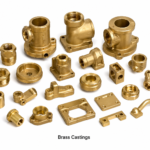
- Brass Castings
- Silicon Bronze C83600 – CDA 836 Casting
- LG2 Gunmetal Casting
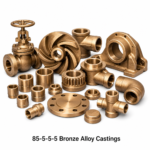
- 85-5-5-5 Bronze Alloy Casting
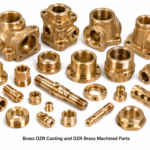
- Brass DZR Casting and DZR Machined Parts
- Phosphor Bronze Casting
- Related Terms: lead-free brass casting India, NSF/ANSI 372 casting manufacturer, C89833 casting, C87850 casting, C89520 bismuth brass casting, RoHS brass casting, WRAS-compliant casting, lead-free gunmetal casting, eco brass casting, lead-free bronze machined parts, CC499K lead-free casting, EU drinking water brass casting, SDWA 2014 compliant brass
Request a Quote – Lead-Free Brass Castings and Machined Parts
Electrical Accessories India is a leading manufacturer and exporter of lead-free brass sand castings, investment castings, and CNC-machined components complying with NSF/ANSI 372, US SDWA 2014, RoHS 2011/65/EU, and EU Drinking Water Directive requirements. Submit your drawing, BOM, or alloy specification for a competitive quotation within 24 business hours.
Indicative Price: US$ 11.50/kilogram (FOB India, subject to alloy grade, complexity, quantity, and compliance documentation requirements. Contact us for exact project pricing.)
📧 info@elecaccs.com | 🌐 www.elecaccs.com