

Product
Product Details
Aluminum Deep Drawn Parts from Sheets
Aluminum Deep Drawn Parts from Sheets — Precision Formed Aluminum Cups, Housings, and Enclosures
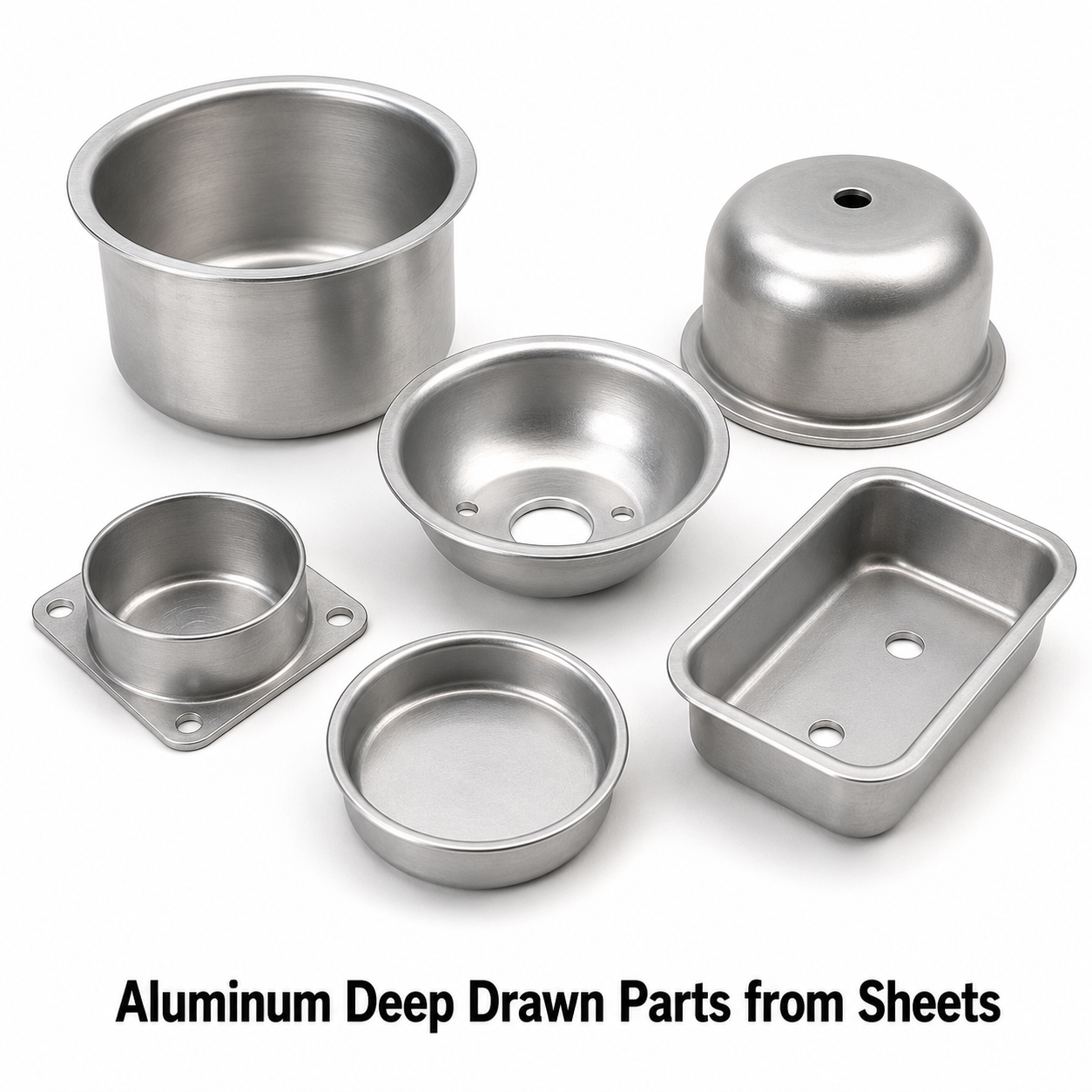
Aluminum Deep Drawn Parts from Sheets (also referred to as deep drawn aluminum components, aluminum drawing parts, aluminum formed cups, aluminum drawn housings, or aluminum cold-drawn enclosures) are hollow three-dimensional metal parts produced by the deep drawing press forming process, in which a flat aluminum sheet blank is progressively drawn into a die cavity by a punch to form a seamless, open-topped or closed-bottom cup, shell, cylinder, or complex three-dimensional shape without any welded or soldered seams. Deep drawing of aluminum produces parts with excellent strength-to-weight ratio, consistent wall thickness, watertight and hermetically sealable construction (when edge-trimmed and lidded), and smooth interior surfaces — properties that make deep drawn aluminum components essential for electrical enclosures, instrument housings, capacitor cans, battery cell housings, cable junction boxes, lighting reflectors, heat sink housings, and a wide range of industrial and defense hardware. Electrical Accessories India manufactures aluminum deep drawn parts from Al 1050-H14, Al 3003-H14, Al 5052-H32, and Al 6061-O sheet, in draw ratios up to 4:1 (with intermediate annealing), for OEM manufacturers, electrical equipment builders, EPC contractors, and industrial suppliers. Price: US$ 9.80/Kilogram
Product Overview
Deep Drawing Process: Fundamentals and Mechanics
Deep drawing is a sheet metal forming process in which a circular or shaped flat blank is placed over a die opening; a punch descends and forces the blank through the die, drawing the flange material radially inward and converting the flat blank into a three-dimensional hollow shell. The process is characterized by: (1) blank holder force — a blank holder ring applies controlled pressure on the flange to prevent wrinkling of the aluminum as it draws inward; (2) punch and die radii — corner radii on the punch nose and die opening edge are critical; too small a radius causes tearing; too large causes wrinkling; (3) draw ratio — the ratio of blank diameter (D) to cup diameter (d) is the draw ratio (DR = D/d); aluminum can be drawn to DR ~2.2 in a single draw operation (vs. ~2.0 for deep drawing steels); (4) ironing — optional thinning of the wall during drawing to control wall thickness; (5) re-drawing — for depths requiring DR > 2.2, the component undergoes one or more re-draw operations with intermediate annealing to restore formability. For complex shapes (flanged cups, domed bottoms, stepped diameters), progressive dies perform multiple forming operations in sequence on a single press stroke.
Aluminum Alloys for Deep Drawing
Not all aluminum alloys are equally suited to deep drawing. The forming behavior depends on ductility (elongation), work-hardening rate (n-value), and anisotropy (r-value). Al 1050-H14 (commercially pure, 99.5% Al) offers the highest ductility (elongation ~20% in annealed H0 condition), very low work-hardening rate, and excellent deep drawability to DR ~2.4 — used for battery cell housings, capacitor cans, toothpaste-type tubes, and food-grade containers. Al 3003-H14 (Al-Mn alloy) is the most widely used deep drawing alloy, providing a good balance of formability (elongation 16%), moderate strength (130 MPa UTS), good corrosion resistance, and consistent deep draw performance — standard for electrical junction box bodies, housing shells, HVAC components, and general industrial drawn parts. Al 5052-H32 (Al-Mg alloy) offers higher strength (210 MPa UTS) and superior corrosion resistance — used for marine junction boxes, harsh environment housings, and structural housings requiring both formability and strength. Al 6061-O (annealed temper for drawing, work-hardens to near T4 in the drawn part) provides structural-grade drawn components — used for heat sink housings, automotive electrical enclosures, and applications requiring post-drawing artificial aging to T6.
Draw Ratio, Wall Thickness, and Depth Capability
Electrical Accessories India’s deep drawing capability: blank diameter up to 600 mm; cup diameter 20 mm to 400 mm; cup depth up to 400 mm (with re-draws); draw ratio (single draw) up to 2.2:1 (Al 3003/5052) and up to 2.4:1 (Al 1050); wall thickness range 0.4 mm to 6 mm sheet input; final wall thickness after ironing: 0.3 mm to 5 mm. For multi-draw operations (draw ratio > 2.2), intermediate annealing (at 320–380°C for 30 minutes) between draws restores ductility and eliminates work-hardening embrittlement. Total achievable draw ratio (multi-draw): up to 4:1 (D/d = 4) with 1–2 intermediate anneals for Al 3003/5052. Dimensional tolerances on drawn parts: OD ±0.3 mm, depth ±0.5 mm (standard); tighter tolerances achievable with additional sizing/ironing operations.
Deep Drawn Aluminum Electrical Enclosures and Housings
The largest application volume for deep drawn aluminum at Electrical Accessories India is electrical enclosure and housing components: draw-formed aluminum enclosure bodies for junction boxes and cable pull boxes (IP44–IP66 rated when fitted with gasket and pressed lid); cylindrical instrument housings for industrial meters, transducers, and proximity sensors; lighting reflector shells (parabolic drawn forms with smooth reflector surface); capacitor can bodies (cylindrical drawn aluminum with one open end for electrolytic capacitor construction); aluminum housing bodies for HRC (High Rupturing Capacity) fuses and current-limiting fuse links; electronics housing shells for power supply and drive electronics; and heat exchanger tube end caps and header plates. All these components benefit from the watertight seamless construction of deep drawn parts, eliminating weld seams that would require post-weld treatment and leak testing.
Tooling Design for Deep Drawn Aluminum Parts
Deep drawing die sets for aluminum consist of: blanking die (to cut the flat blank from sheet or coil), draw punch, draw die, and blank holder. Tool material is typically D2 tool steel (Cr12MoV) through-hardened to 58–62 HRC with ground and polished die and punch radii (Ra ≤ 0.4 µm contact surfaces) to minimize aluminum adhesion (galling) and friction during drawing. Die clearance between punch OD and die ID is set to 105–115% of sheet thickness for drawing without ironing; 100–105% for ironing passes to control wall thickness. Blank holder pressure is computer-controlled (servo-press or hydraulic press with closed-loop pressure control) to prevent wrinkling without exceeding the tearing threshold. Progressive compound tooling combines blanking, drawing, re-drawing, and trimming in a multi-station progressive die for high-volume production (>50,000 parts/run) with consistent dimensional repeatability.
Surface Treatment Options for Deep Drawn Aluminum Parts
Deep drawn aluminum parts are produced with multiple surface treatment options: as-drawn (mill finish — typical for capacitor cans, internal components not requiring corrosion protection); bright annealed (smooth, reflective surface for lighting reflectors and aesthetic enclosures); anodizing Type II (10–20 µm) — corrosion protection and decorative finish for electrical junction boxes, instrument housings, and consumer electronics; hard anodizing Type III (25–50 µm) — for outdoor enclosures, marine housings, and high-wear applications (anodize applied after drawing, masking internal surfaces or accepting full anodize depending on application); powder coating — epoxy primer + polyester topcoat (60–80 µm total) on drawn enclosures for maximum outdoor corrosion protection; electroless nickel plating (ASTM B733, 25–75 µm) — for RF shielding enclosures, precision instrument housings, and hermetically sealed canisters requiring post-plate machining of sealing faces; chromate conversion coating (alodine, MIL-DTL-5541) — electrical bonding housings, EMI/RFI shielded enclosures, and aerospace qualification parts.
Quality Control for Drawn Aluminum Parts
Deep drawn aluminum parts are inspected for: dimensional compliance — OD, depth, wall thickness, flange diameter, and any secondary machined features are measured by CMM or gauging per inspection plan; surface defects — orange peel, galling, tearing, scoring, and wrinkling are detected by visual and tactile inspection; wall thickness uniformity — ultrasonic thickness measurement or cross-section sampling verifies consistent drawing without excessive thinning; annealing verification — hardness testing confirms full annealing between draws (Brinell hardness per annealed alloy specification); surface roughness — profilometer measurement of reflector and cosmetic surfaces; hermeticity testing — for sealed enclosures, leak test at 5 psi air pressure (submerged or pressure decay) verifies watertight construction. SPC (Statistical Process Control) is applied to critical dimensions in production runs above 1,000 pieces.
Post-Drawing Secondary Operations
Deep drawn aluminum cups and housings often require secondary operations after drawing: CNC trimming — the drawn cup lip/flange is trimmed to precise height on CNC lathe or trimming die, removing the uneven draw edge; CNC drilling/milling — cable entry holes, mounting holes, and feature machining on the drawn housing body; thread milling or tapping — threaded entries for conduit knockouts, cable glands, and fasteners; flanging — the trimmed cup opening is flanged outward to create a sealing flange for gasket and lid; beading/necking — diameter reduction at cup opening for cap retention or assembly; deburring and edge radiusing — removal of all sharp edges post-trimming and machining; final surface treatment — applied after all machining and secondary operations.
Applications by Industry and Part Type
| Industry | Part Type | Alloy | Draw Ratio |
|---|---|---|---|
| Electrical OEM | Junction box body, instrument housing | Al 3003-H14 | 1.8:1 – 2.2:1 |
| Capacitor Mfg | Electrolytic capacitor can | Al 1050-H14 | 2.0:1 – 2.4:1 |
| Lighting | Luminaire reflector housing | Al 1050/3003 | 1.5:1 – 2.0:1 |
| Defense / Aerospace | Ordnance canister, aircraft housing | Al 5052/6061 | 1.5:1 – 2.5:1 |
| Automotive / EV | Battery pouch cell housing, sensor cap | Al 3003/5052 | 2.0:1 – 3.0:1 |
| Medical Devices | Sterilizable instrument housing | Al 3003/5052 | 1.8:1 – 2.2:1 |
| Telecommunications | RF shield can, filter housing | Al 1050/3003 | 1.5:1 – 2.0:1 |
| Solar / Renewable | Junction box enclosure, inverter housing | Al 3003/5052 | 1.8:1 – 2.5:1 |
Key Features
- Seamless construction — no weld seams; inherently watertight body from single blank
- Alloys available: Al 1050-H14, Al 3003-H14, Al 5052-H32, Al 6061-O — matched to drawability and strength requirements
- Draw ratio up to 4:1 with intermediate annealing for maximum depth
- Wall thickness 0.4 mm to 6 mm input sheet; ironing to ≤0.3 mm for thin-wall cans
- Blank diameter up to 600 mm; cup diameter 20–400 mm; depth up to 400 mm
- Complete surface treatment: anodized, hard anodized, alodine, EN plated, powder coated
- Secondary operations: CNC trimming, drilling, milling, flanging, beading — integrated workflow
- ISO 9001:2015 certified; SPC applied to production runs >1,000 pieces
High-Volume Production Efficiency
Progressive die deep drawing on servo-press or hydraulic press enables production rates of 20–120 strokes/minute for standard cup sizes, making aluminum deep drawn parts cost-competitive with alternative manufacturing methods (machining, casting) at volumes above 500–1,000 pieces. Tooling investment is amortised over production quantity; for standard housings and cup shapes, tooling costs are moderate and are typically recovered within the first production order.
Thin-Wall Capabilities for Capacitor and Battery Cans
Aluminum electrolytic capacitor cans and battery cell cans require very thin wall thickness (0.3–0.6 mm) with tight OD tolerances (±0.05 mm) for consistent cell assembly. These are produced by ironing (wall ironing, also known as wall reduction) in specialized deep draw-ironing presses using hardened, polished die inserts. Al 1050-H14 (highest purity, highest ductility) is the standard alloy for capacitor cans.
IP-Rated Electrical Enclosure Bodies
Deep drawn aluminum enclosure bodies for IP44, IP55, and IP66-rated junction boxes, terminal boxes, and switch boxes are produced with precision flange faces for gasket seating, CNC-drilled cable entry knockouts, and tapped holes for cover plate fastening. Anodized (Type II or III) and powder-coated finishes are available for indoor and outdoor installations per IEC 60529 IP rating requirements.
Lighting and Reflector Applications
Aluminum deep drawn lighting reflector housings are produced with bright-annealed or chemically brightened interior surfaces (Ra ≤ 0.1 µm), providing reflectance of 80–85% (electrochemically brightened + anodized) for street lighting, stadium floodlighting, and industrial high-bay luminaire applications. Outer surfaces are powder coated for weather resistance.
Custom Profile and Flanged Parts
Beyond standard cylindrical cups, deep drawn aluminum parts include: flanged cups (horizontal flange for gasket seating and lid attachment), stepped cups (multiple diameter changes along depth), oval/rectangular drawn parts (non-circular cross-section for specific housings), domed-end cups (spherical or ogive bottom profile for pressure vessels and ordnance components), and re-entrant forms (inward-flanged or necked-in profiles for cap retention).
Technical Specifications
| Parameter | Specification |
|---|---|
| Material Grades | Al 1050-H14, Al 3003-H14, Al 5052-H32, Al 6061-O |
| Sheet Thickness (Input) | 0.4 mm to 6 mm |
| Blank Diameter | Up to 600 mm |
| Cup OD Range | 20 mm to 400 mm |
| Cup Depth Range | 10 mm to 400 mm |
| Draw Ratio (Single Draw) | Up to 2.2:1 (3003/5052); up to 2.4:1 (1050) |
| Draw Ratio (Multi-Draw) | Up to 4:1 (with intermediate annealing) |
| Wall Thickness (Min, Ironed) | 0.3 mm |
| Dimensional Tolerance (OD) | ±0.3 mm (standard); ±0.05 mm (ironed precision) |
| Depth Tolerance | ±0.5 mm (post-trimming) |
| Surface Finish | As-drawn, Anodized Type II/III, Alodine, EN Plated, Powder Coated |
| Production Rate | 20–120 parts/min (progressive die) |
| Price | US$ 9.80/Kilogram |
Alloy Comparison for Deep Drawing Applications
| Alloy | UTS (MPa) | Elongation (%) | Max Draw Ratio | Corrosion Resistance | Best Applications |
|---|---|---|---|---|---|
| Al 1050-H14 | 95 | 20–25 | 2.4:1 | Good | Capacitor cans, battery cans, tubes |
| Al 3003-H14 | 130 | 16–20 | 2.2:1 | Good | Electrical enclosures, housings, HVAC |
| Al 5052-H32 | 210 | 12–14 | 2.0:1 | Excellent | Marine enclosures, structural housings |
| Al 6061-O | 125 | 18–22 | 2.1:1 | Good | Age-hardened parts, heat sink housings |
International Alloy Equivalents for Sheet Material
| Indian Std | ISO / EN | ASTM / UNS | BS (UK) | DIN | JIS |
|---|---|---|---|---|---|
| IS 19000 (Al 1050) | EN AW-1050A | A91050 | BS 1B | Al 99.5 | A1050 |
| IS 19300 (Al 3003) | EN AW-3003 | A93003 | BS N3 | AlMn1Cu | A3003 |
| IS 19520 (Al 5052) | EN AW-5052 | A95052 | BS N4 | AlMg2,5 | A5052 |
| IS 65032 (Al 6061) | EN AW-6061 | A96061 | BS L113 | AlMgSi1Cu | A6061 |
Product Types and Variants
| Part Type | Shape | Alloy | Typical Application |
|---|---|---|---|
| Cylindrical Cup | Round, flat bottom | 1050, 3003 | Capacitor cans, battery housings |
| Flanged Cup / Housing | Round + OD flange | 3003, 5052 | Electrical junction box bodies |
| Stepped Cup | Multiple diameters | 3003, 6061 | Instrument housings, sensor caps |
| Rectangular Box | Rectangular drawn | 3003, 5052 | Switchgear enclosure shells |
| Reflector Shell | Parabolic/conical | 1050 bright | Lighting reflectors, luminaires |
| RF Shield Can | Square/rectangular | 1050, 3003 | PCB RF EMI shielding |
| Battery Cell Housing | Prismatic/cylindrical | 1050, 3003 | Li-ion, NiMH cell housings |
| Custom Drawn Enclosure | Per OEM drawing | Any above | Defense, aerospace, special purpose |
Applications in Industry
| Industry | Application | Alloy | Treatment |
|---|---|---|---|
| Electrical OEM | Junction box, terminal box bodies | Al 3003-H14 | Anodized Type II / Powder coated |
| Capacitor Manufacturing | Electrolytic capacitor can | Al 1050-H14 | As-drawn / Bright annealed |
| Lighting Industry | Luminaire reflector housing | Al 1050-H14 | Electrochemically brightened + anodized |
| EV / Automotive | Battery cell housing, sensor body | Al 1050/3003 | Anodized / As-drawn |
| Marine / Offshore | IP66 junction box, cable box | Al 5052-H32 | Hard anodized / Powder coated |
| Defense / Aerospace | Ordnance canister, instrument housing | Al 5052/6061 | Alodine / EN plated |
| Telecommunications | RF/EMI shield can, filter housing | Al 1050/3003 | As-drawn / EN plated |
| Solar / Renewable Energy | DC junction box, combiner box body | Al 3003/5052 | Anodized Type II |
Manufacturing Process
Aluminum deep drawn parts are produced from certified aluminum sheet and coil stock with material traceability to mill test certificates. Process flow: (1) Material receipt and incoming inspection — alloy verification by XRF, mechanical property testing (tensile, hardness), and thickness measurement; (2) Blanking — flat circular or shaped blanks are cut from coil or sheet on blanking press or laser/waterjet cutter; (3) Lubrication — blanks are lubricated with appropriate deep drawing lubricant (oil-based or dry film, compatible with subsequent surface treatment) to reduce friction and prevent galling; (4) First draw — blank is placed on die, punch descends, drawing the blank into the die cavity forming the initial cup; (5) Re-draw (if required) — for deep parts, the partially formed cup is re-drawn on a re-draw die; (6) Intermediate annealing (if required) — for high-draw-ratio parts, intermediate annealing at 320–380°C restores ductility; (7) Ironing (if required) — for thin-wall precision parts, a drawing-ironing press with tight die clearance reduces wall thickness; (8) Trimming — CNC trimming removes the uneven cup edge (earing) to produce a flat, level flange face; (9) Secondary operations — drilling, milling, tapping, flanging, beading as per drawing; (10) Cleaning and degreasing — removal of drawing lubricant; (11) Surface treatment — anodize, powder coat, alodine, or EN plate per specification; (12) Inspection — dimensional, surface, and functional inspection; (13) Packaging — protective packaging for drawn parts to prevent transit damage.
Quality Standards and Certifications
| Standard | Scope |
|---|---|
| ISO 9001:2015 | Quality Management System |
| MIL-A-8625 Type II/III | Anodizing specification |
| ASTM B733 | Electroless nickel plating |
| MIL-DTL-5541 | Chromate conversion (alodine) |
| ISO 9227 | Salt spray corrosion testing |
| ASTM B209 / IS 737 | Aluminum sheet material specification |
| IEC 60529 | IP ingress protection classification (for enclosure products) |
| ISO 286-1 | Dimensional tolerance system |
Why Choose Electrical Accessories India?
- In-House Toolmaking — deep draw die design and manufacture in-house for fast NPI cycle
- Wide Alloy Range — Al 1050, 3003, 5052, 6061 from certified sources with full material traceability
- High Draw Capability — up to 4:1 draw ratio with intermediate annealing for deep components
- Integrated Secondary Operations — CNC trimming, drilling, milling, flanging under one roof
- Full Surface Treatment Range — anodize, hard anodize, powder coat, EN plate, alodine
- SPC and CMM Inspection — dimensional consistency on high-volume production runs
- Price: US$ 9.80/Kilogram — competitive for deep drawn aluminum OEM and industrial supply
Frequently Asked Questions
Q1. What is the maximum depth-to-diameter ratio you can achieve?
With multi-draw operations and intermediate annealing: draw ratio up to 4:1 (blank diameter / cup diameter = 4). For Al 1050 in a single draw: up to 2.4:1. For Al 3003 with two draws and one intermediate anneal: up to 3.5:1. Very deep cups (DR > 3.5) require 3–4 draw operations.
Q2. Can you produce rectangular or non-circular deep drawn parts?
Yes. Rectangular, square, oval, and custom profile deep drawn aluminum parts are produced using shaped punch and die sets. Rectangular draw forming is more complex than circular due to corner forming stresses, but achievable for aspect ratios up to ~2:1 (length to width) in standard alloys.
Q3. What sheet thickness range can you deep draw?
Input sheet thickness from 0.4 mm to 6 mm. For thin-wall capacitor-type cans, starting from 1.0–1.5 mm sheet and ironing to final wall thickness 0.3–0.5 mm. For heavy-duty enclosure housings: 2–4 mm input sheet, no ironing.
Q4. Can you supply IP66-rated aluminum junction box bodies?
Yes. Deep drawn aluminum junction box bodies with machined flange faces, drilled cable entry positions, and tapped lid attachment holes are produced to IP66 requirements per IEC 60529. Lid, gasket, and fastener assemblies can be supplied as complete sub-assemblies. Anodize or powder coat finish available.
Q5. What is the tooling lead time for a new part?
In-house toolmaking: 3–5 weeks for a new deep draw die set (blanking die + draw die + blank holder). For simple cups in standard sizes, we may have standard tooling that can be adapted. Prototype quantities (5–10 pieces) are produced with soft tooling (machined resin or soft steel) in 1–2 weeks for form validation.
Q6. Do you supply bright-annealed aluminum for lighting reflectors?
Yes. Al 1050-H14 deep drawn reflectors with bright annealing (BA surface, reflectance ~75%) or electrochemical brightening + hard anodize (reflectance 80–85%) are produced for street lighting, high-bay, and stadium luminaire OEMs. Precise parabolic and asymmetric reflector profiles are achieved with precision ground punch tooling.
Q7. Can you produce aluminum capacitor can bodies?
Yes. Aluminum capacitor cans (cylindrical cups with one open end) in Al 1050-H14 with draw-ironed walls (0.3–0.6 mm) and OD tolerance ±0.05 mm are produced for electrolytic capacitor manufacturers. Standard diameters from 6.3 mm to 100 mm; lengths to 200 mm; in accordance with IEC 60384-4 capacitor can dimension standards.
Q8. What are the packaging requirements for export of drawn aluminum parts?
Deep drawn parts are individually separated by polystyrene trays, foam inserts, or corrugated dividers within master cartons to prevent transit scratching and denting. Reflector surfaces and cosmetic parts are individually wrapped in acid-free tissue. Export packaging is designed for sea freight (anti-humidity VCI polybag within outer carton) or air freight (lightweight foam-lined cartons). Custom labelling and bar-coding per customer requirements.
Q9. Do you supply drawn aluminum parts in annealed temper for post-drawing age-hardening?
Yes. Al 6061-O drawn parts can be supplied for customer post-draw artificial aging (T6) to achieve higher strength in the final part. We can also perform in-house artificial aging (T6 heat treatment: 170°C for 8 hours) after drawing for customers requiring the full 6061-T6 mechanical properties in the finished part.
Q10. What is the minimum order quantity for deep drawn aluminum parts?
For prototype and qualification: MOQ 5–10 pieces (using soft tooling or CNC-adapted tooling). For production with dedicated tooling: MOQ 500–1,000 pieces per part number to amortise tooling cost within acceptable unit pricing. High-volume production from 5,000 pieces/month for commodity parts.
Equivalent Terms in Other Languages
| Language | Term 1 | Term 2 | Term 3 |
|---|---|---|---|
| Spanish | Piezas embutidas de aluminio | Componentes embutición profunda aluminio | Carcasas embutidas de aluminio |
| Russian | Глубокотянутые алюминиевые детали | Штампованные корпуса из алюминия | Вытянутые алюминиевые изделия |
| French | Pièces embouties en aluminium | Composants emboutissage profond aluminium | Boîtiers emboutis en aluminium |
| Portuguese | Peças estampadas de alumínio | Componentes estampagem profunda alumínio | Carcaças estampadas em alumínio |
| Italian | Parti imbutite in alluminio | Componenti imbutitura profonda alluminio | Alloggiamenti imbutiti in alluminio |
Related Aluminum Products
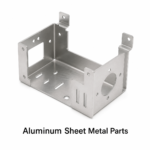
- Aluminum Sheet Metal Parts
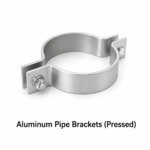
- Aluminum Pipe Brackets (Pressed)
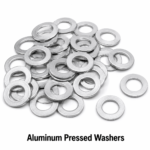
- Aluminum Pressed Washers
- Aluminum CNC Machined Components
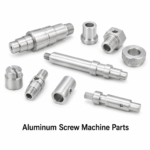
- Aluminum Screw Machine Parts
- Aluminum Machined Washers
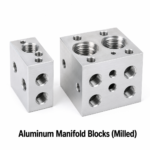
- Aluminum Manifold Blocks (Milled)
- Aluminum Cable Lugs
Get a Quote — Aluminum Deep Drawn Parts from Sheets
Provide part drawing or sketch (OD, depth, wall thickness, material, surface treatment), alloy preference, secondary operations required, quantity, and target application. For enclosure applications, specify IP rating and certification requirements.
Price: US$ 9.80/Kilogram | MOQ: 5 pcs (prototype) | Gujarat, India | Global Export