

Product
Product Details
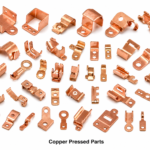
CuSn5-CW451K-C51000 Spring Hard Pressing and Stamping Parts
CuSn5 / CW451K / C51000 Spring Hard Pressing and Stamping Parts
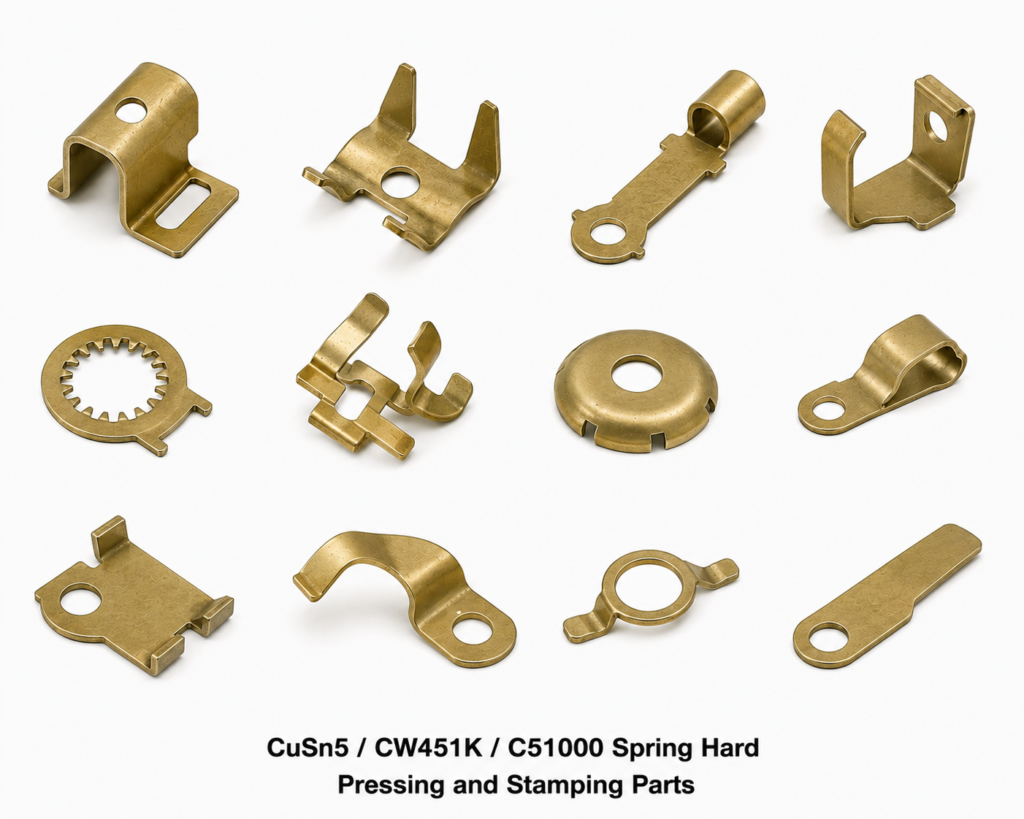
CuSn5-CW451K -C51000 Spring Hard Pressing and Stamping Parts
CuSn5 (European EN designation CW451K, US equivalent C51000, universally known as Phosphor Bronze Grade A or 5% Tin Bronze) is the premier spring and contact alloy for high-performance pressing and stamping parts in the electrical, electronics, and precision engineering sectors. With a composition of approximately 94.5–96% copper, 4.2–5.8% tin, and 0.03–0.35% phosphorus (added as a deoxidant and strengthener), CuSn5 CW451K delivers a unique combination of high fatigue strength, excellent spring properties, superior electrical conductivity (relative to other spring alloys), outstanding corrosion resistance, and reliable solderability. These properties make it the alloy of choice for high-cycle spring contacts, relay contact blades, precision connector contacts, current-carrying spring clips, and demanding pressing and stamping applications where standard brass grades cannot deliver the required mechanical performance life. Electrical Accessories India manufactures CuSn5 CW451K C51000 spring-hard pressing and stamping parts at our Jamnagar, Gujarat facility, supplying connector manufacturers, relay OEMs, switchgear manufacturers, automotive electrical suppliers, and precision electronics hardware producers in India and across 30+ international markets.
Alloy Overview – CuSn5 / CW451K / C51000 Phosphor Bronze
Metallurgy – Why Phosphor Bronze Outperforms Brass for Spring Applications
The fundamental metallurgical advantage of CuSn5 (Phosphor Bronze Grade A) over brass for spring and contact stampings is its combination of solid-solution strengthening (from 5% tin in the copper matrix) and exceptional work-hardening response. In the spring-hard temper (H08 per EN 1652, or Spring per ASTM B103), CuSn5 achieves tensile strength of 700–770 MPa with proof stress (Rp0.2) of 630–700 MPa – approximately 20–30% higher than equivalent-temper C26000 Cartridge Brass. Critically, CuSn5’s fatigue strength is substantially superior to brass: the fatigue endurance limit (at 10⁷ cycles, rotating bending) is approximately 180–220 MPa for CuSn5, compared to 100–140 MPa for 70/30 brass at equivalent hardness. This higher fatigue life translates directly into longer contact and spring life in high-cycle applications – connectors rated for 10,000+ insertion cycles, relay contacts rated for 1,000,000+ switching operations, and precision spring mechanisms requiring consistent contact force over the product lifetime. Phosphorus content (0.03–0.35%) acts as a primary deoxidant during casting (eliminating SnO₂ oxide inclusions), refines grain structure, and contributes marginally to strength. Electrical conductivity of CuSn5 is approximately 15–18% IACS – lower than brass (26–28% IACS) but acceptable for most low-to-medium current spring contact applications.
Spring-Hard Temper and Work-Hardening Characteristics
CuSn5 CW451K strip is cold-rolled from the annealed condition through a sequence of work-hardening passes to achieve progressively higher strength tempers. The standard tempers available per EN 1652 and ASTM B103 are: annealed (O60, lowest strength, highest formability), quarter-hard (H01), half-hard (H02), hard (H04), extra hard (H06), and spring hard (H08 – maximum cold-work, highest strength). For spring contact stampings and relay blade applications, extra-hard (H06) and spring-hard (H08) tempers are most commonly specified, delivering tensile strengths of 600–770 MPa. The critical parameter for spring applications is not just tensile strength but the combination of high proof stress (to resist set/relaxation under load) and sufficient elongation to survive the forming operation without cracking. CuSn5 in spring-hard temper retains 3–7% elongation – adequate for blanking, piercing, and single-axis bending to radii ≥ 2×T, but not suitable for severe multi-stage deep drawing. For complex multi-bend spring profiles requiring high precision, compensation for spring-back (typically 8–15° per 90° bend in spring-hard H08 temper) is incorporated into progressive die design.
Electrical Contact and Spring Applications
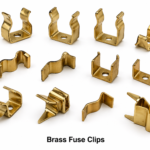
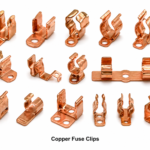
CuSn5 CW451K C51000 spring stampings are specified for the most demanding electrical contact and spring applications: high-cycle connector contacts (rated 10,000–100,000 insertions) in industrial connectors, D-sub connectors, modular connectors (RJ45), and card-edge connectors where brass contacts would fatigue and lose contact force well before service life; relay contact blades and moving contact arms in electromechanical relays rated for 1,000,000+ switching operations; precision socket contacts and pin contacts for IC test sockets and burn-in boards (requiring consistent contact force over millions of test cycles); fuse clip and fuse holder contacts where spring fatigue from repeated cartridge insertion is a failure mode for brass clips; miniature spring clips and retaining springs for panel assembly and PCB mounting; battery contact springs for portable device battery compartments; and antenna spring clips for communications equipment. In each application, CuSn5’s superior fatigue life, consistent spring-back (due to its high proof stress/tensile strength ratio), and good tin-plating compatibility provide performance that brass grades cannot sustain at rated life.
Pressing and Stamping Process for CuSn5 CW451K
Progressive die stamping of CuSn5 CW451K spring-hard strip requires specific process considerations compared to brass: tooling must use higher-hardness punch and die materials (carbide punches for CuSn5 at H06/H08 temper, due to its higher abrasiveness); blanking clearance 5–8% per side (slightly higher than for brass at equivalent thickness, to account for the higher tensile strength and reduced ductility); die radii for forming bends should be 1.5–2.0× material thickness for H06 temper and 2.0–3.0×T for H08 temper to avoid cracking on the tension side; spring-back of 8–15° per 90° bend requires precise die over-bend angles; press tonnage requirements are 30–50% higher than for equivalent-thickness brass strip; and production speed is typically lower (80–300 strokes/minute for H08 temper parts) to allow controlled deformation at each station. Secondary annealing is sometimes applied after severe forming to relieve residual stress in spring-formed features before plating, preventing hydrogen embrittlement during electrolytic plating operations.
Technical Specifications
| Property | Value / Range | Standard / Temper |
|---|---|---|
| EN Designation | CW451K | EN 1652 |
| ISO / DIN Designation | CuSn5 | ISO 427 / DIN 17662 |
| UNS Designation | C51000 | ASTM B103 |
| Common Names | Phosphor Bronze Grade A, 5% Tin Bronze, CDA 510 | – |
| Copper (Cu) | 94.5–96.0% | ASTM B103 |
| Tin (Sn) | 4.2–5.8% | ASTM B103 |
| Phosphorus (P) | 0.03–0.35% | ASTM B103 |
| Tensile Strength – Annealed (O60) | 300–380 MPa | EN 1652 / ASTM B103 |
| Tensile Strength – Half-Hard (H02) | 420–540 MPa | EN 1652 / ASTM B103 |
| Tensile Strength – Hard (H04) | 520–620 MPa | EN 1652 / ASTM B103 |
| Tensile Strength – Extra Hard (H06) | 600–700 MPa | EN 1652 / ASTM B103 |
| Tensile Strength – Spring Hard (H08) | 700–770 MPa | EN 1652 / ASTM B103 |
| Proof Stress Rp0.2 – Spring Hard | 630–700 MPa | EN 1652 / ASTM E8 |
| Elongation – Annealed | 35–55% | EN 1652 / ASTM B103 |
| Elongation – Spring Hard | 3–7% | EN 1652 / ASTM B103 |
| Hardness – Annealed | 70–90 HV | EN ISO 6507 |
| Hardness – Spring Hard (H08) | 195–220 HV | EN ISO 6507 |
| Fatigue Endurance Limit | 180–220 MPa at 10⁷ cycles | Rotating bending |
| Electrical Conductivity | 15–18% IACS | ASTM B193 |
| Thermal Conductivity | ~70 W/m·K | – |
| Density | 8.86 g/cm³ | – |
| Melting Range | 975–1050°C | – |
| Strip Thickness Range | 0.05–3.0 mm | EN 1652 / ASTM B103 |
| Spring-Back (H08, 90° bend) | 8–15° per 90° bend | Practical value |
| Minimum Bend Radius – Spring Hard | 2.0–3.0×T | Practical guideline |
International Equivalent Grades
| Standard | Designation | Common Name |
|---|---|---|
| Europe (EN 1652) | CW451K | CuSn5 Phosphor Bronze |
| ISO 427 | CuSn5 | 5% Tin Phosphor Bronze |
| Germany (DIN 17662) | CuSn5 / WNr 2.1020 | Zinnbronze 5% |
| USA (UNS / ASTM B103) | C51000 / CDA 510 | Phosphor Bronze Grade A |
| UK (BS 2870) | PB102 | Phosphor Bronze Strip |
| India (IS 7811) | Grade PB-5 | Phosphor Bronze Strip |
| Japan (JIS H3130) | C5100 | りん青銅 (Phosphor Bronze) |
| China (GB/T 2059) | QSn5-0.1 | 锡青铜 (Tin Bronze) |
Product Types and Variants
| Product Type | Temper | Description | Typical Dimensions |
|---|---|---|---|
| Connector Spring Contacts | H06 / H08 | Bifurcated, tulip, beam contacts for industrial connectors | 0.1–0.5 mm strip, custom geometry |
| Relay Contact Blades | H06 / H08 | Moving contact arms for electromechanical relays | 0.2–0.8 mm strip |
| Fuse Clip Contacts | H04 / H06 | High-cycle fuse holder clips for cartridge fuses | 0.5–1.5 mm strip |
| Battery Contact Springs | H06 / H08 | Compression and leaf spring battery contacts | 0.2–0.6 mm strip |
| PCB Spring Clips | H06 | Spring-retention clips for PCB mounting | 0.3–1.0 mm strip |
| Precision Socket Contacts | H08 | High-cycle test socket and IC socket contacts | 0.1–0.3 mm strip |
| Antenna Spring Contacts | H06 / H08 | Ground and signal spring contacts for RF/antenna assemblies | 0.2–0.5 mm strip |
| Precision Blanks and Shims | H02 / H04 | Flat blanks and shimstock for precision assembly | 0.05–1.0 mm, various |
Key Features
- Tensile strength up to 770 MPa in spring-hard temper (H08) – 20–30% higher than brass at equivalent temper
- Fatigue endurance limit 180–220 MPa: extends contact and spring service life 3–5× versus brass
- High proof stress / tensile ratio (≥0.90): minimal spring set and relaxation under sustained load
- Excellent corrosion resistance: no dezincification, low susceptibility to stress corrosion cracking in clean environments
- Good solderability and compatibility with tin, nickel, silver, and gold plating systems
- RoHS 2011/65/EU compliant: no restricted substances above limits (no lead, no cadmium)
- Available in 0.05–3.0 mm strip thickness for micro-contacts to heavy spring stampings
- ISO 9001:2015 certified production; EN 1652 CW451K and ASTM B103 C51000 certified strip
- In-house progressive die toolroom with carbide punch capability for hard-alloy strip processing
CuSn5 vs Brass – Spring Performance Comparison
| Property | CuSn5 CW451K (H08) | CuZn30 CW505L (H06) | Advantage |
|---|---|---|---|
| Tensile Strength | 700–770 MPa | 560–660 MPa | CuSn5 +15–20% |
| Proof Stress Rp0.2 | 630–700 MPa | 480–580 MPa | CuSn5 +20–25% |
| Fatigue Endurance (10⁷) | 180–220 MPa | 100–140 MPa | CuSn5 +60–80% |
| Electrical Conductivity | 15–18% IACS | 26–28% IACS | CuZn30 +60% |
| Formability (Bend Radius) | 2.0–3.0×T (H08) | 1.0–1.5×T (H06) | CuZn30 (easier forming) |
| Corrosion Resistance | Excellent (no Zn) | Very Good (low Zn) | CuSn5 superior in aggressive media |
| Cost / kg | Higher (higher Cu content) | Lower | CuZn30 (lower material cost) |
Surface Finishing Options
| Finish | Specification | Application |
|---|---|---|
| Bright Tin Plating | 3–10 µm, ASTM B545 | Connector contacts, solderability, tarnish prevention |
| Reflow Tin (Hot-Dip) | 5–15 µm | Fuse clips, heavy-duty contacts |
| Electrolytic Nickel Underplate | 1–3 µm (barrier layer) | Pre-plate for gold and silver on precision contacts |
| Silver Plating | 3–10 µm, ASTM B700 | Relay contacts, high-current connectors |
| Gold Flash (over Ni) | 0.1–0.5 µm, ASTM B488 | IC test contacts, high-reliability connectors |
| Selective Plating | Contact area only | Cost optimisation on complex contact stampings |
Quality Standards and Certifications
| Standard / Certification | Applicability |
|---|---|
| ISO 9001:2015 | Quality Management System |
| EN 1652 CW451K | Copper alloys – plate, sheet, strip (CuSn5 phosphor bronze) |
| ASTM B103 | Phosphor bronze strip for spring applications (C51000) |
| IS 7811 | Indian standard – phosphor bronze strip |
| EN 10204 3.1 | Material test report with every coil batch |
| IEC 60352 | Solderless connections – applicable to spring contact assemblies |
| RoHS 2011/65/EU | Fully compliant – no restricted substances above thresholds |
| REACH SVHC | SVHC declaration – no SVHC above 0.1% w/w |
| ISO 2859-1 | AQL inspection sampling plan |
Pricing
CuSn5 / CW451K / C51000 Spring Hard Pressing and Stamping Parts: US$ 15.90 per kilogram (CIF major port, indicative). Final price is subject to order quantity, strip temper, part geometry, plating specification, and secondary operations. MOQ 50 kg per part number. Contact us with drawings or specifications for a firm quotation within 24 business hours.
Frequently Asked Questions
1. What is the difference between CuSn5 CW451K and C51000?
CuSn5 is the ISO/DIN chemical composition designation; CW451K is the EN 1652 material number (European standard); C51000 (CDA 510) is the UNS designation used in ASTM B103. All refer to 5% tin phosphor bronze strip containing 94.5–96% Cu, 4.2–5.8% Sn, 0.03–0.35% P. They are equivalent alloys under different national standards.
2. Why is CuSn5 called Phosphor Bronze if it contains mostly copper and tin?
The “phosphor” in phosphor bronze refers to the small phosphorus addition (0.03–0.35%) made during casting as a deoxidant. Phosphorus removes dissolved oxygen as phosphorus pentoxide slag, producing a clean, dense casting. Residual phosphorus in the finished alloy also refines grain structure and contributes marginally to strength. The tin content provides the primary strengthening and spring properties.
3. How many insertion cycles can CuSn5 C51000 spring contacts withstand vs brass?
In standard connector applications with tin-plated contacts, CuSn5 spring contacts typically achieve 10,000–50,000 insertion cycles before exceeding the maximum allowed contact force reduction (typically 20% of initial contact force). Tin-plated brass contacts in equivalent geometry may achieve 3,000–10,000 cycles. For gold-plated CuSn5 contacts in telecom and data connectors, 100,000+ cycles are achievable with appropriate plating specification.
4. Can CuSn5 CW451K be deep drawn?
Not in spring-hard (H08) or hard (H04) temper. In the annealed condition, CuSn5 has elongation of 35–55% and can be deep-drawn (LDR up to 2.0 single draw), but it work-hardens more rapidly than brass between draw stages, requiring more frequent intermediate annealing. For most high-volume spring contact stampings, the strip is used in H06 or H08 temper and limited to blanking and bending operations.
5. What plating is recommended for CuSn5 C51000 relay contact blades?
For relay contact blades: silver plating (5–10 µm ASTM B700) is standard for general-purpose electromechanical relays up to 16A. For high-current relays: silver with graphite or silver-palladium overlay. For low-current signal relays requiring wipe action: nickel underplate (2–3 µm) + gold flash (0.2–0.5 µm) provides the most reliable low-resistance contact over service life. Tin plating is not recommended for relay contacts due to fretting corrosion and tin whisker concerns.
6. What minimum strip thickness is available for CuSn5 C51000 precision contacts?
Electrical Accessories India stamps CuSn5 strip from 0.05 mm (50 micron foil) for the finest micro-contact applications, up to 3.0 mm for heavy spring stampings. Most connector spring contacts are produced from 0.1–0.5 mm strip. Precision micro-stamping tooling (carbide punches, wire EDM-cut dies) is used for strip thicknesses below 0.3 mm.
Related Products
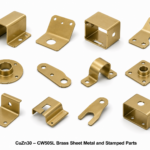
- CuZn30 – CW505L Brass Sheet Metal and Stamped Parts
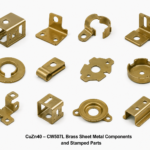
- CuZn40 – CW507L Brass Sheet Metal Components and Stamped Parts
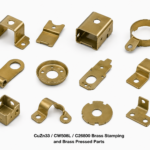
- CuZn33 / CW508L / C26800 Brass Stamping and Brass Pressed Parts
- Brass Stampings – Brass Stamped Parts and Components
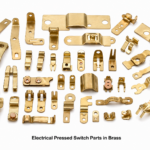
- Electrical Pressed Switch Parts in Brass
Request a Quote
Electrical Accessories India manufactures CuSn5 / CW451K / C51000 phosphor bronze spring-hard pressing and stamping parts for global connector OEMs, relay manufacturers, switchgear builders, and electronics hardware producers. Indicative price: US$ 15.90/kg. Contact us with drawings or specifications for a firm quotation within 24 business hours.
Email: info@elecaccs.com | Website: www.elecaccs.com