

Product
Product Details
Brass Lock Nuts
Brass Lock Nuts for Cable Glands
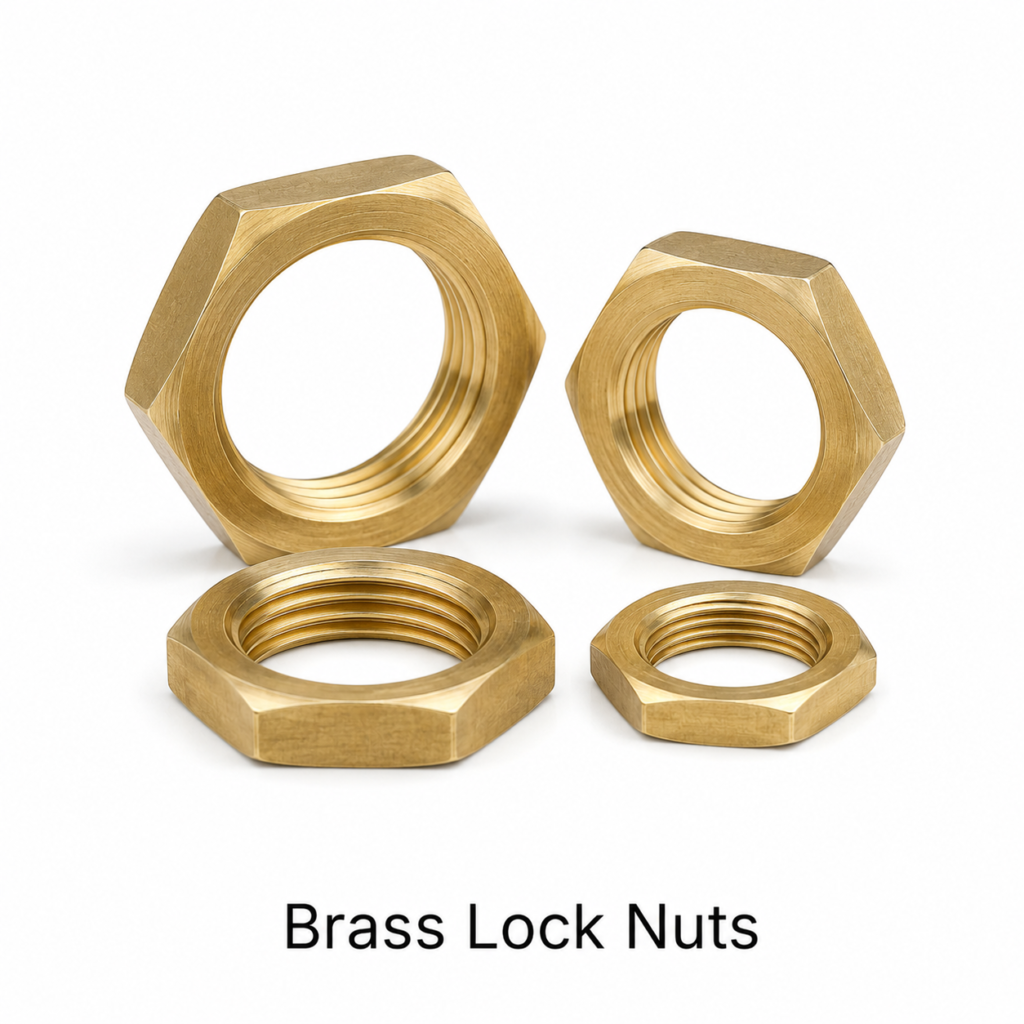
Brass lock nuts are precision-machined threaded fasteners used to secure cable glands, conduit fittings, and cable entry devices to electrical enclosures, junction boxes, control panels, and switchgear. Manufactured by Electrical Accessories India at our Jamnagar facility, these lock nuts are available in metric thread sizes M16 to M90 (1.5 mm pitch) and NPT thread sizes from 1/4″ to 2″. Produced from free-machining brass alloys conforming to IS 319, BS 2874 CZ121, and DIN 17660 CW614N, they deliver superior corrosion resistance, electrical conductivity, and mechanical integrity for industrial electrical installations worldwide.
Price: US$ 14.50 per kilogram (Ex-works Jamnagar, India). Minimum order quantities and volume pricing available — contact sales@elecaccs.com.
Product Overview
What Are Brass Lock Nuts?
A brass lock nut (also known as a cable gland nut, conduit lock nut, jam nut, or gland sealing nut) is a thin-profile internally threaded ring that mates with the external thread of a cable gland body. When tightened against the enclosure wall, it clamps the gland securely, preventing rotation, maintaining IP sealing integrity, and providing a continuous bonding path for earthing. Lock nuts are essential components in hazardous area installations, marine wiring, industrial control panels, motor terminal boxes, and power distribution assemblies. Related items include: cable gland bodies, armour clamps, earth tags, shrouds, thread reducers, sealing washers, neoprene grommets, and stopping plugs.
Material Composition and Alloy Grades
Our brass lock nuts are manufactured from high free-machining brass containing 57–59% copper and 39–42% zinc with small lead additions (1.5–3.5%) for superior machinability. The primary alloys used are IS 319 Type I, CW614N (EN 12164), CZ121 (BS 2874), and UNS C36000 (American Free-Cutting Brass). These alloys exhibit tensile strength of 340–490 MPa, yield strength of 140–310 MPa, Brinell hardness of 80–110 HB, and excellent resistance to atmospheric corrosion, humidity, and salt spray. Optional dezincification-resistant (DZR) brass grades CW602N and CZ132 are available for marine and coastal installations where chloride exposure is a concern.
Thread Standards and Dimensional Range
Brass lock nuts for cable glands are produced in two primary thread families. Metric threads conform to ISO 965-1 and DIN 13, covering sizes M16×1.5, M20×1.5, M25×1.5, M32×1.5, M40×1.5, M50×1.5, M63×1.5, M75×1.5, and M90×1.5 — all with 1.5 mm pitch for fine-thread sealing applications. NPT (National Pipe Taper) threads conform to ANSI/ASME B1.20.1, covering 1/4″, 3/8″, 1/2″, 3/4″, 1″, 1-1/4″, 1-1/2″, and 2″. PG (Panzergewinde) threads per DIN 40430 — PG7 through PG48 — are also available on request. All threads are gauged using calibrated plug and ring gauges traceable to national standards.
Surface Finishes and Protective Coatings
Standard supply finish is natural bright brass (as-machined with deburring and tumble polishing). Optional surface treatments include: nickel plating (5–10 µm electroless or electrolytic) for enhanced corrosion resistance and aesthetic finish; tin plating (3–8 µm) for improved solderability and low contact resistance; chrome plating for decorative or high-wear applications; and hot-dip galvanizing for outdoor or underground use. Parts intended for ATEX/IECEx hazardous area use are supplied with surface roughness Ra ≤ 3.2 µm on seating faces to maintain flameproof integrity.
Design Variants and Configurations
Lock nuts are supplied in several configurations to suit different installation requirements: standard hexagonal lock nuts (most common, wrench-tightened); round knurled lock nuts (hand-tightened, for accessible locations); nylon insert lock nuts (with integrated neoprene locking ring for vibration resistance); double lock nut assemblies; flanged lock nuts with integral sealing washer; and reduced-profile thin lock nuts for tight panel cutouts. Each variant is available across the full metric M16–M90 and NPT 1/4″–2″ range.
Corrosion Resistance and Environmental Performance
Brass lock nuts provide inherent corrosion resistance suitable for indoor and outdoor industrial environments, including Class C3 and C4 atmospheric corrosivity categories per ISO 9223. For coastal (C5-M) and marine (Im3) environments, DZR brass or nickel-plated variants are recommended. Salt spray test performance per IEC 60068-2-11 (NSS test) shows no red rust after 96 hours on standard brass and over 200 hours on nickel-plated parts. UV resistance, thermal cycling from -60°C to +120°C, and resistance to oils, fuels, and cleaning agents are verified per IEC 60529 ingress protection test protocols.
Packaging, Labelling, and Traceability
Lock nuts are packaged in polybag-lined cardboard boxes with quantity, size, material grade, batch number, and country of origin clearly marked. Bulk orders are palletized with shrink-wrap. Each lot is traceable to raw material certificates (EN 10204 3.1 mill certificates), dimensional inspection records, and surface finish test reports. Custom branding, OEM marking, and barcode labelling are available on request for distribution and maintenance applications.
Key Features
- Full metric M16–M90 (1.5 mm pitch) and NPT 1/4″ to 2″ thread coverage
- Free-machining brass: IS 319 / CW614N / CZ121 / UNS C36000
- Tight dimensional tolerances: thread class 6H/6g per ISO 965
- Multiple surface finishes: natural, nickel, tin, chrome plated
- DZR brass option for marine and coastal environments
- Compatible with all major cable gland brands and conduit systems
- ATEX/IECEx compatible designs available
- EN 10204 3.1 material certification on request
Dimensional Accuracy and Thread Tolerances
All brass lock nuts are machined on CNC automatic lathes and Swiss-type screw machines to achieve thread tolerances of class 6H (internal) as per ISO 965-1. Pitch diameter, major diameter, and minor diameter are verified using calibrated thread plug gauges (Go/No-Go) on 100% of production. Flatness of bearing faces is maintained within 0.05 mm, and perpendicularity of thread axis to bearing face is controlled to within 0.3°. These tight tolerances ensure correct engagement with cable gland threads and prevent cross-threading or stripping during installation.
Electrical Continuity and Earthing Performance
Brass lock nuts provide a low-resistance electrical bonding path between the cable gland body and the enclosure, supporting protective earth (PE) continuity in TN-S, TN-C-S, and TT earthing systems. Contact resistance across the lock nut–enclosure interface is typically less than 0.1 mΩ, complying with IEC 60079-14 earthing requirements for hazardous area installations. For enhanced earthing, earth tags (brass earthing tags) are often installed under the lock nut — see our Earth Tags Brass product page.
Mechanical Torque and Vibration Resistance
Recommended installation torque for metric brass lock nuts ranges from 8 N·m (M16) to 120 N·m (M90), using calibrated torque wrenches per IEC 60079-14 requirements. Nylon insert variants provide self-locking performance, maintaining clamp load under vibration levels up to 10g per IEC 60068-2-6. Double lock nut configurations are recommended for high-vibration environments such as motor terminal boxes, compressor panels, and offshore platform installations.
Compatibility with Cable Gland Standards
Lock nuts are designed to be compatible with cable glands conforming to BS 6121, IEC 62444, EN 50262, and IS 12943 standards. They fit all common cable gland types including single-compression, double-compression, armoured cable glands, Ex d/Ex e glands (ATEX), and stuffing glands. Thread dimensions match standard cable gland bodies from leading manufacturers as well as our own product range including Thread Reducers and Adapters.
High-Temperature and Chemical Resistance
Standard brass lock nuts are rated for continuous service temperatures of -20°C to +105°C. For high-temperature applications such as furnace panels, motor junction boxes, and steam-line installations, nickel-plated brass or stainless steel alternatives should be considered — see our Stainless Steel Lock Nuts page. Brass exhibits excellent resistance to acetone, alcohols, dilute acids, and alkalis but should not be used in contact with ammonia, amines, or concentrated nitric acid.
Standardisation and Interchangeability
Electrical Accessories India brass lock nuts are manufactured to interchangeable dimensions, allowing drop-in replacement of lock nuts from other suppliers. Our metric thread lock nuts conform to DIN 46320 (cable gland thread form), and NPT versions comply with ASME B1.20.1. This ensures compatibility across global projects and reduces inventory complexity for EPC contractors, MRO distributors, and plant maintenance teams managing multi-brand installations.
Technical Specifications
| Parameter | Specification |
|---|---|
| Material | Brass IS 319 / CW614N (EN 12164) / CZ121 (BS 2874) / UNS C36000 |
| Thread – Metric | M16 to M90, Pitch 1.5 mm, ISO 965-1, Class 6H |
| Thread – NPT | 1/4″ to 2″, ANSI/ASME B1.20.1 |
| Thread – PG (optional) | PG7 to PG48, DIN 40430 |
| Surface Finish (standard) | Natural bright brass, tumble polished |
| Surface Finish (optional) | Nickel plated (5–10 µm), Tin plated (3–8 µm), Chrome plated |
| Hardness | 80–110 HB (Brinell) |
| Tensile Strength | 340–490 MPa |
| Temperature Range | -20°C to +105°C (standard); up to +150°C (nickel plated) |
| Corrosion Resistance | 96 hrs salt spray NSS per IEC 60068-2-11 (standard brass) |
| IP Rating Support | Supports IP54 to IP68 (depends on gland assembly) |
| Lead Content | 1.5–3.5% (standard); Low-lead/RoHS grades available |
| Material Certification | EN 10204 3.1 available on request |
| Price | US$ 14.50 per kilogram (Ex-works Jamnagar) |
Metric Thread Size Reference Table
| Metric Size | Pitch (mm) | A/F (mm) | Thickness (mm) | Compatible Gland Size |
|---|---|---|---|---|
| M16 | 1.5 | 22 | 5 | Suitable for Ø8–14 mm cable |
| M20 | 1.5 | 27 | 6 | Suitable for Ø10–17 mm cable |
| M25 | 1.5 | 32 | 7 | Suitable for Ø13–21 mm cable |
| M32 | 1.5 | 41 | 8 | Suitable for Ø18–28 mm cable |
| M40 | 1.5 | 50 | 9 | Suitable for Ø25–35 mm cable |
| M50 | 1.5 | 60 | 10 | Suitable for Ø32–44 mm cable |
| M63 | 1.5 | 75 | 11 | Suitable for Ø42–57 mm cable |
| M75 | 1.5 | 90 | 12 | Suitable for Ø53–68 mm cable |
| M90 | 1.5 | 105 | 13 | Suitable for Ø62–82 mm cable |
NPT Thread Size Reference Table
| NPT Size | TPI | A/F (mm) | Equivalent Metric |
|---|---|---|---|
| 1/4″ NPT | 18 | 22 | ~M16 |
| 3/8″ NPT | 18 | 27 | ~M20 |
| 1/2″ NPT | 14 | 32 | ~M25 |
| 3/4″ NPT | 14 | 41 | ~M32 |
| 1″ NPT | 11.5 | 50 | ~M40 |
| 1-1/4″ NPT | 11.5 | 60 | ~M50 |
| 1-1/2″ NPT | 11.5 | 75 | ~M63 |
| 2″ NPT | 11.5 | 90 | ~M75 |
Raw Material Grade Equivalents
| Standard | Grade | Cu% | Zn% | Pb% |
|---|---|---|---|---|
| IS 319 (India) | Type I | 57–59 | Bal. | 1.5–2.5 |
| EN 12164 (Europe) | CW614N | 57–59 | Bal. | 2.5–3.5 |
| BS 2874 (UK) | CZ121 | 57–59 | Bal. | 2.5–3.5 |
| ASTM B16 (USA) | UNS C36000 | 60–63 | Bal. | 2.5–3.7 |
| DIN 17660 (Germany) | Ms58 | 57–59 | Bal. | 2.5–3.5 |
| JIS H3250 (Japan) | C3604 | 59–63 | Bal. | 1.8–3.7 |
| DZR (Dezinc. Resist.) | CW602N / CZ132 | 61–63 | Bal. | 0.2–0.8 |
Product Types and Variants
| Variant | Description | Application |
|---|---|---|
| Hexagonal Lock Nut | Standard 6-sided, wrench-tightened | General industrial panels, switchgear |
| Round Knurled Lock Nut | Smooth round profile, hand-tightened | Accessible enclosures, field wiring |
| Nylon Insert Lock Nut | Brass body with neoprene locking ring | High-vibration environments, OEM equipment |
| Flanged Lock Nut | Integral flange with sealing washer | IP66/IP68 sealing, outdoor enclosures |
| Thin / Jam Lock Nut | Reduced axial profile | Tight panel cutouts, double-nut assemblies |
| DZR Brass Lock Nut | Dezincification-resistant alloy | Marine, coastal, and offshore installations |
| Nickel-Plated Lock Nut | Electroless nickel, 5–10 µm | Corrosive atmospheres, food processing |
Applications in Industry
| Industry Sector | Typical Application |
|---|---|
| Oil & Gas | Hazardous area (ATEX Zone 1/2) junction boxes, wellhead panels |
| Power Generation | Generator terminal boxes, transformer cable entries, switchyard panels |
| Marine & Offshore | Deck fittings, engine room enclosures, navigation system panels |
| Industrial Automation | Control panels, PLC enclosures, motor starters, VFD cabinets |
| Railways | Traction motor junction boxes, signal equipment housings |
| Water & Wastewater | Pump control panels, submersible cable entries, outdoor kiosks |
| Construction (EPC) | Infrastructure wiring, cable tray systems, building management systems |
| Renewable Energy | Solar inverter boxes, wind turbine nacelle wiring, battery enclosures |
Manufacturing Process
Brass lock nuts are manufactured at our Jamnagar facility using the following process sequence:
- Raw Material Procurement: Free-machining brass rods (IS 319 / CW614N) sourced from certified mills with EN 10204 3.1 certificates. Incoming material verified for chemical composition by XRF spectroscopy.
- CNC Turning: Brass rods are fed into CNC automatic lathes and Swiss-type screw machines. The OD, ID, and bearing face are machined in a single setup to ensure concentricity within 0.05 mm.
- Thread Cutting: Internal threads are cut using form taps or thread-milling on CNC machining centres. Thread gauging (Go/No-Go) performed 100% in-process.
- Milling / Hexagon Forming: Hexagonal profiles are milled using multi-spindle milling fixtures. Knurling applied to round lock nuts using diamond-pattern knurling tools.
- Deburring and Finishing: Parts are vibratory-tumbled in ceramic media for deburring and edge radiusing. Surface roughness Ra verified at critical sealing faces.
- Surface Treatment: Optional electroplating (nickel, tin, chrome) performed in controlled bath lines to specified thickness. Adhesion tested per ASTM B571.
- Final Inspection and Packing: Dimensional inspection per drawing, visual inspection per AQL 2.5, thread gauging, and hardness spot-checks. Packed with batch traceability labels.
Quality Standards and Certifications
| Standard / Certification | Applicability |
|---|---|
| ISO 9001:2015 | Quality Management System |
| IS 319 | Free-cutting brass rod material standard (India) |
| EN 12164 / CW614N | European brass alloy standard |
| ISO 965-1 | Metric thread tolerance and gauging |
| ANSI/ASME B1.20.1 | NPT thread standard |
| IEC 62444 | Cable gland performance standard |
| IEC 60079-14 | Electrical installations in hazardous areas |
| EN 10204 3.1 | Material test certificates (on request) |
| RoHS 2011/65/EU | Restriction of Hazardous Substances (low-lead grades available) |
Why Choose Electrical Accessories India
- 50+ Years of Manufacturing Experience in precision brass and copper parts from Jamnagar — India’s brass capital
- Full Thread Range In-House: Metric M16–M90 and NPT 1/4″–2″ from a single source
- Strict Quality Control: 100% thread gauging, AQL 2.5 visual inspection, XRF material verification
- Flexible MOQ: Suitable for project quantities and ongoing OEM supply contracts
- Fast Delivery: Standard sizes ex-stock; custom sizes in 3–5 weeks
- Export Experience: Regular shipments to USA, UK, Germany, UAE, Australia, Singapore
- Technical Support: Application engineering assistance for ATEX, marine, and heavy industrial projects
- Competitive Pricing: US$ 14.50/kg — direct manufacturer pricing with no middlemen
Frequently Asked Questions (FAQ)
Q1. What is the difference between a brass lock nut and a conduit locknut?
A cable gland lock nut is threaded to match the cable gland body (metric or NPT), while a conduit locknut uses coarser threads designed for rigid conduit systems. Cable gland lock nuts are precision-machined for IP-rated sealing and are not interchangeable with standard conduit locknuts.
Q2. Can brass lock nuts be used in ATEX hazardous areas?
Yes. Brass lock nuts are suitable for ATEX Zone 1 and Zone 2 (Group IIB) installations when used with certified Ex d or Ex e cable glands. Installation must comply with IEC 60079-14 requirements, including correct torque values and earth bonding.
Q3. What thread pitch are your metric lock nuts?
All our metric lock nuts use a 1.5 mm pitch (fine thread), conforming to ISO 965-1 and DIN 46320 cable gland thread standard, covering M16 through M90.
Q4. Are DZR brass lock nuts available for marine applications?
Yes. We supply dezincification-resistant (DZR) brass lock nuts in CW602N and CZ132 alloys, recommended for marine, offshore, and coastal environments where chloride-induced dezincification of standard brass is a risk.
Q5. What is the standard delivery time for brass lock nuts?
Common metric sizes (M20–M50) are typically available ex-stock for immediate dispatch. Non-standard sizes and special finishes have a lead time of 3–5 weeks from order confirmation.
Q6. Do you provide EN 10204 3.1 material test certificates?
Yes. EN 10204 3.1 mill certificates covering chemical composition and mechanical properties are available on request at the time of order.
Q7. Can I order nickel-plated lock nuts in both metric and NPT sizes?
Yes. Electroless nickel plating (5–10 µm) is available across the full metric and NPT size range. Plating thickness and adhesion are verified per ASTM B571.
Q8. What is the minimum order quantity (MOQ)?
MOQ depends on size and finish. For standard metric sizes in natural brass, MOQ is typically 500 pieces. For special sizes or plated finishes, MOQ is 1,000 pieces. Project quantities below MOQ can be discussed.
Q9. How do brass lock nuts compare to stainless steel lock nuts?
Brass lock nuts offer better machinability, electrical conductivity, and cost-effectiveness. Stainless steel lock nuts offer superior corrosion resistance, especially in aggressive chemical environments. See our Stainless Steel Lock Nuts page for comparison.
Q10. Are your lock nuts RoHS compliant?
Low-lead and lead-free brass grades compliant with RoHS Directive 2011/65/EU are available on request, including EN 12164 CW625N (bismuth-free machining brass) and CW724R (eco-brass).
Equivalent Terms in Other Languages
| Language | Term 1 | Term 2 | Term 3 |
|---|---|---|---|
| Spanish | Tuerca de bloqueo de latón | Contratuerca de latón | Tuerca prensaestopas de latón |
| French | Écrou de blocage en laiton | Contre-écrou laiton | Écrou de presse-étoupe laiton |
| Russian | Контргайка латунная | Гайка фиксирующая латунная | Латунная гайка кабельного ввода |
| Portuguese | Porca de travamento em latão | Contraporca de latão | Porca de prensa-cabo latão |
| Italian | Dado di bloccaggio in ottone | Controdado in ottone | Dado pressacavo in ottone |
Related Products – Cable Glands Accessories
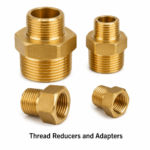
- Thread Reducers and Adapters – Metric and NPT thread conversion fittings
- Earth Tags Brass – Brass earthing/grounding tags for cable gland assemblies
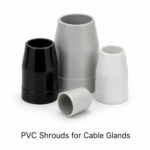
- PVC Shrouds for Cable Glands – Protective PVC covers for cable gland sealing
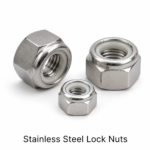
- Stainless Steel Lock Nuts – SS 304/316 lock nuts for corrosive environments
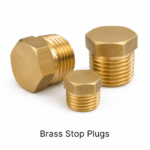
- Brass Stop Plugs – Sealing plugs for unused cable gland entries
Request a Quote
Electrical Accessories India supplies brass lock nuts to electrical OEMs, EPC contractors, power utilities, MRO distributors, and panel builders worldwide. Pricing starts at US$ 14.50 per kilogram (Ex-works Jamnagar, India).
To request a quotation, samples, or technical data sheets, contact us at:
📧 sales@elecaccs.com
📞 +91-22-43449300 | +91-22-43449323
🌐 Contact Form