

Product
Product Details
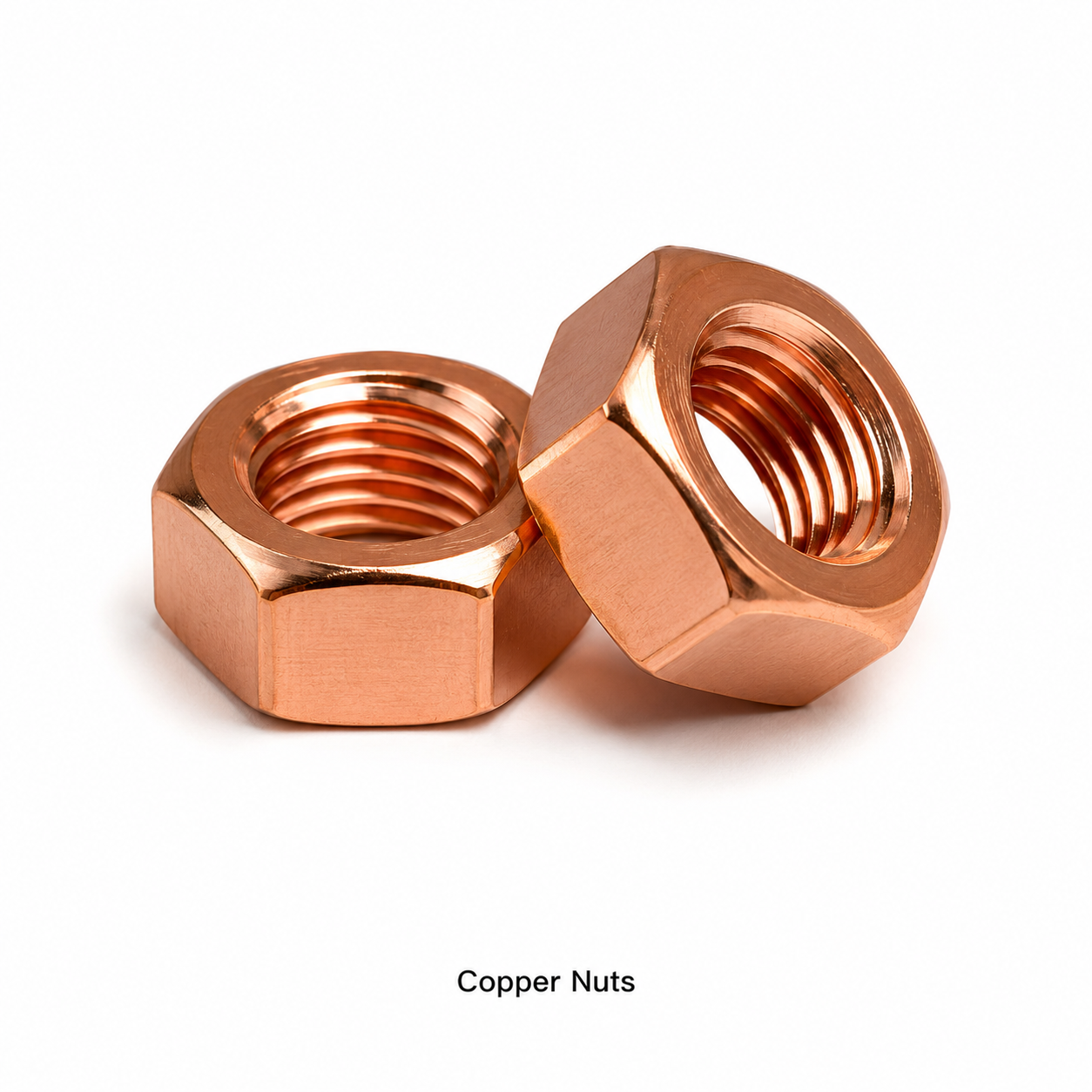
Copper Nuts
Copper Nuts
Pricing: US$ 15.80 / Kilogram (FOB India | MOQ: 25 Kg | All nut types and thread standards)
Electrical Accessories India manufactures and exports copper nuts in all standard types, conforming to DIN 934, DIN 439, DIN 936, ISO 4032, ISO 4033, ISO 4034, ASME B18.2.2, and BS 1083 standards. Produced from high-conductivity copper grades C11000 (ETP), C10100 (OFHC), C12200 (DHP), and C14500 (tellurium copper), copper nuts are engineered for bus-bar assembly, earthing stud connections, transformer terminal boards, switchgear panel wiring, panel board fastening, cable tray systems, industrial machinery grounding, and precision instrument assembly. With ≥98% IACS electrical conductivity, full corrosion resistance, and non-magnetic properties, copper nuts are specified globally by electrical OEMs, EPC contractors, power utilities, and industrial distributors across all major engineering markets.
Product Overview – Copper Nuts
Copper nuts—also referenced as copper hexagonal nuts, copper hex nuts, copper threaded nuts, copper locking nuts, copper grounding nuts, copper earthing nuts, copper terminal nuts, copper coupling nuts, copper barrel nuts, copper insert nuts, copper cage nuts, and copper weld nuts—form a comprehensive family of threaded fasteners used with copper bolts, copper studs, and threaded copper rods in electrical and mechanical assembly. The principal function is to provide a removable threaded clamping element that, when combined with a copper bolt or stud, creates a reliable mechanical and electrical joint in bus-bar systems, earthing grids, transformer terminals, switchgear connections, and industrial grounding systems.
Copper Hex Nuts – Full and Thin Profile
Standard copper hex nuts (DIN 934 / ISO 4032 / ASME B18.2.2) are the most widely used copper nut type, available in M3 to M52 (metric) and 1/4″ to 2″ (imperial UNC/UNF). Thread tolerance: 6H (internal) per ISO 965-1; 2B per ASME B1.1. Full hex nut (Style 1, DIN 934): height nominally 0.85× nominal diameter, for standard applications. Thin/jam nut (DIN 439 / ISO 4035 / Style 2, ASME B18.2.2): height approximately 0.5× nominal diameter, used as jam nuts for locking, for shallow clearance applications, and for panel-mounted terminal post assembly. Extra-thick hex nut (DIN 936 / ISO 4033, height 0.9–1.0× diameter) is used where maximum thread engagement is required, such as earthing stud connections and transformer oil drain plug assemblies. Copper hex nuts are the standard nut for copper hex bolt (DIN 933/931) assemblies in switchgear, bus-bar trunking (BBT), and outdoor earthing grids.
Copper Square Nuts
Copper square nuts (DIN 557 / ASME B18.2.2) provide a larger bearing surface than hex nuts and are used in T-slot assemblies, panel track fastening, cable tray mounting, and applications where anti-rotation in a rectangular channel is required. The flat sides of the square nut lock against the channel walls, preventing rotation during assembly. Standard sizes: M4 to M20 (metric); 1/4″ to 3/4″ (imperial UNC). Copper square nuts are commonly specified in DIN rail mounting systems, cable management trunking assemblies, earth bar brackets, and industrial switchboard bus-bar support rails where the nut must resist rotation without a wrench during initial tightening.
Copper Lock Nuts
Copper lock nuts provide vibration-resistant fastening in electrical assemblies subject to dynamic loads, thermal cycling, and vibration. Types available: nylon insert lock nut (DIN 985 / ISO 7042 equivalent) – limited to applications below 100°C due to nylon insert limitation; all-metal prevailing torque lock nut (DIN 982, elliptical distorted thread form, DIN 980 or ISO 7042) – suitable to 250°C; double nut assembly (copper thin nut + standard hex nut) – traditional locking method for high-current earthing studs and transformer terminals; slotted lock nut (castellated nut, DIN 935 / ISO 7035) – used with split pin for maximum security in high-vibration traction and marine electrical applications; serrated flange lock nut (DIN 6923) – integral serrated flange bites into mating surface to prevent rotation, used in panel board earth bar connections and solar array grounding rail assemblies.
Copper Coupling Nuts and Extension Nuts
Copper coupling nuts (DIN 6334 / ASME B18.2.2 long hex coupling nuts) are elongated hex nuts used to join two externally threaded rods end-to-end. Standard lengths: 3× nominal thread diameter. They are specified for: earthing electrode rod extensions (coupling two 1.5m copper-bonded ground rods), transformer terminal stud extensions, bus-bar support rod assemblies, cable gland backnut extensions in thick wall installations, and lightning conductor down-lead coupling. Custom lengths up to 150 mm are produced for special applications. The internal threaded bore is continuous (single pitch), enabling standard bolts or threaded rods to pass through and extend the assembly length as required.
Copper Cap Nuts and Dome Nuts
Copper cap nuts (DIN 1587 / ISO 8434 / ASME B18.6.3) feature a closed domed end that caps the exposed thread end of a bolt or stud, providing: mechanical protection against thread damage; electrical protection by covering a live conductor thread end in LV switchboard assemblies; aesthetic finish in visible installations such as decorative bus-bar joints, architectural earthing systems, and electrical artwork installations. Standard sizes M3 to M20. The dome height provides approximately 1–2 thread pitches of protection beyond the nut face. Copper cap nuts are specified in switchgear, motor terminal boxes, and outdoor earthing post assemblies where exposed thread corrosion and voltage creepage across thread crests must be minimised.
Copper Wing Nuts
Copper wing nuts (DIN 315 / ASME B18.17) are hand-tightened fasteners with two projecting wings enabling assembly without tools. They are used in: electrical panel inspection cover fastening (for frequently accessed service panels); temporary earthing clamp assemblies; test and measurement equipment grounding connections; field-installed earthing systems in outdoor substations; and industrial machinery bonding connections requiring regular removal. Standard sizes M4 to M20. Copper wing nuts are particularly valued in electrical safety earthing (temporary earth connections per IEC 61230) where field personnel must make quick make/break connections to copper earthing buses and stud terminals during live-line work operations.
Copper Flange Nuts and Serrated Flange Nuts
Copper flange nuts (DIN 6923 / ISO 4161) incorporate an integral wide flange (plain or serrated) that distributes clamping load over a larger area and eliminates the need for a separate washer. In electrical installations, plain flange copper nuts are used on bus-bar support clamps and cable tray support brackets where the larger bearing area prevents crushing of insulation; serrated flange copper nuts provide locking action by the serrations biting into the mating metal surface, used in solar PV mounting rails, earthing system structural connections, and EMI bonding joints per MIL-STD-461.
Specialty Copper Nuts – Insert, Barrel, Weld, and Self-Clinching
Insert nuts (threaded inserts, copper Helicoil-seat type, press-in type) provide internal threads in thin-wall copper sheet, GRP panels, and aluminium enclosures for repeated disassembly without thread damage. Barrel nuts (cross-dowel nuts, DIN 7993 equivalent) are cylindrical blind nuts used in furniture and panel joinery-style electrical enclosure assembly. Weld nuts (DIN 928 square, DIN 929 hex) are projection-welded or spot-welded to copper sheet to provide threaded inserts without drilling; they are specified for bus-bar casing assembly, switchgear door fastening, and panel board interior fittings. Self-clinching nuts are pressed into punched holes in copper sheet under controlled force, providing machine-thread inserts in thin copper panels and mounting plates.
Key Features
- All nut types: hex, thin/jam, square, lock (prevailing torque, nylon insert, castellated), coupling, cap/dome, wing, flange (plain and serrated), insert, barrel, weld, self-clinching
- All thread standards: metric coarse/fine (DIN 13), UNC/UNF (ASME B1.1), BSW (BS 84), BA (BS 57)
- Size range: M3 to M52 (metric); 1/4″ to 2″ NUT (imperial)
- Conductivity: ≥98% IACS (C11000) to ≥100% IACS (C10100)
- Non-magnetic – eliminates interference with CTs, relays, and electronic metering instruments
- RoHS 2 and REACH compliant; EN 10204 3.1 MTCs available
- Surface options: bright, tin-plated, silver-plated, nickel-plated
- AQL 1.0 dimensional inspection; GO/NO-GO thread gauging on all lots
High Electrical Conductivity in Bus-Bar and Earthing Connections
In bus-bar assembly, the nut-bolt interface is a critical electrical joint. Copper nuts (C11000 ETP, ≥98% IACS) paired with copper hex bolts provide a fully conductive joint with contact resistance below 0.5 mΩ at the rated bolt torque. This is essential in LV/MV power distribution bus-bar systems where I²R heating at joints contributes to energy loss and thermal hotspot formation. IEEE Std 80 and IEC 61936-1 earthing grid design standards require that all joints in earthing conductors—including nut-bolt connections on earthing rods and grounding bars—provide reliable low-resistance continuity. Copper-to-copper nut-bolt joints eliminate the galvanic corrosion cells that would arise from dissimilar metals (e.g., steel nut on copper rod) in outdoor earthing systems.
Corrosion Resistance in Electrical Environments
Copper hex nuts resist atmospheric oxidation, H₂S and SO₂ chemical attack (chemical plants, oil refineries), salt spray (ASTM B117, 500 h for plated variants), marine fog, and galvanic corrosion in all-copper assemblies. For coastal and offshore electrical installations (marine switchgear, offshore transformer platforms, port shore power systems), tin-plated copper nuts (ASTM B545, 5 μm) provide additional protection. Silver-plated copper nuts (ASTM B700, 8 μm) are specified for high-current GIS interfaces where tarnish-free contact is mandatory. For process plant electrical bonding in H₂S environments (oil & gas), nickel-plated copper nuts provide superior resistance compared to plain copper.
Non-Magnetic Property for Instrument and Relay Protection
Copper nuts are inherently non-magnetic (magnetic permeability μr ≈ 1.0), unlike carbon steel or stainless steel (μr >> 1). This is critical in: CT (current transformer) secondary terminal connections where ferromagnetic fasteners could introduce measurement errors per IEC 61869; electronic energy meter panel connections where ANSI C12.20 Class 0.2 or IEC 62053 Class 0.2S accuracy requires absence of parasitic magnetic coupling; relay panel assembly where steel fasteners near relay coils cause spurious operation; and MRI ancillary equipment mounting where all ferromagnetic components are prohibited. Copper nut specifications for these applications are supported by certificate of non-magnetic property per ASTM A342.
Thread Engagement and Mechanical Reliability
Thread engagement depth in copper nuts conforms to the minimum values specified in ISO 4032 (nut height = 0.85D), ensuring full mechanical strength of the bolt under tension loading. For applications requiring increased thread engagement due to vibration (e.g., transformer mounted equipment), extra-thick nuts (DIN 936, height = 0.9D or custom 1.0D) are specified. Thread tolerances 6H per ISO 965-1 for metric and 2B per ASME B1.1 for imperial ensure proper fit with mating 6g/2A external thread fasteners. Thread gauge inspection (GO/NO-GO ring gauges, NABL calibrated) is 100% on critical aerospace/defence nuts and AQL 1.0 on standard production lots.
Surface Treatments for Different Environments
Copper nuts are supplied in: natural bright copper (as-machined, standard); chemical bright-dip passivation (light oxide removal, transit protection); tin plating (ASTM B545, 3–8 μm, for tropical, marine, and coastal environments); silver plating (ASTM B700, 5–10 μm, for GIS, substation, and high-current interfaces); nickel plating (ASTM B689, 3–8 μm, for chemical plant and process industry applications); and zinc chromate-free passivation (for temporary storage protection). All plating processes are RoHS 2 (2011/65/EU) and REACH (EC No. 1907/2006) compliant. Plating thickness is verified by XRF per ASTM B568, with results recorded on the quality docket.
Custom Copper Nuts and Special Configurations
Custom copper nut configurations include: non-standard thread pitches (custom metric, extra-fine, left-hand thread); custom nut heights (thin, standard, thick, extra-thick); custom across-flats dimensions (reduced hex or non-standard); slotted and castellated variants for split pin locking; integrated O-ring groove variants for sealing applications; and multi-start thread nuts for quick-release applications. Quantities from 500 pieces are accepted for custom configurations against customer drawings (DXF, DWG, STEP, PDF). First article inspection (FAI) report is provided for all custom nut programs. Lead time for prototype custom nuts: 5–7 working days.
Technical Specifications
| Parameter | Specification |
|---|---|
| Product | Copper Nuts (all types) |
| Standards | DIN 934, DIN 439, DIN 936, DIN 6334, DIN 1587, DIN 315, DIN 6923, ISO 4032, ISO 4035, ASME B18.2.2, BS 1083 |
| Material Grades | C10100, C11000, C12200, C14500 (see table) |
| Size Range (Metric) | M3 × 0.5 to M52 × 5.0 |
| Size Range (Imperial) | 1/4″-20 UNC to 2″-4.5 UNC |
| Thread Tolerance (Internal) | 6H (metric, ISO 965-1); 2B (imperial, ASME B1.1) |
| Nut Height (Standard) | Per DIN 934 / ISO 4032 (0.85D) |
| Nut Height (Thin/Jam) | Per DIN 439 / ISO 4035 (0.5D) |
| Nut Height (Extra Thick) | Per DIN 936 / ISO 4033 (0.9D) |
| Conductivity | 98–101% IACS |
| Hardness (C11000 annealed) | 50–80 HV |
| Tensile Proof Load | Per ISO 898-6 copper alloy equivalents |
| Surface Finish | Bright / Tin-plated / Silver-plated / Nickel-plated |
| Lead Time | 2–4 weeks standard; 1 week express (stocked sizes) |
| Pricing | US$ 15.80 / Kilogram (FOB India) |
Copper Raw Material Grades and International Equivalents
| UNS (USA) | EN (Europe) | BS (UK) | DIN (Germany) | IS (India) | JIS (Japan) | Description |
|---|---|---|---|---|---|---|
| C10100 | CW008A | C101 | E-Cu99.99 | — | C1011 | Oxygen-Free High Conductivity (OFHC) |
| C11000 | CW004A | C101 | E-Cu58 ETP | ETP Copper | C1100 | Electrolytic Tough Pitch (ETP) |
| C12200 | CW024A | C106 | SF-Cu | DHP Copper | C1220 | Phosphorus Deoxidized (DHP) |
| C14500 | CW118C | C109 | CuTeP | — | C1450 | Tellurium Copper (Free-Machining) |
Product Types and Variants
| Nut Type | Standard | Thread Range | Typical Application |
|---|---|---|---|
| Hex Nut (Full) | DIN 934 / ISO 4032 | M3–M52 / 1/4″–2″ | Bus-bar bolting, earthing stud fastening, general assembly |
| Hex Thin/Jam Nut | DIN 439 / ISO 4035 | M3–M36 | Panel-mount terminal posts, locking secondary nut |
| Hex Extra-Thick Nut | DIN 936 / ISO 4033 | M8–M52 | Earthing rod coupling, transformer stud assemblies |
| Square Nut | DIN 557 / ASME B18.2.2 | M4–M20 | T-slot assembly, cable tray fastening, DIN rail tracks |
| Coupling/Extension Nut | DIN 6334 | M6–M36 | Earth rod extension, stud length extension |
| Cap / Dome Nut | DIN 1587 / ISO 8434 | M3–M20 | Exposed thread protection, terminal post capping |
| Wing Nut | DIN 315 / ASME B18.17 | M4–M20 | Hand-tightened earth connections, inspection covers |
| Flange Nut (Plain) | DIN 6923 / ISO 4161 | M5–M24 | Bus-bar support clamps, cable tray brackets |
| Serrated Flange Lock Nut | DIN 6923 (serrated) | M5–M20 | Solar PV earth rails, EMI bonding joints |
| Prevailing Torque Lock Nut | DIN 980 / ISO 7042 | M5–M24 | Vibration-resistant panel assembly, transformer internals |
| Castellated / Slotted Nut | DIN 935 / ISO 7035 | M6–M36 | Split-pin locking, high-vibration traction systems, marine |
Applications by Industry
| Industry | Application |
|---|---|
| Power Transmission and Distribution | Bus-bar joint hex nuts, earthing stud nuts, transformer terminal nuts, surge arrester base nuts |
| Switchgear and Panels | MCB/MCCB terminal nuts, relay base nuts, DIN rail track square nuts, panel earth bar wing nuts |
| Earthing and Grounding Systems | Earth rod coupling nuts, grounding conductor clamp nuts, lightning protection mast nuts |
| Renewable Energy (Solar/Wind) | Inverter bus-bar nuts, PV structure earthing nuts, wind turbine cable tray fastening nuts |
| Railways and Traction | OHE fitting castellated nuts, traction return conductor coupling nuts, rolling stock panel nuts |
| Oil and Gas / Petrochemical | ATEX zone earthing system nuts, instrumentation panel bonding nuts, HPU assembly nuts |
| Marine and Offshore | Shore power connection nuts, hull bonding stud nuts, offshore switchboard assembly nuts |
| Telecommunications | BTS tower earthing nuts, rack mounting nuts, data centre PDU bonding nuts |
Manufacturing Process
Copper nuts are manufactured through hot forging or cold forging followed by CNC machining and thread cutting/tapping. (1) Raw Material Incoming Inspection: copper rod or bar tested for chemical composition (ICP), conductivity (ASTM E1004), and hardness. (2) Forging / Cold Heading: smaller nuts (M3–M16) are cold-headed from copper rod on dedicated nut formers; larger nuts (M20–M52) are hot-forged at 600–750°C on open die or closed die forging presses. (3) CNC Turning/Milling: forged blanks are machined on CNC lathes and milling centres to achieve final across-flats dimension, bearing face flatness, and chamfers per DIN/ISO standard. (4) Thread Tapping: internal threads are tapped using form taps (for rolling) or cutting taps (for cut threads) on CNC tapping machines; thread tolerance 6H per ISO 965-2. (5) Secondary Operations: slotting (for castellated nuts), drilling (for split pin holes), serration milling (for serrated flange nuts). (6) Heat Treatment: annealing where required to restore ductility after cold working. (7) Surface Treatment: electroplating per customer specification. (8) Inspection and Testing: GO/NO-GO thread gauging (100%); dimensional AQL 1.0 per ISO 2859-1; conductivity spot-check; hardness test. (9) Packing and Documentation: VCI polybag count packs, carton, export documentation.
Quality Standards and Certifications
| Standard / Certification | Scope |
|---|---|
| ISO 9001:2015 | Quality Management System |
| DIN 934 / ISO 4032 | Hex nut dimensions – metric standard |
| DIN 439 / ISO 4035 | Thin hex nut dimensions |
| DIN 6334 | Coupling nut dimensions |
| ASME B18.2.2 | Hex nut dimensions – imperial standard |
| ISO 965-2 | Internal thread tolerance – 6H metric |
| ASTM B187 / BS EN 13601 | Copper rod and bar – chemical composition |
| EN 10204 Type 3.1 | Material test certificate |
| RoHS 2 / REACH | Hazardous substances compliance |
| ASTM B117 | Salt spray test for plated variants |
Why Choose Electrical Accessories India for Copper Nuts?
Electrical Accessories India offers the most complete range of copper nut types—hex, square, jam, coupling, cap, wing, flange, lock, castellated, and specialty insert nuts—manufactured under ISO 9001:2015 QMS with full EN 10204 3.1 material certification, NABL-traceable dimensional inspection, and dedicated copper forging and machining infrastructure. We supply: US$ 15.80/kg FOB India competitive pricing; 2–4 week delivery for standard orders; custom copper nut configurations against OEM drawings; complete export documentation package; and technical support for material grade selection, surface treatment specification, and thread standard selection. Our copper nuts are exported to USA, UK, Germany, France, UAE, Australia, Singapore, South Africa, Brazil, Canada, and Italy through established shipping routes.
Frequently Asked Questions (FAQ)
Q1. What types of copper nuts do you manufacture?
We manufacture: hex nuts (full height, thin/jam, extra-thick), square nuts, coupling/extension nuts, cap/dome nuts, wing nuts, flange nuts (plain and serrated), prevailing torque lock nuts, castellated/slotted nuts, weld nuts, self-clinching nuts, and custom specialty nuts against customer drawings. All standard DIN/ISO/ASME nut types are produced.
Q2. What thread standards are available for copper nuts?
Metric coarse (DIN 13/ISO 68-1, M3–M52), metric fine (DIN 13, M4–M36), Unified National Coarse (UNC, ASME B1.1, 1/4″ to 2″), Unified National Fine (UNF, ASME B1.1, 1/4″ to 1-1/2″), British Standard Whitworth (BSW, BS 84, 1/4″ to 2″), and British Association (BA, BS 57, 0BA–6BA) are all produced. Left-hand thread and custom thread pitches are available on request.
Q3. Which copper nut grade is recommended for outdoor earthing systems?
C11000 ETP copper is the standard grade for outdoor earthing system nuts in moderate environments. For aggressive coastal, marine, or industrial atmospheres, tin-plated C11000 copper nuts (ASTM B545, 5 μm minimum) are recommended. For severe environments (offshore platforms, chemical plants), nickel-plated copper nuts provide the best corrosion resistance while maintaining electrical conductivity above 90% IACS.
Q4. Can copper nuts be used as CT secondary terminal connections?
Yes. Copper nuts (C11000 ETP or C10100 OFHC, non-magnetic) are the preferred fastener for CT secondary terminal connections per IEC 61869-2, where the non-magnetic property is essential to prevent measurement errors caused by ferromagnetic fasteners near CT cores and secondary circuits. Silver-plated copper nuts are specified for low-contact-resistance connections in Class 0.2 and Class 0.2S metering CT terminals.
Q5. What is the tensile strength of copper hex nuts?
C11000 ETP copper hex nuts: proof load per nut size equivalent to approximately 200–250 MPa material strength. C14500 tellurium copper: 250–300 MPa. C17200 beryllium copper (aged): 900–1,400 MPa. For standard electrical panel applications, C11000 nut strength is adequate for typical fastener torques in M3–M36 sizes. For high-torque structural earthing connections (M24–M52), C14500 or hot-forged C11000 nuts with controlled temper provide higher strength.
Q6. Do copper nuts require a torque specification?
Yes. Torque specifications for copper nuts are lower than steel equivalents due to copper’s lower yield strength. Recommended torque values (dry): M6 = 5–6 Nm; M8 = 12–14 Nm; M10 = 24–28 Nm; M12 = 40–46 Nm; M16 = 90–100 Nm. These values are based on C11000 ETP copper, 6H/6g thread combination. For tin-plated or silver-plated copper nuts, torque can be increased by 10–15% due to reduced friction. Always use calibrated torque wrench; over-torquing copper nuts (especially in small sizes M3–M5) risks thread stripping.
Q7. Are coupling nuts available in non-standard lengths?
Yes. Standard coupling nuts (DIN 6334) have length = 3× nominal diameter. Custom coupling nuts with lengths from 1D to 10D (or any specific dimension in mm) are produced against customer drawings. Non-standard across-flats dimensions and reduced hex coupling nuts are also produced. These are common in earthing system rod extension coupling and transformer terminal stud length extension applications.
Q8. What is the minimum order quantity for copper nuts?
Standard MOQ: 25 kg for catalogue sizes in C11000 ETP copper (DIN 934/ISO 4032 hex nuts, M3–M36). For custom types (coupling nuts, cap nuts, specialty), MOQ is 50 kg. For special alloys (C10100 OFHC, C14500 tellurium), MOQ is 50–100 kg. Prototype samples of 200–500 pieces are accepted for OEM qualification at nominal sample charge.
Multilingual Equivalent Terms
| Language | Equivalent Terms |
|---|---|
| Spanish | Tuercas de cobre, Tuercas hexagonales de cobre, Tuercas de fijación de cobre |
| Russian | Медные гайки, Медные шестигранные гайки, Медные крепёжные гайки |
| French | Écrous en cuivre, Écrous hexagonaux en cuivre, Écrous de fixation en cuivre |
| Portuguese | Porcas de cobre, Porcas sextavadas de cobre, Porcas de fixação de cobre |
| Italian | Dadi in rame, Dadi esagonali in rame, Dadi di fissaggio in rame |
Related Products – Copper Parts and Components
Explore our complete range of copper precision parts and components:
- Copper Transformer Studs
- Copper Transformer Stud Connectors
- Copper Sealing Washers
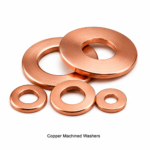
- Copper Machined Washers
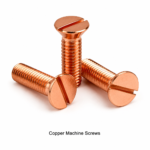
- Copper Machine Screws
- Copper Casting High Conductivity
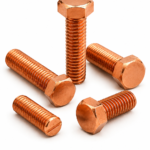
- Copper Hex Bolts, Copper Bolts
- Copper CNC Machined Parts
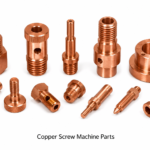
- Copper Screw Machine Parts
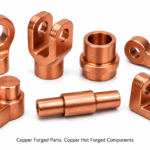
- Copper Forged Parts, Copper Hot Forged Components
- Copper Cold Forged Parts
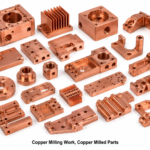
- Copper Milling Work, Copper Milled Parts
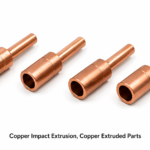
- Copper Impact Extrusion, Copper Extruded Parts
Request a Quote – Copper Nuts
Electrical Accessories India | Manufacturer & Exporter of Copper Nuts – All Types and Thread Standards
Email: info@elecaccs.com | Website: elecaccs.com
Price: US$ 15.80 / Kilogram (FOB India)
Lead Time: 2–4 weeks | MOQ: 25 Kg | All nut types, thread standards, and surface finishes available
Submit your specification, drawing, or nut type/thread/size requirements to receive a detailed technical quotation within 24 business hours. We serve clients across India, USA, UK, Germany, UAE, Australia, Canada, Singapore, South Africa, France, Italy, Spain, and Brazil.