

Product
Product Details
Stainless Steel Glands and Connectors for Flexible Conduits
Stainless Steel Glands and Connectors for Flexible Conduits — SS316 and SS304 Flexible Conduit Fittings
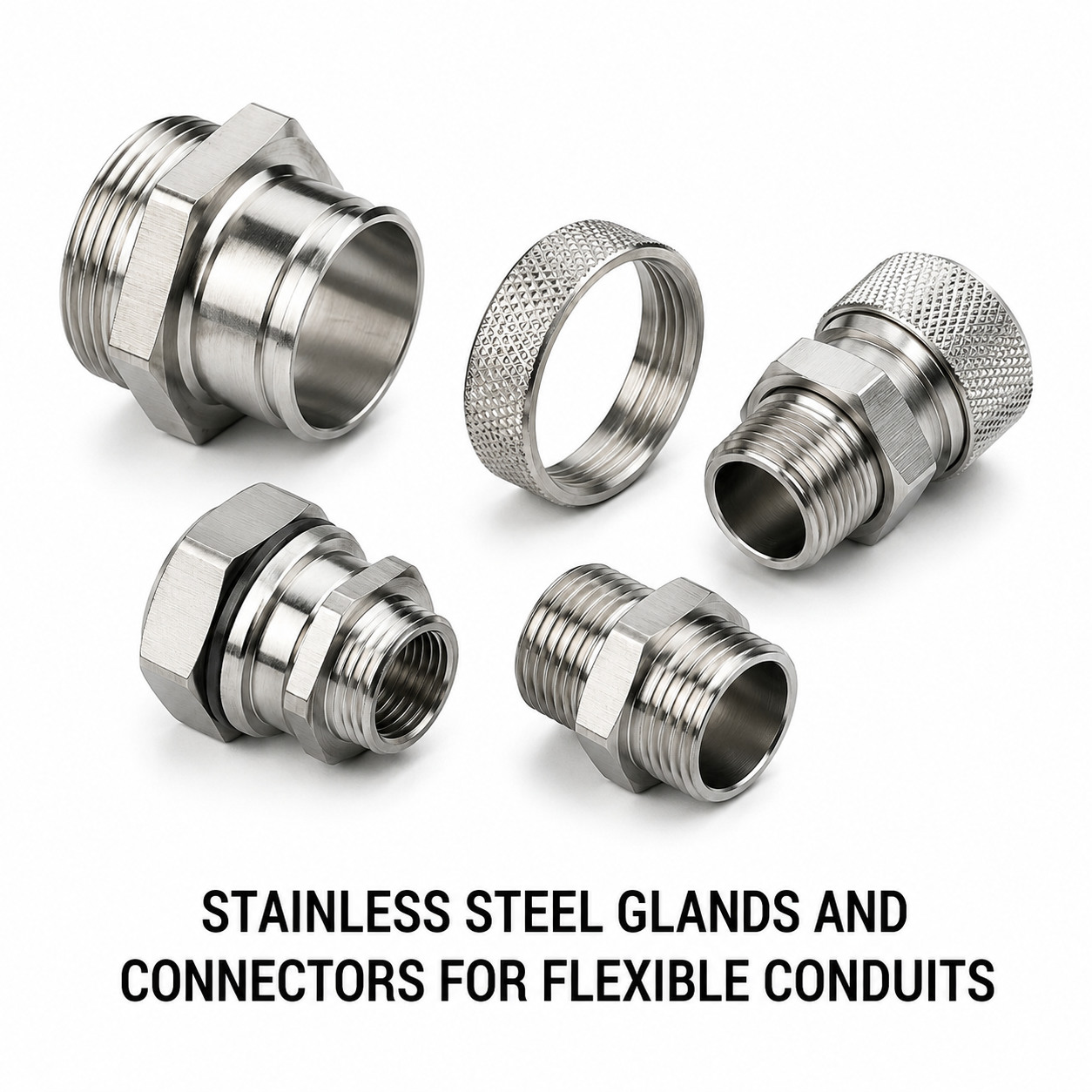
Stainless Steel Glands and Connectors for Flexible Conduits (also referred to as stainless steel flexible conduit fittings, SS conduit glands, stainless flexible conduit connectors, SS liquid-tight conduit fittings, or stainless steel armoured flexible conduit connectors) are precision-machined connection components that securely terminate flexible conduit runs at equipment entries, enclosure walls, motor terminal boxes, junction boxes, and process instrument connections — providing cable route protection, vibration isolation, mechanical protection, and environmental sealing in aggressive industrial environments. Manufactured from AISI 316 (1.4401) and AISI 304 (1.4301) stainless steel, these fittings are produced for all standard flexible conduit types: liquid-tight smooth-bore flexible conduit (LTHC, LTMC), stainless steel strip-wound armoured flexible conduit (SS interlock), and PVC-jacketed stainless steel flexible conduit, in metric and NPT thread forms for global installation standards. Electrical Accessories India supplies stainless steel flexible conduit connectors for electrical OEMs, EPC contractors, marine and offshore engineering companies, chemical plant builders, food processing equipment manufacturers, and industrial automation installers. Price: US$ 10.90/Kilogram
Product Overview
Flexible Conduit System Architecture and Gland Function
A flexible conduit system consists of three elements: the flexible conduit body (metallic strip-wound, metallic braided, or PVC liquid-tight), the conduit connector/gland at each end, and the locknut that secures the connector into the equipment enclosure entry. The stainless steel conduit gland/connector serves multiple simultaneous functions: (a) mechanical retention of the conduit end — the connector grips the conduit OD or inner core (depending on type) to prevent pull-out and relative movement; (b) environmental sealing — an integral O-ring or compression seal at the enclosure entry prevents liquid, dust, oil mist, and chemical ingress into the enclosure; (c) vibration isolation — the inherent flexibility of the conduit system, combined with the swivel-joint capability of properly designed connectors, absorbs motor and machine vibration before it transmits to the cable and panel connections; (d) earthing continuity (for metallic conduit) — the connector maintains metallic continuity between the conduit body and the equipment enclosure for EMC shielding and protective earth purposes; (e) IP-rated cable route sealing — the completed conduit + connector assembly achieves the specified IP rating at both the enclosure entry and the conduit-to-connector interface.
Stainless Steel Flexible Conduit Types and Compatible Connectors
Different flexible conduit constructions require different connector engagement mechanisms, and Electrical Accessories India produces SS glands matched to each conduit type. SS strip-wound armoured conduit (also called SS interlock conduit, SS galvanised steel flexible conduit, or SS flexible metallic conduit) has a helical interlocking metal strip profile — the connector engages with the interlocked profile by means of an internal thread or locking ring that registers with the conduit pitch. SS liquid-tight conduit (LTHC/LTMC) — a PVC or SS braid over liquid-tight inner liner — requires a compression-type connector that grips the PVC jacket outer diameter with a cone and locknut. SS braided flexible conduit — metallic wire braid over inner conduit — requires a braid-gripping ferrule inside the connector body for metallic continuity. Corrugated SS flexible conduit (for high-temperature applications) — requires a connector with internal thread engaging the corrugation profile. For each type, the connector body is machined from SS 316 or 304 round bar with the appropriate conduit-side engagement feature and standard metric or NPT enclosure-entry thread.
Metric and NPT Entry Threads for Equipment Connection
Stainless steel flexible conduit connectors are produced with the same metric and NPT enclosure-entry thread options as SS cable glands. Metric entry threads (M16 to M63, ISO 1502 / EN 62444) for European, Asian, and IEC-specification equipment; NPT entry threads (1/2″ to 2″, ASME B1.20.1) for North American and API-specification equipment, NEMA enclosures, and Ex d/Ex e conduit systems in petroleum processing facilities. The external entry thread of the connector is sealed at the enclosure wall using a nylon or SS flat washer + SS locknut combination, or with an integral hex shoulder and nylon washer (preventing over-insertion). Where IP66 or IP67 sealing at the enclosure entry is required, an EPDM face O-ring or NBR O-ring on the connector shoulder provides the required ingress protection.
IP Rating and Environmental Sealing of SS Conduit Connectors
Stainless steel flexible conduit connector assemblies achieve IP66 (dust-tight + powerful water jets) and IP67 (temporary immersion, 1 m / 30 min) as standard when the entry O-ring is correctly compressed against the enclosure face and the conduit-side sealing is intact. IP68 (continuous immersion) is achievable with the addition of a conduit fill sealant or gel at the conduit-to-connector transition point, or by using IP68-rated conduit connectors with dual O-ring sealing. For food, dairy, pharmaceutical, and hosedown installations, IP69K (100 bar, 80°C washdown per ISO 20653) stainless steel conduit connectors with electropolished finish and FDA-grade EPDM sealing elements are produced to the same hygiene standards as IP69K cable glands.
ATEX and IECEx Certified SS Flexible Conduit Connectors
In hazardous area installations (petroleum refineries, chemical plant, LNG storage, paint manufacturing), flexible conduit systems entering Ex e (increased safety) or Ex d (flameproof) equipment enclosures must use ATEX/IECEx certified conduit connectors. Certified SS flexible conduit connectors prevent the conduit system from compromising the explosion protection of the equipment. Certified connectors are produced to the specific mechanical retention and sealing requirements of IEC 60079-0 (general Ex requirements) and IEC 60079-7 (Ex e) or IEC 60079-1 (Ex d), with test house certification and ATEX Declaration of Conformity. Zone 1 and Zone 2 (gas, Group II) and Zone 21 and Zone 22 (dust, Group III) certified variants are supplied.
EMC Earthing Continuity in SS Conduit Connectors
For instrumentation and control cable installations where EMC (Electromagnetic Compatibility) cable route shielding is required, metallic continuity through the conduit system is essential. Stainless steel conduit connectors with integral earth tail (earth lug), internal earthing spring contact, or metallic continuity clamp maintain low-impedance electrical connection between the SS conduit body and the equipment enclosure. The connector’s SS body to enclosure metalwork contact resistance is typically <0.1 Ω, providing effective 360° EMC shielding of the cable route from noise pickup and radiation. For process control loops with 4–20 mA signals, instrumentation cable route shielding through SS flexible conduit systems with SS EMC connectors provides significant noise immunity improvement over unshielded plastic conduit routes.
Swivel and Fixed Connector Types
Stainless steel flexible conduit connectors are produced in straight (fixed) and swivel (rotating) configurations. Fixed (straight) connectors have a rigid, non-rotating body — used where the conduit installation does not require angular adjustment after installation. Swivel connectors have a rotating entry thread that allows the gland body to rotate relative to the conduit end after installation, enabling angular alignment with the enclosure entry without twisting the conduit. 45° and 90° elbow connectors (fixed angle) allow conduit runs to turn without bending radius concerns. Adjustable elbow connectors (variable angle, 0°–90°) are used for difficult access installations on motor terminal boxes and compact process instrument housings.
Reduced-Shank and Long-Thread Connectors
For enclosure walls with thick panels, composite material walls, or enclosures with internal components close to the entry, reduced-shank connectors (shorter thread engagement length) and long-thread connectors (extended thread for thicker wall engagement) are produced. Long-thread (extended entry) SS connectors are used in NEMA enclosures with thick-wall cast aluminium or stainless steel bodies and in process equipment with thick-wall stainless steel housings. Short-thread (shallow entry) connectors are used in thin-sheet metal enclosures and compact junction boxes.
Key Features
- Material: AISI 316 (1.4401) and AISI 304 (1.4301) stainless steel for corrosive, marine, and food-grade environments
- Compatible with all flexible conduit types: SS strip-wound, liquid-tight, braided, and corrugated
- Metric (M16–M63) and NPT (1/2″–2″) entry threads for global installation standards
- IP66 / IP67 / IP68 / IP69K rated — with appropriate sealing elements
- ATEX / IECEx certified variants for Zone 1/2/21/22 hazardous areas
- Straight, 45°, 90° elbow, and swivel configurations for installation flexibility
- Electropolished and passivated for food, pharma, and cleanroom applications
- EMC earthing continuity for instrumentation and control cable shielding
Vibration Resistance for Motor Applications
The primary application for flexible conduit systems is motor wiring — the flexible conduit absorbs motor vibration and prevents transmission to panel cable connections. SS conduit connectors with anti-rotation locking features (locking ring, internal anti-rotation tabs) are used in high-vibration applications (pumps, compressors, fans) to prevent connector loosening under vibration. Anti-vibration lock systems achieve vibration resistance to IEC 60068-2-6 (sinusoidal vibration) and IEC 60068-2-27 (shock) test levels.
Temperature Range of SS Conduit Connectors
The stainless steel connector body is rated to -60°C to +300°C (thermal withstand of SS316/304). The operating temperature range is limited by the sealing insert material: EPDM (-40°C to +120°C), silicone (-55°C to +180°C), FKM (-20°C to +200°C), and PTFE (-200°C to +260°C). For high-temperature conduit systems near furnaces, ovens, and heat exchangers, PTFE-sealed SS connectors with SS lock nut are specified for continuous service to +260°C.
SS Conduit Connectors for Food and Pharmaceutical Installations
In food, dairy, beverage, and pharmaceutical manufacturing, conduit systems protect cable routes in wet and washdown processing areas. SS 316 conduit connectors with electropolished finish (Ra ≤ 0.8 µm), FDA-grade EPDM sealing, crevice-free design (no external threads exposed to process area), and IP69K rating comply with EHEDG (European Hygienic Engineering and Design Group) guidelines and FDA 21 CFR hygienic cable entry requirements.
Long-Life and Low-Maintenance Design
Stainless steel conduit connectors are designed for long service life in aggressive environments without regular maintenance. SS316 passivated surfaces resist corrosion without protective coatings that could deteriorate; EPDM sealing elements are rated for 15+ years UV and ozone resistance when sheltered from direct ozone sources. Unlike nickel-plated brass conduit connectors that can dezincify or suffer nickel depletion in corrosive environments, solid SS316 connectors maintain material integrity throughout the installation’s design life.
Comparison: SS vs Nickel-Plated Brass vs Plastic Conduit Connectors
| Property | SS 316 Connector | Nickel Brass Connector | Nylon Connector |
|---|---|---|---|
| Corrosion Resistance | Excellent (marine, chemical) | Good (atmospheric only) | Good (non-mechanical) |
| Temperature Rating | -60°C to +300°C (body) | -40°C to +120°C | -40°C to +100°C |
| EMC Earthing | Yes (metallic) | Yes (metallic) | No (insulating) |
| IP69K Compliant | Yes (with EP finish) | Limited | Yes (moulded) |
| ATEX Certification | Available | Available | Limited |
| Cost | Higher | Medium | Lower |
Technical Specifications
| Parameter | Specification |
|---|---|
| Material (Body) | AISI 316 (1.4401) / AISI 304 (1.4301) |
| Material (Sealing) | EPDM (standard) / NBR / Silicone / FKM / PTFE |
| Entry Thread (Metric) | M16, M20, M25, M32, M40, M50, M63 |
| Entry Thread (NPT) | 1/2″, 3/4″, 1″, 1-1/4″, 1-1/2″, 2″ |
| Conduit Size Range | Ø10 mm to Ø54 mm conduit OD |
| Conduit Types | SS strip-wound, liquid-tight, braided, corrugated |
| IP Rating | IP66 / IP67 standard; IP68 / IP69K on request |
| Body Temperature Rating | -60°C to +300°C (SS body); insert-limited for sealing |
| Configuration | Straight / 45° elbow / 90° elbow / Swivel |
| Surface Finish | Machined / Electropolished (Ra ≤ 0.8 µm) / Passivated |
| ATEX/IECEx | Available (Ex e and Ex d certified variants) |
| Price | US$ 10.90/Kilogram |
Stainless Steel Grade and International Equivalents
| Grade | EN | UNS | BS | IS (India) | Key Feature |
|---|---|---|---|---|---|
| AISI 316 | 1.4401 | S31600 | 316 S 31 | IS 6911 SS316 | 2.5% Mo, marine and chemical-grade |
| AISI 316L | 1.4404 | S31603 | 316 S 11 | IS 6911 SS316L | Low carbon, max corrosion resistance |
| AISI 304 | 1.4301 | S30400 | 304 S 31 | IS 6911 SS304 | General, food-grade, cleanroom |
Product Types and Variants
| Type | Conduit Engagement | Entry Thread | Configuration | Application |
|---|---|---|---|---|
| Liquid-Tight Compression Connector | Compression on PVC jacket | Metric / NPT | Straight / 90° elbow | Motors, pumps, drives |
| SS Interlock Conduit Connector | Internal locking ring | Metric / NPT | Straight | Industrial automation, process plant |
| Braided Conduit Connector | Braid-gripping ferrule | Metric | Straight | EMC shielding, instrumentation |
| Corrugated Conduit Connector | Internal thread to corrugation | Metric | Straight | High-temperature cable routes |
| ATEX/IECEx Certified | Compression / locking | Metric | Straight | Zone 1/2/21/22 hazardous areas |
| Swivel Elbow (45°/90°) | Compression / locking | Metric / NPT | Angled swivel | Tight-space motor, instrument access |
| IP69K Food/Pharma | Compression on PVC | Metric | Straight | Washdown, food processing, dairy |
| EMC Earth Continuity | Braid / interlock | Metric | Straight | Control panels, instrumentation |
Applications in Industry
| Industry | Application | Grade | Conduit Type |
|---|---|---|---|
| Marine / Offshore | Motor wiring, pump connections on vessels/platforms | SS316 | SS strip-wound + liquid-tight |
| Oil and Gas | ATEX Zone 1/2 conduit system terminations | SS316 | SS interlock / liquid-tight |
| Chemical Processing | Pump, agitator motor wiring in corrosive areas | SS316 / 316L | SS liquid-tight |
| Food and Beverage | IP69K washdown motor and conveyor wiring | SS316 (EP) | SS liquid-tight |
| Pharmaceutical | Cleanroom motor control and instrument connections | SS316 (EP) | SS liquid-tight |
| Water / Wastewater | Submersible pump and treatment equipment wiring | SS316 | SS interlock / liquid-tight |
| Industrial Automation | Robot and servo motor flexible wiring | SS304 / 316 | SS strip-wound |
| Mining | Motor and instrumentation in dusty, wet environments | SS316 | SS interlock |
Manufacturing Process
Stainless steel flexible conduit connectors are CNC-machined from certified SS316 or SS304 bar stock with full material traceability. Process: (1) Material incoming inspection — MTC review, PMI (XRF) spot checks, hardness verification; (2) CNC turning — connector body profile, entry thread (metric or NPT), conduit engagement bore, and shoulder profile machined; (3) Hex/drive flat milling; (4) Thread inspection — go/no-go gauge for every connector; (5) Conduit engagement element manufacture — locking ring, compression cone, or braid ferrule manufactured separately on CNC lathe, assembled into body; (6) Passivation — citric acid passivation per ASTM A967; (7) Electropolishing (food/pharma grade) per ASTM B912; (8) O-ring and seal assembly; (9) IP sampling test per IEC 60529; (10) Marking and packaging — size, grade, thread type laser-marked or ink-stamped; individual polybag with batch traceability.
Quality Standards and Certifications
| Standard | Scope |
|---|---|
| EN 62444 / IEC 62444 | Cable glands for electrical installations |
| IEC 60529 | IP rating (IP66/67/68/69K) |
| ATEX 2014/34/EU / IECEx | Hazardous area (Ex e, Ex d) certification |
| ASME B1.20.1 | NPT thread standard |
| ASTM A967 / A380 | Stainless steel passivation |
| ASTM B912 | Electropolishing |
| IEC 60068-2-6 | Vibration resistance testing |
| ISO 9001:2015 | Quality Management System |
Why Choose Electrical Accessories India?
- Full Conduit Type Coverage — connectors for SS strip-wound, liquid-tight, braided, and corrugated conduit from one source
- Grade 316 Marine Standard — PMI-verified SS316 for offshore, chemical, and marine procurement specifications
- IP69K Food Grade — electropolished + passivated SS316 with FDA EPDM sealing for hygienic installations
- ATEX/IECEx Capability — certified conduit system connectors for Zone 1/2/21/22
- Elbow and Swivel Range — 45° and 90° elbows for compact motor terminal box entries
- EMC Earth Continuity — metallic continuity connectors for shielded instrumentation conduit
- Price: US$ 10.90/Kilogram — competitive SS pricing for industrial and offshore procurement
Frequently Asked Questions
Q1. What is the difference between a cable gland and a flexible conduit connector?
A cable gland seals directly onto the cable outer sheath — it terminates the cable at an enclosure entry with environmental sealing and strain relief. A flexible conduit connector terminates the conduit (not the cable) at the enclosure entry — the cable runs freely inside the conduit, and the connector seals the conduit end at the enclosure. Conduit connectors are used where cable route mechanical protection and vibration isolation are required, not just cable sealing.
Q2. What flexible conduit types are compatible with your SS connectors?
Our stainless steel connectors are manufactured for: SS strip-wound interlock conduit (SS galvanised flexible metallic conduit); PVC liquid-tight conduit (LTHC/LTMC); SS braided flexible conduit; and corrugated SS flexible conduit for high-temperature applications. Specify the conduit type, OD, and required entry thread when ordering.
Q3. Can I use SS conduit connectors in ATEX Zone 1 installations?
Yes, with ATEX/IECEx certified connectors specifically. Standard SS conduit connectors (even in 316 grade) do not carry ATEX certification unless they have been type-tested and certified by a notified body. ATEX-certified SS conduit connectors for Ex e and Ex d applications are available — supply of ATEX Declaration of Conformity and IECEx certificate reference is included.
Q4. Are elbow conduit connectors available?
Yes. 45° and 90° fixed-angle elbow connectors and swivel elbow connectors (0°–90° adjustable) are produced in SS316 and SS304 for all standard conduit sizes. These are essential for motor terminal box entries where the conduit must change direction within a very short distance of the enclosure entry.
Q5. What is the IP rating of your SS flexible conduit connectors?
Standard straight connectors with face O-ring sealing achieve IP66 and IP67 as standard. IP68 (immersion rating) requires additional conduit fill sealant or dual-seal connectors. IP69K-rated connectors with high-pressure seal design are available for food, pharma, and washdown applications.
Q6. Can SS conduit connectors be used for EMC shielded conduit systems?
Yes. SS conduit connectors with internal earthing spring, braid-gripping ferrule, or metallic continuity clamp maintain 360° metallic connection between the conduit and the enclosure metalwork for EMC cable route shielding. Contact resistance <0.1 Ω at the connector-to-enclosure interface.
Q7. Do you supply complete SS flexible conduit system assemblies?
Electrical Accessories India supplies the SS conduit connectors/glands. SS flexible conduit supply (strip-wound, liquid-tight) can be coordinated through our supply chain for complete system procurement. Contact us with conduit type, length, conduit OD, and end fitting requirements for system quotation.
Q8. What is the minimum order quantity?
Standard straight connectors (M20–M40): MOQ 25 pieces. Elbow and swivel connectors: MOQ 10 pieces. ATEX-certified variants: MOQ 10 pieces. Sample quantities (5 pieces) for installation trials and specification evaluation are available.
Equivalent Terms in Other Languages
| Language | Term 1 | Term 2 | Term 3 |
|---|---|---|---|
| Spanish | Conectores inox para tubo flexible | Prensaestopas inox conduit flexible | Racores de conduit flexible inoxidable |
| Russian | Нержавеющие фитинги для гибкого кондуита | Муфты из нержавейки для гибкого рукава | Соединители нержавеющий гибкий трубопровод |
| French | Raccords inox pour conduit flexible | Presse-étoupes inox conduit souple | Connecteurs inox tube flexible |
| Portuguese | Conectores inox para eletroduto flexível | Prensa-cabos inox conduite flexível | Racores aço inox tubo flexível |
| Italian | Raccordi inox per conduit flessibile | Pressacavi inox tubo flessibile | Connettori acciaio inox condotto flessibile |
Related Stainless Steel Products
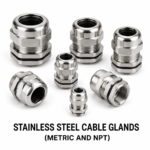
- Stainless Steel Cable Glands (Metric and NPT)
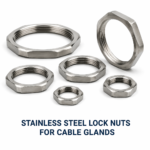
- Stainless Steel Lock Nuts for Cable Glands
- Conduit Fittings (Brass)
- Cable Glands (Brass)
- Cable Glands Accessories
Get a Quote — SS Glands and Connectors for Flexible Conduits
Specify conduit type (strip-wound / liquid-tight / braided), conduit OD (mm), entry thread (Metric/NPT), size, SS grade (316/304), configuration (straight/elbow/swivel), sealing material, IP rating, and quantity. For ATEX requirements, provide Zone, gas group, and Ex type.
Price: US$ 10.90/Kilogram | MOQ: 10–25 pcs | Gujarat, India | Global Export